

Understanding wine scoring: make informed premium choices
Wine scores promise to simplify buying decisions, yet many enthusiasts find themselves confused when a 91-point bottle disappoints whilst an 87-point gem delights. The reality is that scores aren’t absolute quality stamps. They reflect critic preferences, tasting conditions, and market forces that can obscure genuine value. Understanding how wine scoring actually works unlocks smarter purchasing decisions, helping you identify premium bottles that match your palate without paying inflated prices for marginal score differences.
Table of Contents
- Key takeaways
- How the 100-point wine scoring system works
- The nuances behind wine scores and critic preferences
- Understanding the relationship between scores, price, and value
- Practical tips for using wine scores to select quality wines
- Enhance your wine collection with F.U. Wine
- FAQ
Key Takeaways
| Point | Details |
|---|---|
| Scores aren’t absolute | Scores reflect critic preferences, tasting conditions and market forces, so they guide decisions but may not match your palate. |
| Top score inflation | Score inflation compresses the top end, making small differences seem to drive price and prestige. |
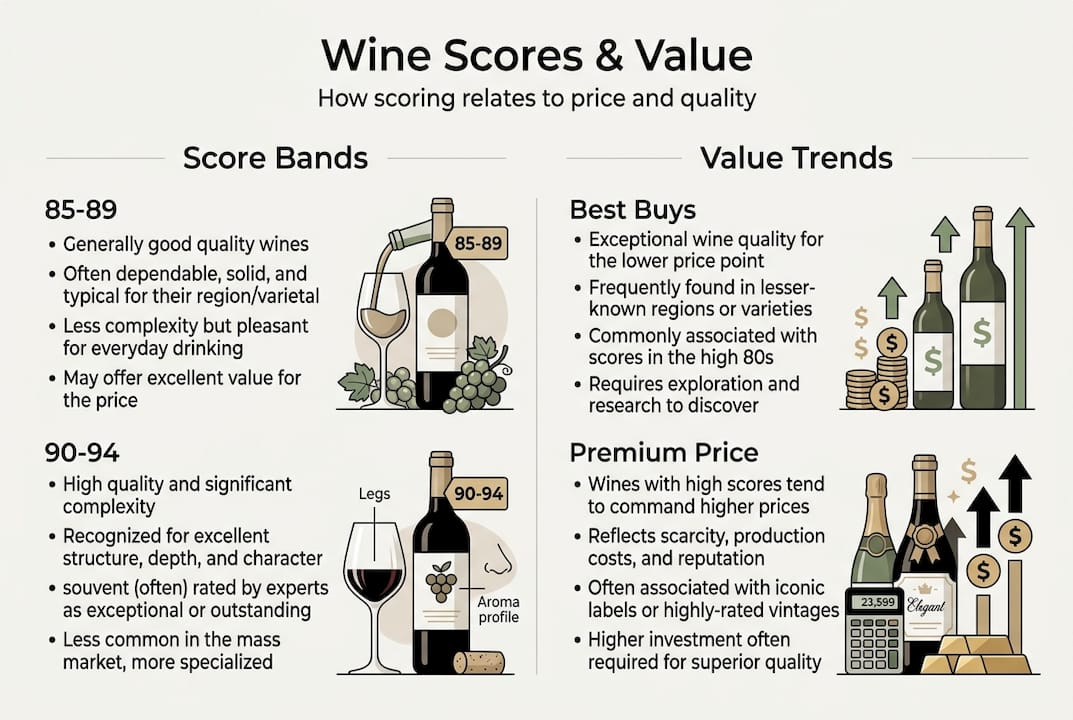
| 85 to 89 range | Wines scoring 85 to 89 often offer better value than higher scores when you consider price and style. |
| Blind tastings focus on quality | Blind tastings assess balance, aroma, structure and finish without price or producer information to focus on quality. |
| Don’t obsess over margins | Don’t obsess over one to two point differences, instead treat wines within three to four points as equivalent. |
How the 100-point wine scoring system works
The wine industry’s dominant scoring system is the 100-point scale, popularised by critic Robert Parker in the 1980s and now used by Wine Spectator, Jeb Dunnuck, and countless other reviewers worldwide. This system scores wines from 50 to 100 points, with each range corresponding to specific quality categories that guide consumers through their purchasing decisions.
The scoring categories break down as follows:
- 95-100 points: Classic wines of exceptional character and style
- 90-94 points: Outstanding wines of superior quality and character
- 85-89 points: Very good wines with special qualities
- 80-84 points: Good wines that are solid and well-made
- 75-79 points: Mediocre wines with noticeable deficiencies
- Below 75 points: Not recommended
Critics conduct blind tastings in flights, assessing wines grouped by variety, region, or vintage. They evaluate balance, aroma complexity, structural integrity, and finish length without knowing price or producer. This methodology aims to isolate quality from reputation, though human preferences inevitably influence results.
Scores reflect potential quality rather than price point. A 92-point wine might cost thirty dollars or three hundred, depending on scarcity, region prestige, and market demand. Critics sometimes score wines during barrel tastings, projecting future quality after bottle ageing. These early assessments can shift as wines evolve, making vintage and tasting timing crucial context.
Pro Tip: Check when a score was assigned. Barrel scores predict future potential, whilst bottle scores reflect current drinking quality.
The nuances behind wine scores and critic preferences
Critic palate preferences significantly shape scoring outcomes. Parker famously favoured bold, ripe wines, elevating fruit-forward Napa Cabernets and powerful Rhône blends whilst sometimes undervaluing subtle, terroir-driven expressions. Other critics prioritise elegance, acidity, and restraint, scoring the same wines differently based purely on stylistic alignment.
Score inflation has compressed the meaningful range at the top end. Decades ago, wines scoring 88-92 points represented exceptional quality. Today, quality improvements and critic generosity mean scores cluster above 90 points, with tiny differences carrying disproportionate market impact. Statistical analysis reveals that small score differences lack significance, yet consumers treat a 91 as meaningfully superior to an 89.
Blind tasting panels improve reliability by grouping wines into equivalence classes. Rather than obsessing over whether a wine deserves 90 or 91 points, panels identify wines of comparable quality within statistical margins of error. This approach acknowledges that human palates cannot consistently distinguish minute quality differences, especially across multiple tasting sessions.
Key factors influencing score variability include:
- Tasting order effects, where wines tasted earlier or later receive different scores
- Palate fatigue during extended tasting sessions with numerous wines
- Vintage variation affecting the same wine across different years
- Bottle variation from cork quality, storage conditions, and batch differences
Pro Tip: Don’t obsess over 1-2 point differences. Treat wines within 3-4 points as equivalent quality, focusing instead on style alignment with your preferences.
Understanding the relationship between scores, price, and value
Empirical research demonstrates strong price-score correlation, particularly above the 90-point threshold where price premiums jump dramatically. Consumers experience a mental quantum leap at 90 points, perceiving wines above this mark as fundamentally superior despite minimal quality differences from 88-89 point bottles.

| Score range | Average price behaviour | Value opportunity |
|---|---|---|
| 95-100 | Premium pricing, often 3-5x wines scoring 90-94 | Rare value; buy for special occasions only |
| 90-94 | Significant premium over sub-90 wines | Moderate value; seek discounted allocations |
| 85-89 | Minor price increments despite solid quality | Excellent value; sweet spot for daily drinking |
| 80-84 | Budget pricing with acceptable quality | Good value for casual consumption |
Below 86 points, price increments remain minor despite quality differences. An 85-point wine might cost fifteen dollars whilst an 87-point bottle reaches twenty dollars, representing modest premiums for noticeable quality improvements. Above 90 points, each additional point can add ten to fifty dollars, driven more by scarcity and prestige than proportional quality gains.
Using equivalence classes helps identify underpriced wines offering exceptional value. When multiple critics score a wine between 88-91 points, it likely belongs in the same quality bracket as 92-point bottles commanding double the price. Smart buyers exploit these market inefficiencies, purchasing quality without paying for score inflation.
Market dynamics create pricing anomalies worth exploiting. Lesser-known regions, unfashionable varieties, and overlooked vintages often score well without attracting premium pricing. A 90-point Grenache from an emerging Australian region might cost half what a 90-point Pinot Noir from Burgundy commands, despite comparable quality.
Pro Tip: Target wines scoring 85-89 points from reputable critics. These bottles deliver outstanding quality and drinking pleasure without the inflated price tags attached to 90+ scores.
Practical tips for using wine scores to select quality wines
Applying wine scoring knowledge practically transforms how you approach purchasing decisions. Rather than blindly chasing high scores, informed buyers align scores with personal preferences and market opportunities to maximise value and satisfaction.
Follow this systematic approach to leverage scores effectively:
- Identify critics whose palate preferences align with yours by sampling wines they rate highly and noting your reactions
- Cross-reference multiple critic scores to average out individual biases and identify consensus quality assessments
- Focus purchasing on the 85-89 point range where quality remains high but prices stay reasonable
- Read tasting notes beyond scores to confirm style alignment with your preferences
- Consider wine provenance, vintage conditions, and ageing potential alongside numerical scores
- Use blind tasting panel results as reliable guides, trusting group consensus over individual opinions
Understanding your palate proves essential. If you prefer elegant, food-friendly wines with bright acidity, critics who favour bold, extracted styles will mislead you regardless of their scoring accuracy. Sample wines from different critics, noting which reviewers consistently recommend bottles you enjoy.
Cross-checking multiple sources reveals scoring patterns and anomalies. When three critics score a wine 88-90 points whilst one outlier assigns 94 points, trust the consensus. Conversely, when a wine receives consistently high scores across diverse critics with different palate preferences, quality likely transcends style.
Key factors to evaluate beyond scores include:
- Vintage quality reports for the specific region and year
- Producer reputation and track record with the variety
- Ageing recommendations and optimal drinking windows
- Food pairing suggestions that match your dining preferences
- Value comparisons within the same score bracket
Blind tasting results and panel equivalency classes provide reliable quality guides because they aggregate multiple expert opinions whilst eliminating bias. When a panel groups five wines as statistically equivalent despite scores ranging from 89-92 points, you can confidently purchase the lowest-priced option.
Develop relationships with retailers and critics whose recommendations consistently satisfy. Their understanding of your preferences becomes more valuable than any numerical score, guiding you towards discoveries that match your palate whilst respecting your budget.
Enhance your wine collection with F.U. Wine
Now that you understand how wine scoring works and where genuine value hides, you need a trusted source that applies these insights for you. F.U. Wine cuts through industry markup and pretension to deliver premium bottles at prices that make sense.
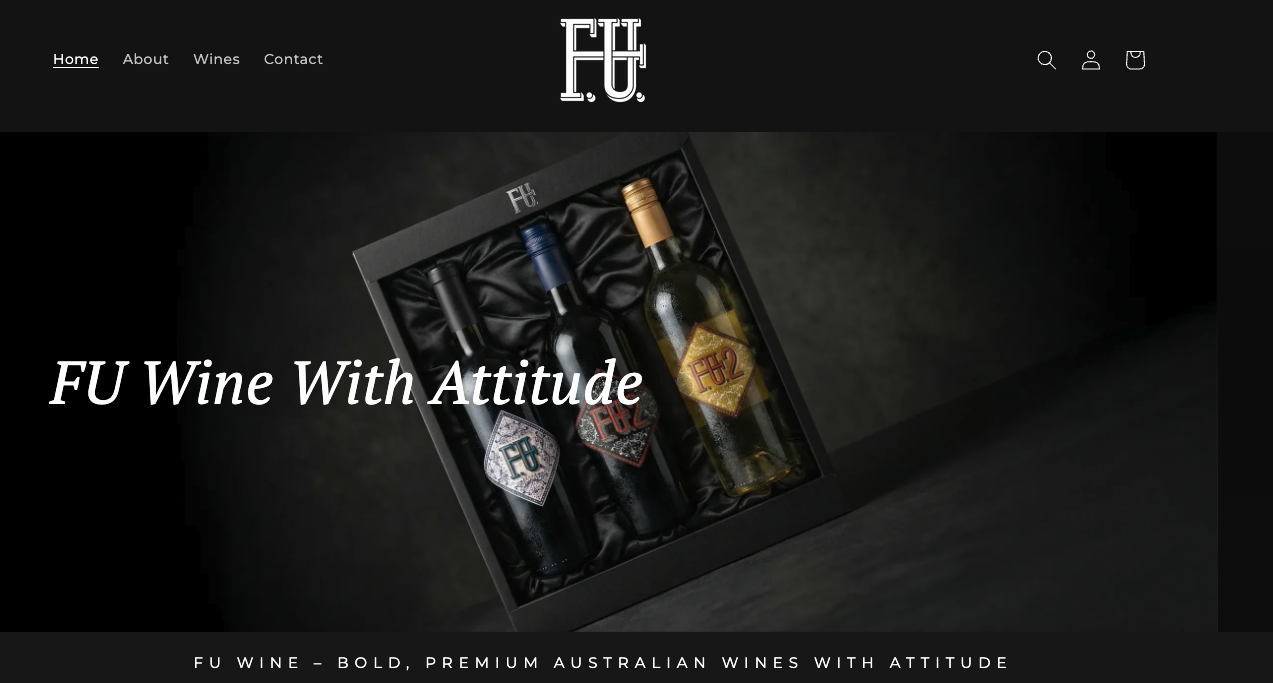
Our carefully curated collection focuses on high-scoring wines from exceptional vintages, sourced through direct relationships that bypass traditional distribution markups. Whether you’re exploring our Barossa Valley Cabernet Sauvignon 2010 or discovering the elegant Barossa Valley Pinot Noir 2024, you’ll find quality that matches or exceeds wines scoring 90+ points without the inflated pricing. Every bottle represents the value-quality sweet spot this guide taught you to recognise, selected by experts who understand that great wine shouldn’t require a second mortgage.
FAQ
What is the most common wine scoring system?
The 100-point scale dominates wine criticism, scoring wines from 50 to 100 points based on quality attributes like balance, aroma, structure, and finish. Critics including Robert Parker, Wine Spectator, and Jeb Dunnuck use this system to provide consumers with standardised quality assessments.
Do small differences in wine scores really matter?
Small differences of 1-2 points often lack statistical significance due to score inflation, tasting variability, and human palate limitations. Broader score ranges of 3-4 points provide more reliable quality indicators than minute gaps that may reflect tasting order or daily palate variation rather than meaningful quality differences.
How can I find good wine value using scores?
Target wines scoring 85-89 points, which deliver solid quality at better prices than 90+ bottles commanding premium pricing. Cross-check multiple critic scores to identify consensus quality assessments, and seek wines underpriced for their score bracket from lesser-known regions or unfashionable varieties. F.U. Wine’s collection specialises in finding these value opportunities.
Why do different critics score the same wine differently?
Critic palate preferences, tasting conditions, and stylistic biases influence scoring outcomes significantly. Some critics favour bold, fruit-forward wines whilst others prioritise elegance and restraint, leading to score variations of 3-5 points for identical bottles. Cross-referencing multiple critics helps average out individual preferences.
Should I only buy wines scoring 90 points or higher?
No, the 90-point threshold triggers disproportionate price premiums without proportional quality improvements. Wines scoring 85-89 points often deliver exceptional quality and drinking pleasure at fraction of the cost, representing the value sweet spot for enthusiasts seeking quality without paying for score inflation and market hype.