

3 Steps to Ship Wine in Summer: Insulation, Carrier Choices, and Timing
Shipping wine in summer is possible, but it’s a risk you manage, not one you ignore. If you can delay dispatch until temperatures ease, do it. If you can’t, take three actions: choose a temperature-controlled or expedited service, pack with proper insulation and phase-change gel, and track the shipment like it’s cargo that actually matters. Heat damage doesn’t reverse itself.
TL;DR:
- Cold chain shipping or two-day expedited services are essential for protecting valuable wine during summer, as prolonged heat exposure causes irreversible damage.
- Proper insulation with phase-change gel packs, placed above and below bottles, can maintain internal temperatures between 10 to 18°C, critical for safeguarding wine quality.
- Shipping schedules should avoid weekends, with shipments ideally dispatched Monday to Wednesday, to minimize time spent sitting in hot courier depots.
- Heat damage signs include cork swelling, leakage, and sticky labels, requiring immediate refrigeration and prompt claims with sellers or carriers.
- Retailers emphasizing careful packing and offering heatwave management options help ensure rare or expensive wines arrive intact during hot months.
Table of Contents
- Quick summer shipping checklist before you book
- How heat damages wine (and why it doesn’t come back)
- Packaging and insulation that actually holds up
- Choosing a carrier and service level for summer
- Timing and logistics that cut your risk
- What to do if you suspect heat-damaged wine
- A step-by-step workflow for your summer order
- FU Wine’s take on summer shipping
- Buying rare bottles without the summer guesswork
- Sources
- FAQ
Quick summer shipping checklist before you book
Before you hand a single bottle to a courier, run through this. It takes five minutes and saves you a ruined case of something you can’t easily replace.
- Decide first: can this wait for a cooler week, or does it have to move now?
- Book a temperature-controlled service where one exists, or step up to 2-day expedited shipping as the minimum fallback.
- Confirm the box uses high-performance insulation with phase-change gel packs properly positioned, not just bubble wrap and hope.
- Schedule dispatch Monday to Wednesday and add adult signature plus full tracking.
- Get written confirmation from the seller or packer on packing method and ask about insurance or replacement cover.
Skip any one of these and you’re gambling on a courier’s warehouse not sitting in direct sun for a weekend. It happens more than people think.
How heat damages wine (and why it doesn’t come back)
Wine is a living, chemically active liquid, and heat speeds up every reaction inside the bottle. Sustained exposure above roughly 25°C accelerates ageing, flattening the fruit and pushing the wine toward flat, tired characters well before its time, according to Wineshippingboxes. Push higher, into the 40 to 50°C range, and the wine effectively cooks. Corks can push outward, seals fail, and the aromatics turn stewed or jammy in a way that no amount of cellaring will fix.
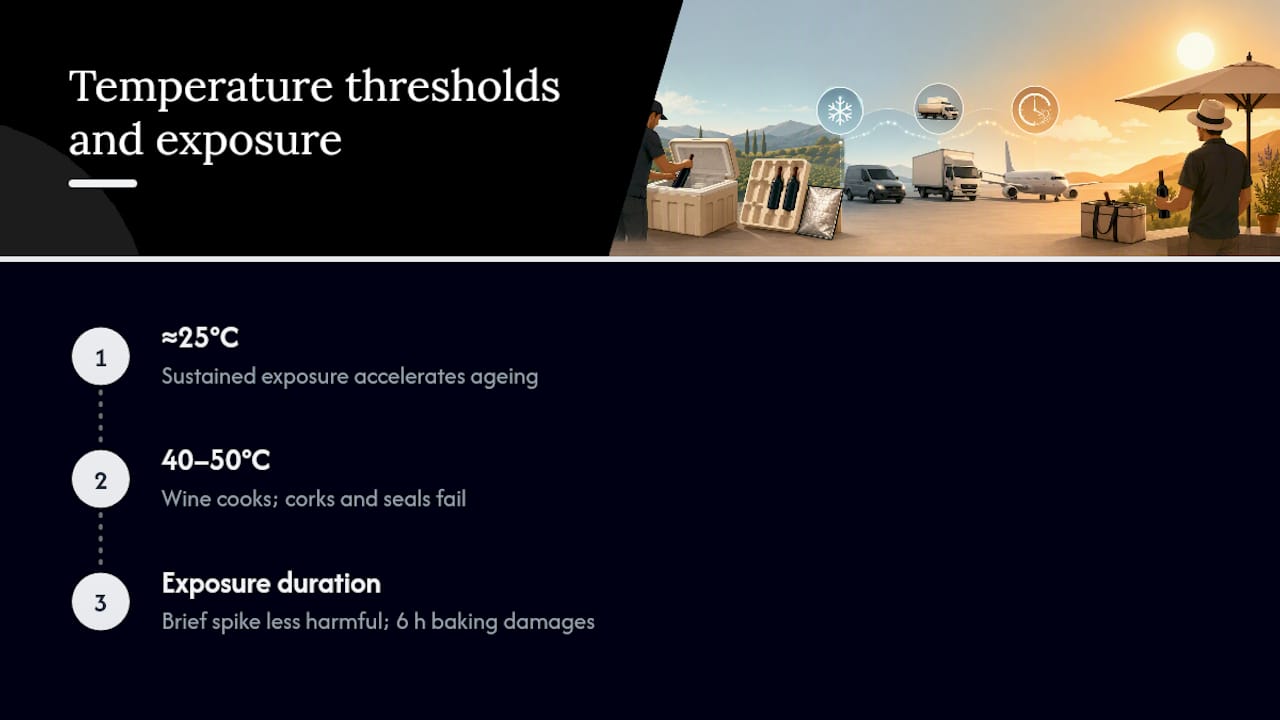
The number that should worry you: a delivery van sitting in direct sun, or a cardboard box left on a hot porch, can climb well past 30°C within a short stretch of exposure, based on industry reporting from WineShippingBoxes.com. Duration matters as much as peak temperature. A brief spike during loading is one thing; six hours baking on a truck is another entirely, and it’s the cumulative exposure that tends to do the real damage.
Packaging and insulation that actually holds up
Not all insulated boxes are equal, and the difference shows up the moment temperatures climb. Thin foam liners slow heat transfer for maybe an hour. Dense moulded pulp or high-density EPS foam, paired with phase-change gel packs, can hold internal temperatures in the 10 to 18°C range for far longer, according to Cryolux. That range is the target: cool enough to protect the wine, not so cold you’re inviting condensation problems.
Packing it properly means:
- Immobilise every bottle so nothing shifts or knocks during transit.
- Place gel packs both above and below the bottles, not just on one side, for even thermal buffering.
- Use a leak-proof liner and, where humidity is a concern, a small desiccant packet.
- Add reflective liners or extra EPS panels to slow heat transfer further, and double-box for long-haul transit, a method detailed by Packwo’s shipping guide.
- Check that gel packs are fully sealed before packing. A split pack means liquid pooling against labels and cardboard.
Pro Tip: Freeze your gel packs solid before packing, then let them sit for ten minutes at room temperature first. Fully frozen packs against glass can cause thermal shock in extreme cases, and a slightly softened pack still holds cold for hours.
Some carriers restrict liquid-filled packs in certain shipping classes, so confirm your gel packs comply before the box leaves your hands.
Choosing a carrier and service level for summer
Not every courier will even carry alcohol. Most require the shipper to hold a liquor licence or to ship through a winery or retailer with existing carrier agreements, which is why direct-to-consumer wine sellers usually manage the account relationship rather than leaving it to the buyer. Once that’s sorted, the service tier you pick matters more in summer than any other season.
- Temperature-controlled service is the safest option. It costs more, but for anything rare or expensive, EasyPost’s shipping guidance points to this tier as the standard recommendation for hot months.
- 2-day or expedited air is a solid middle ground. Less time in transit means less cumulative heat exposure, even without active refrigeration.
- Standard ground is the riskiest choice from late spring through early autumn. Multi-day transit through regional hubs means more time sitting on loading docks in the sun.
Before booking, ask the carrier directly: do they guarantee a temperature range, do they hold parcels over weekends, what tracking detail do you get, is signature required, and what’s covered under their claims process if the wine arrives damaged. A cold chain shipping option at 13°C is worth the premium for anything genuinely collectible.
Timing and logistics that cut your risk
When you ship often matters more than how you pack. A box sitting in a courier depot over a weekend is the single most common cause of heat damage, because most depots aren’t climate controlled and Saturday pickups can mean 48 hours of exposure before a Monday delivery.
- Ship Monday to Wednesday so the parcel isn’t sitting anywhere over a weekend.
- Choose routes with fewer hub transfers. Every transfer point is another loading dock, another few hours outdoors.
- For short distances, consider local pickup, a same-city courier, or simply carrying the bottles yourself if you’re travelling that way. It sounds old-fashioned, but it removes the risk entirely.
Shipping professionals who move high-value bottles regularly treat the shipping window as more reliable protection than packaging alone. Waiting three days for a cooler forecast often beats any box on the market.
What to do if you suspect heat-damaged wine
Damage isn’t always obvious from the outside, but there are tells. Check the cork for signs it’s pushed upward, check the capsule for leakage or staining, and check the label for a “cooked” or slightly sticky residue where wine has seeped past the seal.
- Inspect the package the moment it arrives, especially if it’s sat on a porch during a heatwave.
- Refrigerate any unopened bottles immediately, even if they look fine, to halt further heat exposure.
- Photograph the box, the packing materials, and the bottles themselves before you move or open anything.
- Contact the seller or carrier the same day. Most claims processes want documentation within a narrow window, and delays weaken your case.
Pro Tip: Keep the original box and all packing material until any claim is resolved. Carriers and sellers will often ask for it as proof of how the shipment was packed.
A step-by-step workflow for your summer order
Before you even place the order, ask the seller three things: what packaging they use, what carrier and service tier they default to in summer, and whether they offer to hold shipments during heatwaves. Their answers tell you a lot about how seriously they take this.
- At checkout, confirm the service level. If temperature-controlled or expedited isn’t offered automatically for summer orders, ask for it.
- Lock in a dispatch day early in the week and provide a delivery address where someone can receive and sign immediately.
- On delivery day, bring the package inside within minutes, not hours. Don’t let it sit on a step in direct sun.
- Run your inspection checklist before you let the wine rest and move it into proper storage.
- If the forecast looks brutal and you have flexibility, ask the seller to hold the shipment. A week’s delay beats a ruined case.
FU Wine’s take on summer shipping
Selling rare and cellar-aged bottles means we take this seasonally seriously. Our approach leans on the same principles covered here: proper insulation, sensible carrier choices, and a willingness to hold shipments when the forecast doesn’t cooperate. We’d rather a customer wait a few extra days than open a box that’s been cooked on a truck. If you’re building a collection, our guide on home wine storage covers what happens after the bottle survives the trip.
— Damien
Buying rare bottles without the summer guesswork
Some retailers source rare, cellar-aged, and high-scoring bottles at prices well below traditional retail, and stress that summer shipping needs extra care, not extra risk. That’s the whole point of skipping the pretentious markups other sellers charge for the same due diligence: you get the bottle, the protection, and the honesty about what heat does to wine, all in one place.

For anyone shipping something genuinely valuable, a specialist courier offering white-glove, temperature-aware handling is worth comparing against standard options, particularly for allocation releases or anything irreplaceable. If you’re sending a bottle as a gift rather than to yourself, our rundown on legal ways to send wine as a gift covers the extra steps involved.
Browse the current rotating catalogue on FU Wine, check the shipping notes on any listing before you buy, and if a heatwave is forecast for your area, message us. We’ll talk through holding the shipment rather than sending it into a delivery van at 35°C.
Sources
FAQ
What temperature is too hot to ship wine?
Sustained exposure above roughly 25°C starts accelerating ageing, and temperatures that delivery vehicles and boxes in direct sun can reach, sometimes exceeding safe levels, can permanently cook the wine according to WineShippingBoxes.com.
Does wine go bad in hot temperatures?
Yes. Heat accelerates chemical reactions inside the bottle, flattening fruit character and pushing the wine toward stewed, cooked flavours that don’t reverse once they set in.
Can I send wine with a standard postal service?
Most standard postal and courier services either restrict or outright prohibit shipping alcohol without a licensed sender, so wine typically needs to move through a retailer or winery with an existing carrier agreement rather than a personal parcel booking.
What is the 20 minute wine rule?
It refers to keeping wine out of extreme heat, such as a hot car or direct sun, for only brief periods, since even short exposure at very high temperatures can begin degrading delicate aromatics.