

Wine allocation explained: Unlock premium bottles and real value
TL;DR:
- Wine allocation is a controlled system based on loyalty and relationship, not price.
- Consistent, full-portfolio purchases over years improve chances of securing premium wines.
- Building genuine relationships and avoiding reselling are key to maintaining allocation access.
You can have the money. You can have the taste. But if your name isn’t on the list, you’re not getting the bottle. That’s the quiet, maddening truth about the world’s most sought-after wines. Price isn’t the gatekeeper. Allocation is. For wine enthusiasts who are tired of paying inflated secondary market prices or simply missing out entirely, understanding how wine allocation works is the single biggest unlock available. This guide breaks down exactly what allocation is, why winemakers use it, how to get on the right lists, and how to make the system work in your favour without losing your mind in the process.
Table of Contents
- What is wine allocation and who gets access?
- Why winemakers use allocation: Scarcity, strategy, and game theory
- The pros and cons of chasing wine allocations
- How to actually get allocated: Insider strategies
- Why wine allocation remains the secret handshake (and how not to overthink it)
- Access premium wines without the runaround
- Frequently asked questions
Key Takeaways
| Point | Details |
|---|---|
| Access not price | Wine allocation decides who gets premium bottles, not just who can pay the most. |
| Scarcity drives value | True and managed scarcity both make allocations highly sought after, affecting price and availability. |
| Strategy is essential | Consistent portfolio commitment and strong relationships are key to earning and keeping wine allocations. |
| Major savings | Allocation wines are often 200–500% cheaper than secondary market prices. |
| Success takes patience | Getting allocated premium wines can require years of loyalty and smart portfolio moves, but the rewards are genuine. |
What is wine allocation and who gets access?
Let’s cut straight to it. Wine allocation is the controlled distribution of limited quantities of premium, hard-to-find wines to select buyers, based on criteria like purchase history, relationship strength, and portfolio commitment. It’s not a raffle. It’s not first-come, first-served. It’s a system built on loyalty, trust, and sometimes a fair bit of patience.
Think of it as distribution for collectors that operates almost like a private club. Wineries decide in advance how many cases they’ll release, then divide those cases among their most valued customers: mailing list members, long-standing trade accounts, and loyal retail partners. The general public often gets whatever’s left, which at the top end of the market is frequently nothing at all.
Why does this exist? Two reasons. First, genuine scarcity. Burgundy Grand Cru vineyards are tiny. A single climat might produce fewer than 300 cases in a good year. There simply isn’t enough wine to go around, so producers must ration it carefully. Second, strategic control. Wineries want their bottles in the hands of people who will appreciate and cellar them, not flip them on the secondary market the following week.
In Australia, the allocation model is alive and well. Cult producers like Giaconda in Victoria, Wendouree in Clare Valley, and Bass Phillip in Gippsland operate tight mailing lists with years-long waitlists. Getting on one of these lists often requires a personal introduction or years of demonstrated loyalty to the producer.
“Allocation isn’t about who has the deepest pockets. It’s about who has the longest relationship.”
Here’s a snapshot of how some famous allocations compare:
| Producer | Region | Cases per year | Waitlist status |
|---|---|---|---|
| Romanée-Conti (DRC) | Burgundy, France | Under 500 | Decades, via négociants only |
| Screaming Eagle | Napa Valley, USA | 400 to 850 | 5,000+ names |
| Giaconda | Beechworth, Australia | Under 1,000 | Years, mailing list only |
| Wendouree | Clare Valley, Australia | Very limited | Closed list, invitation only |
| Bass Phillip | Gippsland, Australia | Under 500 | Long waitlist |
The table tells the story plainly. These wines are not impossible to get. But they are impossible to get without a plan.
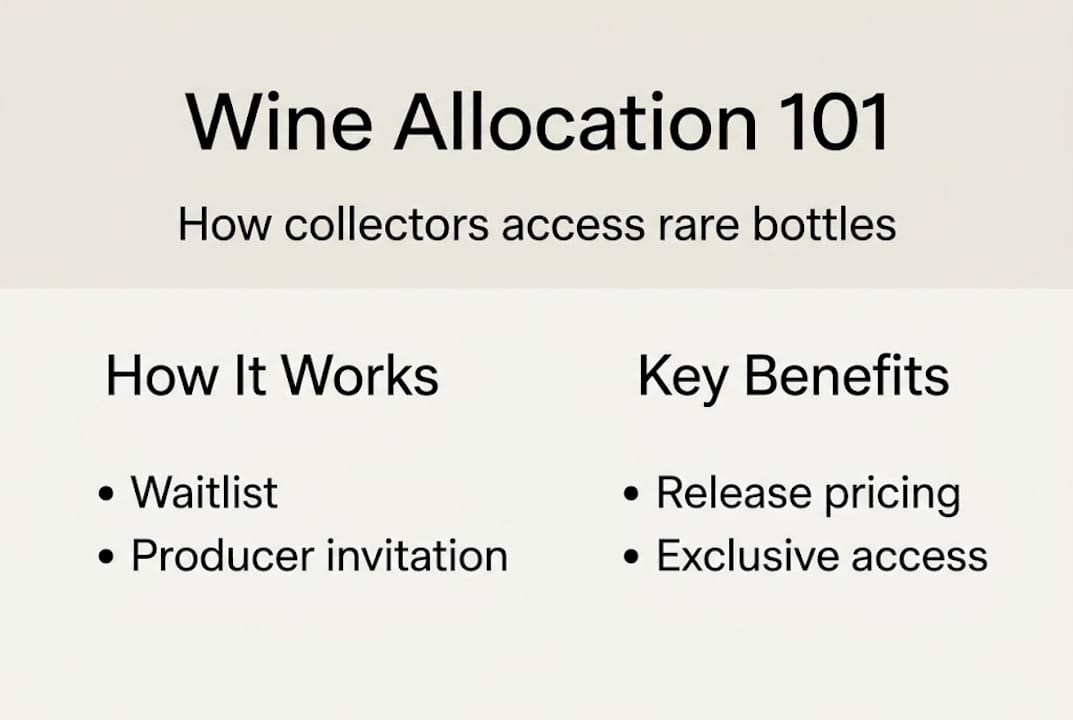
Why winemakers use allocation: Scarcity, strategy, and game theory
Not every allocation is born from necessity. Some is pure strategy, and understanding the difference changes how you approach the game.
Genuine scarcity is real. Romanée-Conti produces fewer than 500 cases per year across its entire range, with the flagship Romanée-Conti itself yielding well under that. Burgundy Grand Cru vineyards are measured in hectares, not kilometres. The soil, the climate, the ancient vines, none of it can be scaled. When a producer in this region allocates, it’s because there is simply no other option.
Then there’s managed scarcity. Napa cult producers like Screaming Eagle and Harlan Estate produce wines in quantities that could, theoretically, reach a wider audience. But deliberate restriction inflates desirability. It creates a collector psychology where the wine’s rarity becomes part of its identity and value. Some top producers are oversubscribed by 500% or more, meaning demand is five times what supply can meet.
Understanding how wine deals work at this level reveals a few consistent tactics producers use to protect their allocation systems:
- Bundling: Allocated bottles are tied to purchases of other wines in the producer’s range. Want the flagship? You’ll need to buy the second label too.
- Blacklisting resellers: Producers actively monitor the secondary market. If your allocated bottles show up at auction shortly after release, expect to lose your spot permanently.
- Oversubscription management: Lists are deliberately kept longer than supply can satisfy, creating a queue that rewards patience and annual commitment.
The comparison below shows how the two types of scarcity play out differently:
| Type | Driver | Example | Collector impact |
|---|---|---|---|
| True scarcity | Tiny yields, famous terroir | DRC, Romanée-Conti | Near-impossible access, generational waitlists |
| Managed scarcity | Strategic limits, hype | Screaming Eagle, Harlan | Long waitlists, high commitment, strong resale premiums |
For enthusiasts following the wine scarcity guide, the key insight is this: both types reward those who engage early, stay consistent, and treat the relationship with the producer as a long-term investment, not a one-off transaction.
The pros and cons of chasing wine allocations
Here’s the honest version. Allocation lists are genuinely powerful tools for accessing premium wine at fair prices. They’re also a commitment that not everyone is ready for.
On the upside, allocation wines are sold at release prices. That’s the original price set by the producer, before the secondary market gets its hands on them. For context, secondary market premiums on cult wines regularly run between 200% and 500% above release price. Caymus Special Selection, for example, has seen secondary premiums of 300 to 400%. Getting allocated means you skip that markup entirely.
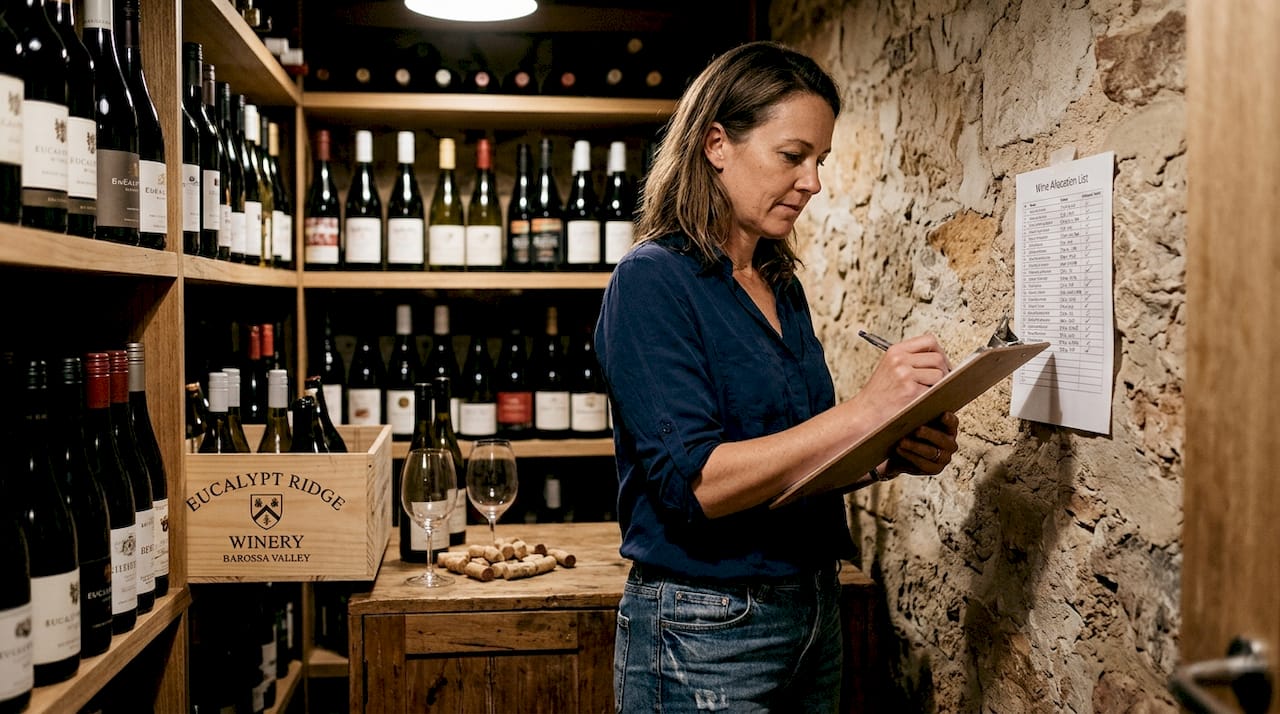
The wine investment benefits for those on the right lists are substantial. You get first-right access, original pricing, and bottles that are genuinely hard to find elsewhere. For collectors, that’s a significant edge.
But let’s be real about the challenges too.
Pros:
- Access to wines at release price, often far below secondary market value
- First opportunity to purchase before bottles disappear
- Building a genuine relationship with producers and distributors
- Potential to cellar wines that appreciate significantly over time
- Access to affordable rare varieties that simply don’t appear on retail shelves
Cons:
- Waitlists can stretch for years, especially for internationally recognised labels
- Annual buying commitments are often non-negotiable
- Bundling requirements mean buying wines you may not want
- Reselling is usually prohibited and monitored
- Screaming Eagle’s waitlist sits at over 5,000 names with only 400 to 850 cases produced annually
Pro Tip: If you cherry-pick only the best vintages and skip others, many producers will quietly drop you from the list. Consistency is the currency of allocation. Show up every year, buy across the range, and your position strengthens.
How to actually get allocated: Insider strategies
Right. You’re in. You want access. Here’s what actually works.
The foundation is consistent full-portfolio purchasing over three to five years. That means not just buying the headline wine. It means supporting the producer’s second labels, whites, entry-level releases, everything. Producers notice who buys broadly and who only shows up for the prestige bottle.
Relationship-building with distributors matters just as much as direct winery contact. In Australia, many premium wines move through specialist distributors and fine wine retailers. Getting to know the people behind those businesses, attending tastings, being a reliable customer, opens doors that a cold email never will.
Here are five concrete strategies that work:
- Join mailing lists early. Even if the waitlist is long, being on it is the first step. Some Australian producers open their lists periodically, so timing matters.
- Buy consistently across the portfolio. Don’t just grab the trophy wine. Support the whole range to signal genuine loyalty.
- Attend cellar door events and tastings. Face-to-face relationships with winemakers and sales teams carry real weight.
- Work with a specialist wine retailer or curator. A good retailer with existing allocations can give you access you couldn’t get alone. More on this in the expert rare wine guide.
- Never flip. Reselling allocated wine is the fastest way to lose your spot and your reputation in a tight-knit community.
Pro Tip: Using wine curators or specialist clubs can shortcut years of relationship-building. A curator with existing producer relationships can open allocation doors that would otherwise take a decade to unlock on your own.
The game rewards patience and genuine enthusiasm. Producers can tell the difference between a collector who loves their wine and someone chasing an asset. Be the former.
Why wine allocation remains the secret handshake (and how not to overthink it)
Here’s a take you won’t find in most guides. Allocation isn’t really about exclusivity. It’s about appreciation. The producers running the tightest lists aren’t trying to be elitist. They’re trying to make sure their wine ends up with people who actually care about it. That’s a different thing entirely.
The mistake most enthusiasts make is treating allocation like a competition to be won. They chase the biggest names, obsess over waitlist positions, and lose the plot somewhere between Burgundy and Napa. The joy of wine gets buried under the anxiety of access.
The smarter move? Be selective. Identify two or three producers whose wines genuinely excite you, then commit to those relationships properly. You don’t need every cult label in your cellar to drink extraordinarily well. Meaningful curation, as we talk about when helping people build a versatile portfolio, always beats chasing hype.
The allocation game is worth playing. Just don’t let it play you.
Access premium wines without the runaround
Not everyone has five years to spend climbing a waitlist. That’s exactly where FU Wine comes in.
FU Wine sources rare and premium bottles outside the traditional allocation maze, bringing them directly to you at prices that make sense. No gatekeeping. No bundling. No years of waiting. Just genuinely outstanding wine at a fraction of what you’d pay elsewhere. Whether you’re building a serious collection or simply want to drink better without the markup games, explore the premium wine collection and see what’s available right now. Or browse all wines and find your next favourite bottle without the runaround.
Frequently asked questions
Can anyone join a wine allocation list?
Most lists are invite-only or carry long waitlists, but some Australian wineries open their allocations to serious buyers who demonstrate consistent commitment. Allocation access is typically based on purchase history and relationship strength rather than open applications.
How long does it take to get allocated premium wines?
It depends entirely on the producer. Some Australian wineries can move you up relatively quickly with consistent buying, while international icons like Screaming Eagle carry waitlists of 5,000 names or more, meaning years of patience are often required.
What happens if I resell allocated wine?
Flipping allocated wine is taken seriously. Most producers actively monitor the secondary market, and blacklisting resellers is standard practice. Lose your spot once for reselling, and it’s rarely given back.
Are allocation-only wines really a better deal?
Absolutely. Allocation wines sell at release prices, which means you avoid the 200 to 500% secondary premiums that cult bottles routinely attract once they hit the open market. It’s one of the most significant pricing advantages available to serious wine buyers.
How can I improve my allocation status?
Support the producer annually across their full range and invest in genuine relationships with distributors. Consistent full-portfolio purchases over three to five years is the most reliable path to moving up any serious allocation list.