

Wine pairing with crème brûlée: your expert guide
TL;DR:
- Sweet, botrytized wines like Sauternes and aged Tawny Port are ideal pairings for crème brûlée due to their flavor compounds and balanced sweetness. Proper pairing requires matching or exceeding the dessert’s sweetness and selecting wines with vibrant acidity to refresh the palate. Alternative options include demi-sec Champagne and aromatic Rieslings, especially when infused with herbs during preparation.
The best wines for crème brûlée are sweet, botrytized whites like Sauternes or oxidatively aged fortified wines like 20-year-old Tawny Port. These are not arbitrary suggestions. The science is real: botrytized wines contain sotolon, a compound also found in caramelised sugar, creating a direct flavour bridge between glass and spoon. Get the pairing right and the dessert tastes richer, the wine tastes more alive, and the whole experience lands somewhere between indulgent and genuinely memorable. Get it wrong and you’ve wasted both.
Why wine pairing with crème brûlée starts with sweetness and acidity
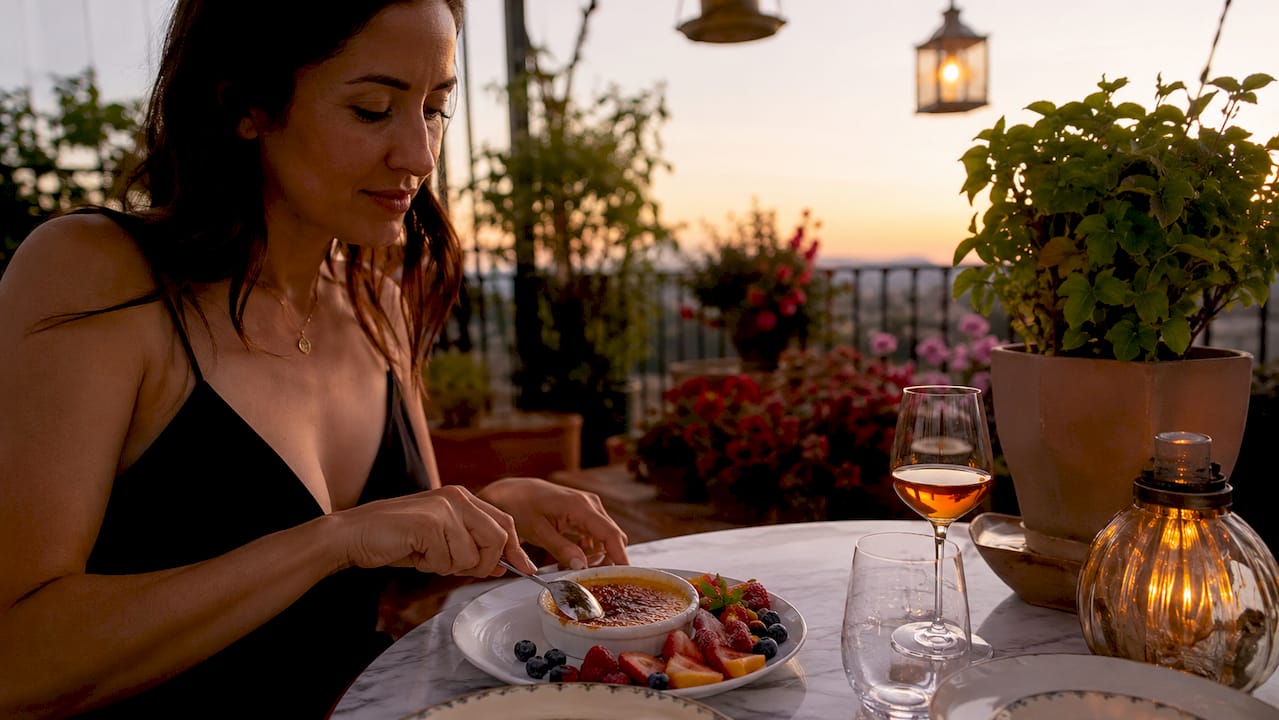
The single most important rule in dessert wine pairing is this: wine must be at least as sweet as the dessert, and ideally sweeter. When the dessert outpaces the wine in sweetness, the wine tastes sharp, thin, and almost bitter. That’s not a subtle flaw. It ruins the glass entirely.
Crème brûlée is a rich, egg-yolk-heavy custard with a caramelised sugar crust on top. That combination is dense, fatty, and sweet. A dry Chardonnay or a Pinot Noir simply cannot hold its own against that. The wine tastes hollow, and the dessert tastes cloying. It’s a lose-lose.
Acidity is the other half of the equation. A wine with good acidity cuts through the fat in the custard, refreshing your palate between bites. Without it, the richness stacks up and the whole experience becomes heavy. Botrytized wines like Sauternes are brilliant here because they carry both: concentrated sweetness and a vibrant acid backbone that keeps things lively.
The beginner mistake is pairing dry, tannic wines with sweet desserts. Tannins clash with sugar and fat in a way that feels genuinely unpleasant. Think of biting into a piece of dark chocolate after a sip of Cabernet Sauvignon. That metallic, drying sensation is exactly what you want to avoid at the dessert course.
- Check sweetness first. The wine must match or exceed the dessert’s sweetness level.
- Look for acidity. High-acid sweet wines refresh the palate rather than adding to the heaviness.
- Avoid tannins. Red wines with strong tannins clash with creamy, sugar-rich desserts.
- Consider fat content. The richer the custard, the more acidity you need in the wine to balance it.
Pro Tip: If you’re unsure whether a wine is sweet enough, taste it on its own before serving. If it tastes dry or sharp next to a spoonful of crème brûlée, swap it out.
Sauternes and aged Tawny Port: the benchmark pairings
These two wines come up in every serious conversation about crème brûlée for good reason. They are not just popular choices. They are structurally and chemically suited to the dessert in ways that most wines simply are not.
Why Sauternes works so well
Sauternes is a sweet white wine from Bordeaux, France, made primarily from Sémillon and Sauvignon Blanc grapes affected by Botrytis cinerea, a beneficial mould that concentrates sugars and creates complex flavour compounds. The result is a wine with honey, apricot, vanilla, and caramel notes that mirror crème brûlée almost note for note.
The sotolon compound in botrytized wines is the same compound found in caramelised sugar. That chemical similarity is not a coincidence. It creates an almost seamless flavour connection between the wine and the dessert’s burnt sugar crust.
Vintage matters enormously with Sauternes. Rich botrytis vintages are required to hold up against crème brûlée’s intensity. Lighter years produce wines that feel thin and watery next to the dessert. Look for well-regarded years from producers in the Sauternes and Barsac appellations. You want concentration, not delicacy, here.
Why 20-year-old Tawny Port is the other great choice
Tawny Port from the Douro Valley in Portugal is aged oxidatively in small barrels, which strips away the deep red colour and builds up caramel, roasted nut, toffee, and dried fruit flavours over time. A 20-year-old Tawny Port develops caramel and toffee notes that echo the burnt sugar crust of crème brûlée directly.
The age statement is the critical factor. Younger Ports lack the rancio complexity needed to resonate with the dessert. A 10-year Tawny is pleasant on its own but feels one-dimensional next to crème brûlée. The 20-year version has the depth to match the dessert’s layered richness. Brand matters far less than age here. Buy by the age statement, not the label.
| Wine | Flavour profile | Why it works with crème brûlée |
|---|---|---|
| Sauternes | Honey, apricot, vanilla, caramel, vibrant acidity | Sotolon compound mirrors caramelised sugar; acidity cuts through custard fat |
| 20-year Tawny Port | Caramel, toffee, roasted nuts, dried fruit | Oxidative complexity echoes burnt sugar crust; rich texture matches custard |
Pro Tip: Serve Sauternes slightly chilled at around 10–12°C and Tawny Port at around 14–16°C. Too cold and the aromatics shut down. Too warm and the sweetness becomes cloying.
What about sparkling wines and Riesling?
Not everyone wants to pour a full glass of Sauternes at the end of a long dinner. That’s fair. There are alternatives that work well, though they operate on a different principle. Instead of mirroring the dessert’s flavours, they contrast with them.
- Demi-sec Champagne carries enough residual sugar to avoid the bitterness problem, while its bubbles and acidity act as a palate cleanser between bites. The effervescence lifts the heaviness of the custard and refreshes the mouth in a way that still sweet wines cannot. It’s a lighter, more playful pairing.
- Brut Champagne is riskier. It sits on the drier side, which means it can taste sharp against the sweetness of the dessert. If you go this route, serve it with a crème brûlée that has been dialled back on sugar, or pair it with a version that uses less caramelised topping.
- Mosel Riesling Trockenbeerenauslese is the choice for herb-infused crème brûlée. When you add thyme or orange blossom to the custard, the subtle bitterness from the herbs balances the sweetness and opens the door to more aromatic, complex wines. A Mosel Trockenbeerenauslese brings stone fruit, petrol, and floral notes that play beautifully against those herbal layers.
- Late-harvest Riesling from the Clare Valley or Eden Valley in South Australia is worth exploring for a local option. These wines carry the same high-acid, concentrated-sweet profile that makes German Riesling work, with a distinctly Australian character.
The herb infusion must be done during cooking to integrate the bitterness properly. Adding fresh herbs as a garnish does not achieve the same effect and will not shift the pairing dynamic in the same way.
How to choose and serve the right wine: a practical guide
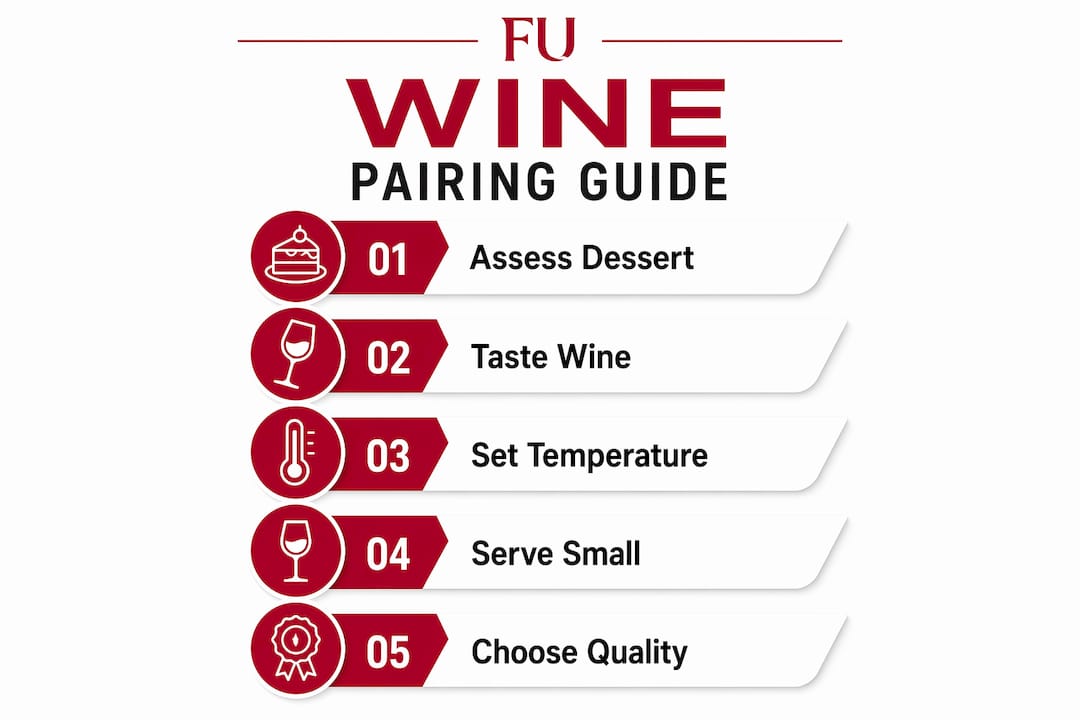
Knowing which wines work is one thing. Knowing how to select, evaluate, and serve them is what separates a good pairing from a great one.
Step 1: Assess the dessert first
Before you choose a wine, taste the crème brûlée on its own. How sweet is it? How thick is the custard? Is there any infused flavour like vanilla bean, lavender, or thyme? The answers shape your wine choice. A classic vanilla crème brûlée calls for Sauternes or Tawny Port. An herb-infused version opens up to Riesling. A lighter, less sweet version can handle demi-sec Champagne.
Step 2: Evaluate the wine before serving
Taste the wine on its own before the meal ends. It should taste noticeably sweet, not just fruity. The acidity should be present but not aggressive. If the wine tastes dry or sharp on its own, it will taste worse next to the dessert.
Step 3: Get the serving temperature right
| Wine | Serving temperature | Why |
|---|---|---|
| Sauternes | 10–12°C | Preserves acidity and lifts aromatics |
| 20-year Tawny Port | 14–16°C | Allows caramel and nut notes to open up |
| Demi-sec Champagne | 8–10°C | Keeps bubbles tight and acidity fresh |
| Mosel Riesling TBA | 10–12°C | Balances sweetness with floral complexity |
Step 4: Keep portions small
Sweet and fortified wines are rich. A 60–90ml pour is the right amount at the dessert course. A full glass of Sauternes alongside a full serve of crème brûlée is genuinely too much sweetness. Less is more here. For a guide to choosing wines for entertaining, smaller pours of high-quality sweet wine always land better than generous pours of mediocre ones.
Step 5: Source quality bottles without overpaying
Sauternes and aged Tawny Ports can be expensive at retail. In Australia, you’ll find them at specialist bottle shops, fine wine retailers, and online. The key is knowing what to look for. For Sauternes, prioritise the vintage and the botrytis intensity on the label. For Tawny Port, look for the 20-year age statement from producers like Ramos Pinto, Quinta do Crasto, or Graham’s. For rare bottles without markups, a good wine curator can source these at prices that make the experience genuinely accessible.
Pro Tip: Buy a half-bottle of Sauternes rather than a full bottle. Half-bottles are common in this category and mean you’re not stuck with leftover sweet wine after the dessert course.
Key takeaways
The best wine pairing for crème brûlée is a sweet, botrytized wine like Sauternes or a 20-year-old Tawny Port, chosen for their shared flavour compounds and structural balance with the dessert’s richness and caramelised sugar.
| Point | Details |
|---|---|
| Sweetness must match or exceed the dessert | A wine that is drier than the dessert will taste sharp and bitter, ruining the pairing. |
| Sauternes is the classic benchmark | Its sotolon compound mirrors caramelised sugar, creating a direct chemical flavour bridge. |
| 20-year Tawny Port echoes the burnt sugar crust | Age matters more than brand; younger Ports lack the rancio complexity needed. |
| Sparkling wines offer contrast, not mirror | Demi-sec Champagne cleanses the palate rather than matching flavours, which works well. |
| Herb-infused crème brûlée changes the pairing | Adding thyme or orange blossom opens the door to aromatic wines like Mosel Riesling. |
My honest take on crème brûlée pairings
I’ve tasted a lot of wine next to a lot of crème brûlée, and the pairing that still surprises people every time is a well-aged Tawny Port. Most folks expect Sauternes, and Sauternes is brilliant. But there’s something about the way a 20-year Tawny’s caramel and roasted nut character locks onto that burnt sugar crust that feels almost theatrical. You crack the top of the custard, take a sip of the Port, and the two just click.
Where I see people go wrong is in chasing complexity for its own sake. A Mosel Trockenbeerenauslese is a genuinely exciting pairing with a thyme-infused crème brûlée, but if the herb isn’t cooked into the custard properly, the whole thing falls apart. The wine ends up fighting the dessert instead of dancing with it. Get the fundamentals right first. Match sweetness. Find acidity. Then experiment.
The other thing I’d push back on is the idea that great dessert wine has to cost a fortune. A well-chosen 20-year Tawny from a solid producer, sourced at the right price, will outperform a mediocre Sauternes at twice the cost. Know what you’re buying and why. That’s the whole game.
— Damien
Find the right bottle without the pretentious price tag
You’ve done the hard work of knowing what to look for. Now you just need to find it without getting gouged.
Com sources premium botrytized whites, aged Tawny Ports, and rare dessert wines at prices that make the experience worth repeating. No inflated retail markups. No gatekeeping. Just quality bottles that belong on your table next to a properly torched crème brûlée. The selection rotates, deals move fast, and the wines are the real thing. Browse the current wine collection and find your next pairing before someone else does.
FAQ
What is the best wine for crème brûlée?
Sauternes is the classic choice, with its botrytis-driven honey, apricot, and vanilla notes mirroring the dessert’s caramelised sugar. A 20-year-old Tawny Port is an equally strong option for its caramel and roasted nut complexity.
Can you pair sparkling wine with crème brûlée?
Yes, demi-sec Champagne works well as a palate cleanser, using its bubbles and acidity to lift the richness of the custard between bites. Brut Champagne is riskier and works best with a less sweet version of the dessert.
Why does dry wine taste bad with crème brûlée?
A wine that is drier than the dessert tastes sharp and bitter because the dessert’s sweetness overwhelms the wine’s fruit. The wine must be at least as sweet as the dessert to taste balanced.
Does the vintage of Sauternes matter for this pairing?
Yes. Rich botrytis vintages are needed to match crème brûlée’s intensity. Lighter years produce wines that feel thin and watery next to the dessert’s richness.
Can I pair a local Australian wine with crème brûlée?
Late-harvest Riesling from the Clare Valley or Eden Valley in South Australia is a strong local option. These wines carry the high-acid, concentrated-sweet profile needed to balance the dessert’s richness.