

Wine checklist for restaurants: the complete guide
TL;DR:
- A solid wine checklist is essential for restaurants to build a profitable, guest-pleasing program by selecting, storing, and serving wine confidently. It should align with your concept, establish appropriate price tiers, organize logically, and be regularly reviewed based on sales data. An engaged staff, proper inventory management, and a culture of curiosity are key to a successful wine program.
A solid wine checklist for restaurants isn’t just a nice-to-have. It’s the backbone of a profitable, guest-pleasing programme that separates the good venues from the truly memorable ones. Get it wrong and you’re stuck with slow-moving stock, awkward service moments, and guests who quietly wish they’d ordered beer. Get it right and your wine programme becomes a genuine revenue engine. This guide cuts through the pretension and gives you the practical framework to select, store, serve, and optimise your wine list with confidence.
Table of Contents
- Key takeaways
- 1. Building your wine checklist for restaurants from scratch
- 2. Setting your price tiers and budget targets
- 3. Organising your restaurant wine list logically
- 4. Wine inventory checklist for storage and stock control
- 5. Rotation: first to peak, first to open
- 6. Service checklist: the 12-step tableside standard
- 7. Benchmarks and comparison by venue type
- 8. Making your wine list a living document
- My take on running a great restaurant wine programme
- Build your wine programme with FU Wine
- FAQ
Key takeaways
| Point | Details |
|---|---|
| Match wine to your concept | Align your wine selection guide with your cuisine style, customer profile, and price positioning. |
| Storage conditions matter | Keep cellar temperature at 10–14°C and humidity at 60–70% to protect your investment. |
| Service is a sequence | A professional 12-step service standard builds guest trust and reduces costly errors. |
| Review your list regularly | Treat your restaurant wine list as a living document with quarterly reviews to stay relevant. |
| BTG drives revenue | By-the-glass programmes generate 35–50% of wine revenue and need tight quality control. |
1. Building your wine checklist for restaurants from scratch
Before you pour a single glass, you need a foundation. Your wine checklist for restaurants starts with one honest question: who are your guests and what do they expect to drink?
A neighbourhood bistro with a short Italian menu has entirely different needs from a fine-dining venue with an eight-course degustation. Your concept defines your selection. There’s no point loading up on rare Burgundy if your crowd is ordering shared plates and natural wine by the glass.
Start by mapping your menu against broad wine styles: sparkling, light whites, full-bodied whites, light reds, medium reds, full reds, rosé, dessert, and fortified. Every style category should have representation, but the weighting depends on your food and customer profile. A seafood-focused venue will lean heavily on crisp whites and lighter reds. A steakhouse will anchor its list in full-bodied reds.
Pro Tip: When building your initial selection, identify two to three “workhorse” wines per style category. These are the bottles that are versatile enough to pair with half your menu, priced accessibly, and reliable from vintage to vintage.
Check your wine discounts strategy to understand how to source quality at the right price point without compromising your margins.
2. Setting your price tiers and budget targets
Your wine selection guide is only as good as the margins it generates. Price tiers need to be deliberate, not reactive. A common approach is three tiers: entry-level (accessible everyday drinkers), mid-range (the sweet spot for most guests), and premium (aspirational bottles that drive average spend).
The temptation is to over-invest in premium stock before your customer base supports it. Don’t. Start with a strong mid-range and add premium wines as demand signals emerge. Your margin on a $60 bottle should tell a very different story to your cost on a $200 bottle.
Markup strategy varies by venue. Standard restaurant markups sit between two and three times wholesale cost, but by-the-glass wine can carry higher margins when managed well. The key is not to push guests toward the cheapest option by default. Train your team to sell up confidently and authentically.
3. Organising your restaurant wine list logically
How you organise your wine list shapes how guests engage with it. There are two dominant approaches: geography (by country and region) and variety (by grape). Neither is universally correct.
Geography works well in fine dining where guests are more wine-literate and enjoy the storytelling of terroir. Variety-first organisation suits casual and mid-range venues where guests think in terms of “I want a Sauvignon Blanc” rather than “I’d like something from the Marlborough region.”
A third option gaining traction is style-based organisation: light and fresh whites, textural whites, light aromatic reds, bold structured reds, and so on. This works brilliantly for venues where guests know what they like but not what it’s called. It removes the intimidation factor and speeds up decision making.
Bin numbers are also worth implementing early. They reduce ordering errors, simplify staff communication, and make inventory tracking significantly cleaner.
4. Wine inventory checklist for storage and stock control
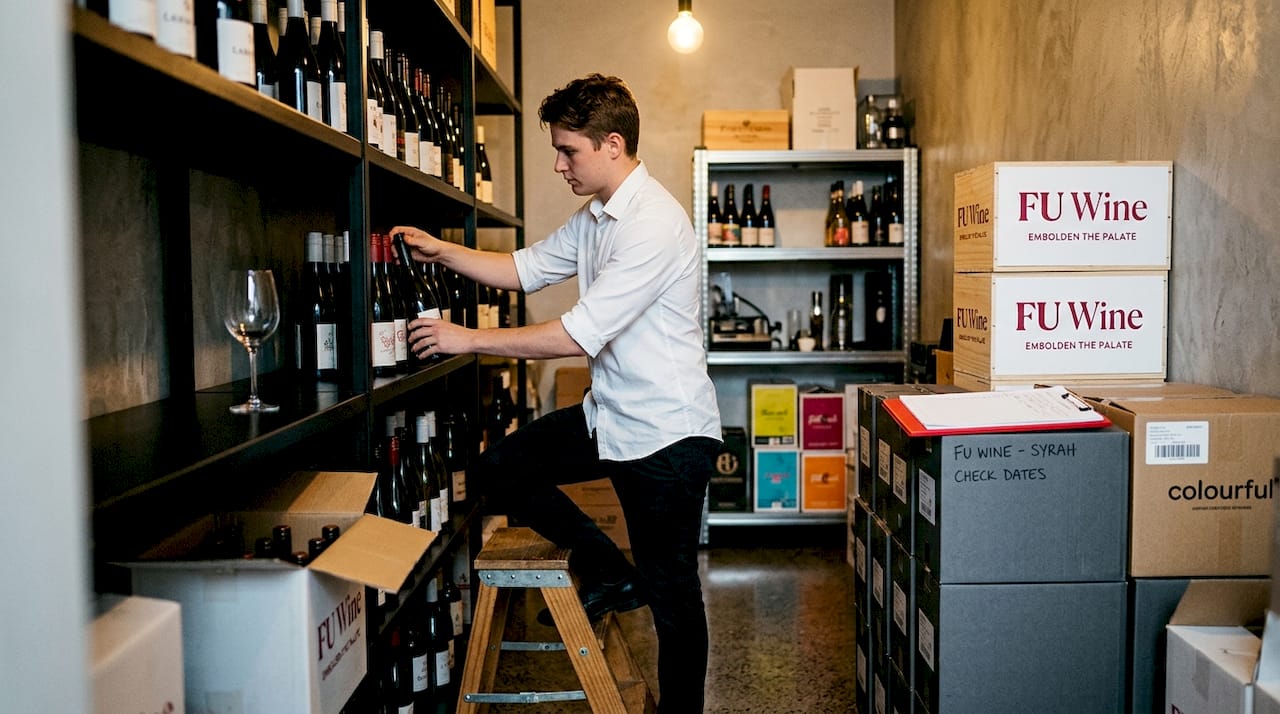
Your wine is only as good as the conditions it’s kept in. Optimal storage requires temperatures between 10–14°C and humidity of 60–70%. Anything above 21°C accelerates wine degradation and no amount of clever list design recovers a cooked bottle.
Light and vibration are the other silent killers. Fluorescent lighting and the rumble of a nearby cool room motor cause more damage than most operators realise. Invest in proper cellar infrastructure early. It pays for itself.
For inventory tracking, consistent naming conventions across your entire team are non-negotiable. Every winery, wine name, vintage, and format needs to be recorded identically by every staff member. One person writing “Penfolds Grange 2019” and another logging “Grange Hermitage 19” creates real problems at audit time.
| Storage factor | Ideal standard | Risk if ignored |
|---|---|---|
| Temperature | 10–14°C | Premature ageing, cooked wine |
| Humidity | 60–70% | Cork drying, oxidation |
| Light exposure | Minimal, UV-filtered | Label damage, heat build-up |
| Vibration | Negligible | Sediment disturbance, wine stress |
| Air circulation | Adequate, stable | Mould, uneven temperature zones |
Pro Tip: Schedule a full cellar audit every quarter. Cross-reference stock on hand against your point-of-sale data to catch shrinkage early and identify slow movers before they tie up capital.
Track your distressed wine inventory signals carefully. A wine sitting untouched for six months is telling you something important about your list or your team’s confidence in selling it.
5. Rotation: first to peak, first to open
Most operators default to FIFO (first in, first out). It sounds logical. For wine, it’s often wrong.
Rotation should prioritise readiness over arrival date. A 2019 Shiraz sitting alongside a 2016 of the same wine needs to be assessed on drinking window, not bin date. The one that’s ready to drink now goes first. The one still building should wait.
This approach requires your team to understand basic ageing principles. It doesn’t need to be deep sommelier knowledge, but whoever runs your cellar should be comfortable identifying when a wine is in its window versus when it’s still tight.
Build a simple tasting note and drinking window record for every wine in your cellar. One sentence per bottle is enough. It makes rotation decisions faster and reduces the risk of serving a wine that’s not showing its best.
6. Service checklist: the 12-step tableside standard
Professional wine service isn’t theatre for its own sake. It builds trust, communicates quality, and protects your reputation. The 12-step service sequence is a non-negotiable baseline for any venue that takes its wine programme seriously.
- Present the bottle to the host with label facing forward
- Confirm the wine name, producer, and vintage verbally
- Cut foil cleanly below the second lip of the bottle
- Wipe the bottle neck with a clean cloth
- Insert corkscrew centrally and extract the cork smoothly
- Inspect the cork for condition and set it on the table
- Wipe the bottle neck again after cork removal
- Pour a 30 ml tasting sample for the host
- Wait for the host’s approval before proceeding
- Serve guests starting from the right of the host, ladies first where preferred
- Pour the host’s glass last
- Place the bottle in a wine cooler or on the table with the label visible
“Wine service is rhythmic; pacing pouring to avoid interrupting guests distinguishes professional servers.” — Wine service standards
Serving temperature is where most venues quietly lose points. Temperature standards vary significantly by wine style: sparkling wines at 4–9°C, light whites at 6–9°C, full-bodied whites at 10–13°C, light reds at 13–16°C, and full reds at 15–18°C. A Pinot Noir served at room temperature on a 28-degree Sydney summer day is not showing anyone its best.
Decanting deserves its own mention. Bold, structured reds and older vintages with sediment benefit from decanting, but the decision should be offered to the guest, not imposed. Handle faulty bottles with calm confidence. TCA contamination (the wet cardboard smell of a corked wine) requires a quiet swap, not a dramatic announcement.
7. Benchmarks and comparison by venue type
How big should your list be? How many wines by the glass? These are the questions every operator asks, and the honest answer is: it depends entirely on your format.
| Venue type | Total wines | By-the-glass | Notes |
|---|---|---|---|
| Casual dining | 40–80 | 6–10 | Focus on accessibility and turnover |
| Bistro or brasserie | 80–120 | 8–12 | Balance variety with ease of service |
| Fine dining | 150–500+ | 10–15 | Depth, provenance, and vintage range |
| Wine bar | 60–150 | 15–30 | BTG is the core offer |
Keep your by-the-glass programme tight. Limiting open bottles to 12–15 at any time maintains quality and prevents oxidation losses. Rotate your BTG selections with purpose, not just convenience.
A smart approach to list organisation by geography vs variety is to ask your front-of-house team which approach they find easier to explain. If they struggle to talk about regions, your guests will struggle to navigate the list.
8. Making your wine list a living document
The biggest mistake operators make is treating the wine list as a set-and-forget document. It isn’t. A structured review cadence of at least quarterly keeps your list honest and your team engaged.
That said, there’s real operational logic in freezing changes for six months at a time once the list is working well. Reprinting menus and retraining staff every few weeks burns time and money. The sweet spot is a stable list with a scheduled review window. You commit to the current list, train your team on it thoroughly, and then refresh with intent rather than impulse.
Use sales data ruthlessly. Any wine that hasn’t moved in 90 days deserves a hard look. Is it priced wrong? Is it positioned poorly on the list? Does your team know how to sell it? Those three questions will give you your answer.
My take on running a great restaurant wine programme
I’ve spent enough time with restaurant wine lists to know that the ones that genuinely work share one thing in common: the people behind them care. Not in a precious, self-congratulatory way. In a practical, guests-first way.
The biggest misconception I see is that a great list is about having the most impressive bottles. It’s not. It’s about having the right bottles for your specific room, your specific kitchen, and your specific crowd. A small list of 40 wines that your whole team knows cold will always outperform a 200-bottle catalogue that nobody can talk about with confidence.
Servers who rely on scripted descriptions lose credibility fast. Guests can feel the difference between genuine enthusiasm and a rehearsed pitch. The venues I’ve seen build real wine culture are the ones that invest in tasting sessions, encourage curiosity, and make wine knowledge feel like a perk rather than a chore.
Review cadence is also underrated. The operators who build strong programmes treat their wine list the way a good chef treats a menu. They revisit it with fresh eyes on a schedule, not just when something goes wrong.
The checklist is your tool. But the culture around it is what makes the difference.
— Damien
Build your wine programme with FU Wine
You’ve got the framework. Now you need the wine.
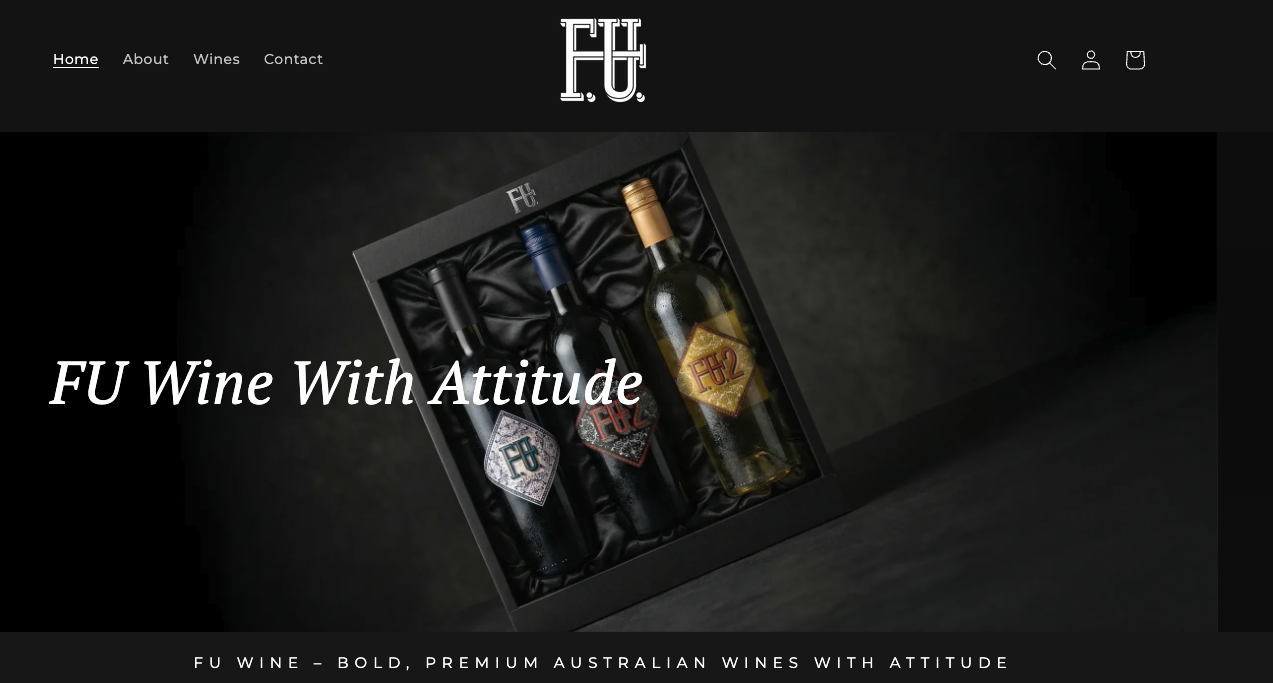
FU Wine exists for exactly this kind of work. Premium bottles at prices that don’t punish you for caring about quality. Whether you’re sourcing best wines for restaurants across multiple style categories or hunting down a standout by-the-glass Shiraz that won’t blow your cost-per-pour, the FU Wine catalogue is built around access and value. Rare releases, cellar-aged stock, boutique producer runs. All at 30 to 70 per cent below what you’d pay through traditional channels.
Your guests deserve a list that winks at sophistication rather than lecturing them about it. Head to FU Wine and start building a programme that’s bold, honest, and worth every glass.
FAQ
What should a wine checklist for restaurants include?
A wine checklist for restaurants should cover wine selection criteria, storage conditions, service procedures, inventory rotation protocols, and a scheduled review cadence. It acts as both a reference document and a quality control tool for your entire wine programme.
How many wines should a restaurant list have?
Casual dining venues typically carry 40 to 80 wines with 6 to 10 by-the-glass options, while fine dining venues may carry 150 to 500 wines or more. The right number depends on your venue format, kitchen output, and team’s ability to sell what’s on the list.
What is the best temperature to store restaurant wine?
Ideal wine storage sits between 10 and 14°C with humidity of 60 to 70 per cent. Temperatures above 21°C degrade wine quality quickly and can render a bottle unsellable.
How often should a restaurant wine list be reviewed?
A quarterly review is considered best practice for most venues. This allows you to respond to seasonal changes, remove slow movers, and align the list with current cuisine and guest preferences without causing constant operational disruption.
What are by-the-glass wine programmes and why do they matter?
By-the-glass programmes generate a significant share of wine revenue, often 35 to 50 per cent, making them one of the most profitable elements of any restaurant wine list. Keeping open bottles limited to 12 to 15 at a time maintains quality and protects your margins.