

Factors affecting wine prices: a value collector's guide
TL;DR:
- Wine prices are heavily influenced by layered distribution markups, tariffs, and hospitality costs that often inflate true value.
- Climate, vintage reputation, and market segmentation also shape prices, with weather events and critic scores acting as proxies for quality and scarcity.
- For genuine value, collectors should consider direct sourcing, account for all storage and auction fees, and analyze segment-specific market dynamics carefully.
You find a bottle with a jaw-dropping label, a stellar vintage year, and a price tag that makes your eyes water. But is it genuinely worth that number, or are you paying for three layers of middlemen, a lucky weather report, and someone else’s cellar storage fees? For collectors who care about real value, understanding what actually drives wine prices is the difference between a brilliant find and an expensive mistake.
Table of Contents
- Key structural and macro factors influencing wine prices
- How vintage, climate and reputation shape pricing
- Hidden frictions: storage, insurance, and auction fees
- Market volatility and segment specifics: avoiding ‘one-factor’ traps
- Why disrupting traditional pricing matters for collectors
- Explore rare, value-focused wines with FU Wine
- Frequently asked questions
Key Takeaways
| Point | Details |
|---|---|
| Tariff and markup layers | Macro shocks and structural markups can inflate the real price collectors pay for wine. |
| Vintage matters | Weather impacts wine quality and supply, with reputation signals affecting the price premium. |
| Hidden collector costs | Storage, insurance, and auction fees can turn a headline ‘deal’ into an expensive purchase. |
| Segment and regional volatility | Pricing trends differ between market segments and regions, requiring nuanced collector strategies. |
| Disruption means value | Collectors can find true value by bypassing traditional channels and accounting for all transaction frictions. |
Key structural and macro factors influencing wine prices
Let’s start with what drives those headline prices from the ground up. The structure of the wine industry is, frankly, stacked against you as a buyer. Every bottle travels through a chain of hands before it reaches yours, and each set of hands takes a cut.
The three-tier system in most markets, producer to importer to distributor to retailer, layers on markups at every stage. Wine pricing fundamentals show that layered distribution economics, including restaurant multipliers, can push retail prices dramatically above what a producer actually charges for the same quality wine. A restaurant bottle can carry a three to four times markup on its wholesale cost. That’s not value. That’s theatre.
Then there’s trade policy. Tariff effects on wine are real and significant. When governments shift tariff settings, landed costs change and every downstream player amplifies that shift through their own margin calculations. A 25% tariff doesn’t just add 25% to your cost. By the time it ripples through the importer, distributor, and retailer, the consumer-facing price shock can be far larger. We saw exactly this dynamic play out with US tariffs on European wines, and Australian collectors watching US-bound wine divert to other markets felt the secondary effects.
Here’s a quick snapshot of how channel markups stack up:
| Channel | Typical markup above producer price |
|---|---|
| Importer | 25 to 40% |
| Distributor | 15 to 30% |
| Retail | 30 to 50% |
| Restaurant | 200 to 400% |
The fair pricing guide unpacks this even further if you want to see how to benchmark what a bottle is actually worth versus what you’re being asked to pay.
Key structural forces pushing prices up include:
- Tariff changes on imported wines from key regions like France, Italy, and Spain
- Multi-tier distribution adding margin at every handoff
- Restaurant and hospitality markups that bear no relation to quality
- Compliance costs, labelling regulations, and biosecurity levies specific to the Australian market
Understanding these layers is the foundation. Once you know what’s artificial inflation versus genuine value, you can start hunting smarter.
How vintage, climate and reputation shape pricing
Moving from structural price layers, let’s look at how nature and reputation shape collector targets. This is where things get genuinely fascinating, and a little humbling.
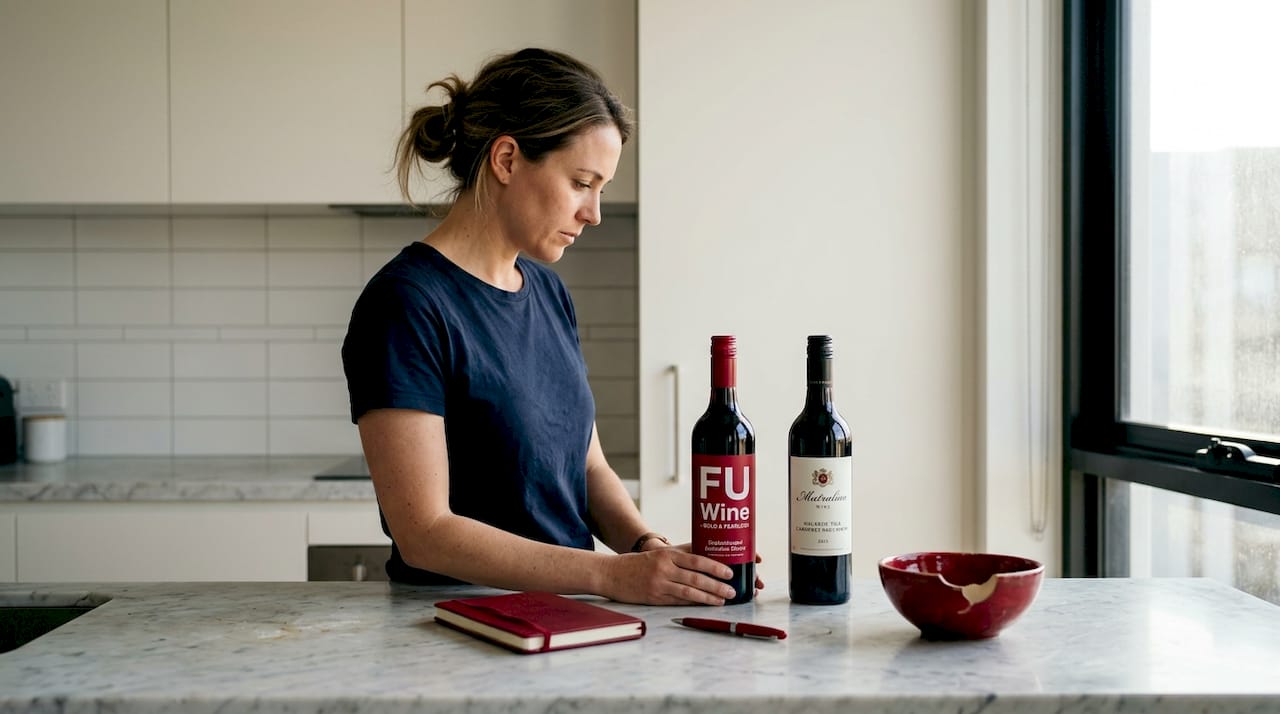
Wine is agriculture. Full stop. A cold snap during flowering, a heatwave at harvest, an unexpected late-season rain. These events change everything about what ends up in the bottle, and they change the quantity produced as well. Climate effects on wine quality are well documented. Extreme temperatures reduce quality signals and disrupt supply, both of which feed into collector prices. A Barossa Shiraz from a drought-stressed vintage with half the normal yield will command a premium simply because there’s less of it, and savvy buyers know it.
But here’s where it gets tricky. Reputation and collective perception of a vintage can sometimes run ahead of, or even contradict, the actual quality in the glass. Expert ratings and weather fundamentals interact in complex ways. Critic scores move prices, but those scores are often acting as proxies for climate and vintage fundamentals rather than operating independently. In other words, a critic giving a vintage 98 points is often just reflecting what a good growing season already told the vines.
“The vintage’s reputation travels faster than the wine itself. By the time most collectors act on a celebrated vintage, the smart money has already moved.”
What this means practically for you:
- High-scoring vintages can be priced on reputation before most collectors even taste the wine
- Lesser-known regions in a great climate year can offer extraordinary value because the reputation premium hasn’t attached yet
- Poor vintage scores in a famous region can depress prices to the point where the best producers are genuine bargains
- Supply disruptions from climate events in one region can push demand and pricing into adjacent regions and styles
The vintage quality explained guide digs into how to read vintage variation without getting suckered by headline scores. The short version: look at producer-level consistency, not just regional averages.
Hidden frictions: storage, insurance, and auction fees
Beyond reputation and climate, collector costs aren’t just about the bottle. This is the section that most people skip, and it’s where genuine value calculations fall apart.
Storage is not free. If you’re buying bottles to hold, you’re either paying a professional facility or absorbing the risk of home storage. Professional wine storage in Sydney or Melbourne typically runs anywhere from $12 to $25 per case per year for temperature-controlled facilities. That sounds modest until you’re holding 40 cases of a ten-year vertical and the maths starts compounding against you.
Insurance is another bite. Hidden collector costs including storage, insurance, and transaction fees materially affect the effective price you pay, and can determine whether an apparently cheap buy is genuinely good value after all costs are considered. Insuring a $50,000 collection can run 1 to 2% annually, or $500 to $1,000 a year, before you’ve opened a single bottle.
Auction fees are perhaps the most underestimated friction of all. Buyer’s premiums, seller’s commissions, and administrative charges stack up fast. And if you’re buying at auction as a collector hoping for value, you need to factor in:
- Buyer’s premium typically running 18 to 25% on top of the hammer price
- GST implications depending on how the auction is structured
- Shipping and handling from the auction house to your door or storage facility
- Authentication and condition inspection costs for high-value lots
Pro Tip: Before you bid at any auction, calculate your true landed cost including the full buyer’s premium, shipping, and any storage fees you’ll incur for the first twelve months. Add that to the hammer price and compare it to what the wine is available for through other channels. You might be surprised how often the “bargain” at auction isn’t one.
The auction fee secrets article breaks down exactly how to decode auction catalogues and avoid the fee traps that catch even experienced collectors off guard.
Market volatility and segment specifics: avoiding ‘one-factor’ traps
Even once you’ve accounted for all costs, segment realities can disrupt usual pricing rules. This is where many collectors get burned, because they apply a general rule to a specific market and it doesn’t hold.
Bordeaux is the classic example. For years, the assumption was that top Bordeaux only moved in one direction. Then came a sustained market correction driven by shifting demand from Asian buyers, oversupply in certain vintages, and a collective reassessment of pricing that had pushed many châteaux well beyond fair value. Bordeaux price trajectories show that recovery in some segments and declines in others are happening simultaneously. One-factor explanations simply don’t hold when a market is this segmented.
Consider the common traps:
- Assuming a rising tide lifts all boats. When Burgundy prices surged, many collectors assumed Bordeaux would follow. They diverged dramatically instead.
- Treating en primeur as automatically advantageous. En primeur economics can decouple from near-term drinking and future market pricing. Early release prices are sometimes higher than what the same wine trades for several years later in bottle, particularly when storage costs are added.
- Ignoring regional Australian market dynamics. Import parity, exchange rates, and local demand create price environments here that don’t mirror European or US market movements.
- Chasing scores without checking supply. A 99-point wine with a 100,000-case production is a very different value proposition from a 99-point wine made in 400 cases.
- Overlooking emerging regions. Some of the best value in Australian and international wine right now is coming from producers in less-celebrated areas whose quality has quietly surpassed their reputation.
Pro Tip: Build a simple checklist before any significant collector purchase. Ask yourself: what segment is this wine in, what are the specific supply dynamics, and have I accounted for every cost between now and when I plan to drink or sell it? Segment-specific thinking beats broad market rules every time.
For more on this, spotting genuine value and rare wine bargains offer practical frameworks that go beyond generic advice.
Why disrupting traditional pricing matters for collectors
Here’s the uncomfortable truth most wine media won’t say directly: the traditional buying model is designed to benefit everyone in the chain except you.
Every layer between producer and your glass exists partly to add genuine value, logistics, quality control, curation, and partly to extract margin. The question worth asking is which layers are truly serving you and which ones you’re funding out of habit. Conventional collector wisdom often focuses on vintage scores, critic ratings, and region pedigree while completely overlooking total cost of ownership. That’s a framework built for people who don’t care about price. Most of us do.
Direct-to-consumer and secondary market sourcing can reduce the markup layers that create the biggest, most predictable price gaps. The distribution and restaurant tiers, along with tariff and compliance layers, are often where the most significant artificial inflation lives. Cutting through those layers, where it’s legally and practically possible, delivers real savings on real wine.
But, and this matters, disruption isn’t the same as recklessness. Even when you bypass traditional channels, storage costs, insurance, and authentication fees don’t disappear. True value disruption means accounting for every friction, not just the obvious retail markup. The collector who saves 40% on acquisition but ignores holding costs and auction fees hasn’t actually beaten the system.
The smartest move is combining direct or secondary market access with ruthlessly honest total-cost thinking. That’s where genuine value lives. And that’s exactly the playbook that unlocking rare wine savings is built around.
Every bottle is a small rebellion when you buy it at the right price, knowing what you know, while everyone else is still paying for the label.
Explore rare, value-focused wines with FU Wine
You’ve seen the full picture now. Tariff shocks, distribution markups, climate-driven scarcity, hidden auction fees, and segment-specific traps. It’s a lot to keep track of, and that’s exactly why most collectors overpay without realising it.
FU Wine does the hard work for you. We source rare, premium bottles through direct relationships and opportunistic buying, cellar clearances, allocation releases, and distressed inventory, then pass those savings straight to you. Think 30 to 70% below traditional retail on wines that are genuinely desirable, not clearance shelf leftovers. Browse FU Wine’s collector offerings to see what’s available right now, check the blog for ongoing collector strategy content, and reach out if you want expert guidance on your next find. Life’s too short for ordinary wine at inflated prices.
Frequently asked questions
Do tariffs impact all imported wines equally?
No. Tariff effects depend on wine origin, alcohol content, and the local supply chain structure. Even within Europe, tariff rates and their downstream price impacts can vary significantly by country and product category.
Are critic ratings the best way to predict wine price gains?
Expert ratings help, but vintage and weather signals are often equally influential. Critic scores frequently act as proxies for climate fundamentals rather than independent price drivers, so reading both together gives a more reliable picture.
What percentage of wine auction purchases is lost to fees?
Auction buyer’s premiums typically run 18 to 25% on top of the final hammer price. Add insurance, shipping, and storage and the true cost can be considerably higher than the headline bid.
Does en primeur always offer a price advantage for collectors?
Not always. En primeur pricing can be set above what the same wine later trades for in bottle once you factor in storage costs and actual future market prices. It pays to compare carefully before committing early.
Recommended
- How wine value is determined: a collector’s guide to fair pricing – FU Wine
- Vintage wine: quality, rarity and value explained – FU Wine
- How to spot a wine value buy: expert guide to genuine finds – FU Wine
- Unlock rare wine: expert guide to selection and savings – FU Wine
- Wine valuation checklist: protect and maximise your collection