

How to find rare wine bargains: your treasure hunt guide
TL;DR:
- Anyone can find valuable, rare wines with curiosity and smart strategies.
- Building relationships with importers and reading labels improves treasure hunting success.
- Focus on lesser-known regions and price ranges for optimal value and discovery.
Think finding rare wine bargains is something only sommeliers and seasoned collectors get to do? That’s exactly the kind of gatekeeping the wine industry loves to peddle. The truth is, the thrill of uncovering a genuinely spectacular bottle at a price that makes your wallet sing is available to anyone willing to look in the right places. You don’t need a cellar full of trophies or a Michelin-starred contact list. You need curiosity, a few smart strategies, and the confidence to back your own instincts.
Table of Contents
- What is a wine treasure hunt?
- Where value hides: strategies for uncovering great bottles
- Mastering the clues: reading labels, price cues, and staff picks
- The role of trusted networks and importers
- Applying your knowledge: practical steps for your next hunt
- What most wine hunters get wrong (and how to really win)
- Ready to start your wine treasure hunt?
- Frequently asked questions
Key Takeaways
| Point | Details |
|---|---|
| Look beyond big brands | Hidden wine gems often come from lesser-known producers and regions rather than famous labels. |
| Value is found with curiosity | Asking questions and exploring different stores or importers increases your odds of finding treasures. |
| Price bands matter | Using proven price sweet spots, like $13-16, can uncover bottles that punch above their cost. |
| Relationships help the hunt | Building rapport with wine shop staff and importers leads to insider tips and exclusive finds. |
| Every hunt builds expertise | Each wine treasure hunt sharpens your tasting skills and ability to spot genuine value. |
What is a wine treasure hunt?
Let’s get one thing straight: a wine treasure hunt isn’t about stumbling across a dusty old bottle at a garage sale. It’s a deliberate, exhilarating process of seeking out wines with exceptional value, rarity, or a cracking story behind them. All at prices that don’t require a second mortgage.
The concept spans two distinct worlds. On one end, you’ve got the everyday hunter. This is someone combing supermarket aisles and boutique bottle shops, looking for that $18 Grenache that punches way above its weight. On the other end, there’s the specialist collector navigating direct networks for rare bottles, building relationships with importers to access limited allocations that never reach retail shelves. Both are valid. Both are addictive.
What makes the hunt special is what it does to you. It sharpens your palate. It builds knowledge with every bottle. It turns a weekly errand into an adventure.
“The beauty of wine hunting is that the barrier to entry is a single curious question. Ask a staff member what they’re excited about this week and you’ve already started.”
Here’s what the treasure hunt can look like in practice:
- Scouring a boutique bottle shop for a lesser-known Italian producer that just landed in Australia
- Asking your local wine merchant about new allocations before they hit the shelf
- Finding a high-scoring vintage at a grocery store wine playbook price, far below what you’d pay in a restaurant
- Discovering a South American small-batch wine that no one in your circle has tried yet
The appeal is universal. Whether you’re value-driven or adventure-hungry, the hunt delivers.
Where value hides: strategies for uncovering great bottles
Now that you know what the hunt is, let’s explore where the best treasures are hidden and how to maximise your chances of discovery.
The good news? Value hides in predictable places once you know where to look. The better news? Most wine buyers aren’t looking hard enough, which means more for you.
- Start at boutique bottle shops. These small, independently run stores are goldmines. Staff are usually passionate, knowledgeable, and genuinely excited to share what’s new. Ask for their personal recommendation under a specific budget and you’ll almost always walk out with something brilliant.
- Build relationships with trusted importers. Names like Kermit Lynch and Skurnik in the international market have reputations for sourcing quality. In Australia, seek out importers who specialise in particular regions and ask about their upcoming arrivals. The boutique wine strategies page goes deeper on this.
- Work the supermarket sweet spot. This is where most people give up too quickly. The $13 to $16 price band at major grocery chains is a surprisingly fertile hunting ground according to the grocery store wine playbook. Wines in this range are often from quality producers managing volume, and they can deliver serious value when chosen wisely.
- Look for wine on allocation. Some producers limit how much goes to each retailer. If a trusted store has a small allocation of something special, act fast. These bottles don’t wait around.
- Follow the strategies for wine discounts that smart collectors use. Flash deals, cellar clearances, and end-of-vintage sales are all legitimate ways to access premium bottles at significantly reduced prices.
Pro Tip: Introduce yourself to the staff at your local bottle shop. Tell them your budget and the styles you love. Ask them to give you a heads-up when something exciting comes in. This single move can open doors that casual shoppers never find.
| Source | Pros | Cons | Huntability |
|---|---|---|---|
| Grocery store | Accessible, affordable, wide range | Variable quality, limited staff knowledge | Medium |
| Boutique bottle shop | Expert staff, curated range, unique finds | Slightly higher prices | High |
| Importer direct | Access to rare allocations, insider knowledge | Requires relationships, minimum orders | Very high |
Curiosity is your most valuable tool. Never walk past an unfamiliar label without at least reading it. That unknown producer might be exactly what you’ve been searching for.
Mastering the clues: reading labels, price cues, and staff picks
Having scouted the best places to hunt, the next skill is deciphering the clues. Let’s decode what makes a bottle a genuine find.
Labels are like treasure maps. Once you know how to read them, they tell you almost everything you need to make a confident call. Here’s what to look for:
- Region: Up-and-coming regions like Portugal’s Dão, Spain’s Bierzo, or South Africa’s Swartland often produce quality wine at a fraction of the price of famous appellations. If you see something from a region you don’t recognise, that’s often a good sign.
- Importer name: A reputable importer listed on the back label is one of the strongest signals of quality. Names like those referenced in the grocery store wine playbook have built their reputations on consistent quality sourcing.
- Vintage year: Certain vintages from lesser-known regions are exceptional. Do a quick search before you shop and you’ll know which years to prioritise.
- Medals and scores: Not all medals are equal, but a gold from a credible show or a score of 90+ from a respected critic is worth noting, especially if the price doesn’t reflect it.
- Staff favourite tags: These are underrated. A hand-written tag from a passionate staff member is often more reliable than any trophy sticker.
The $13 to $16 grocery zone often delivers 2 to 3 times the value for the price compared to what most shoppers expect from that range, according to the grocery store wine playbook. This is where informed buyers clean up while everyone else reaches for the familiar labels.
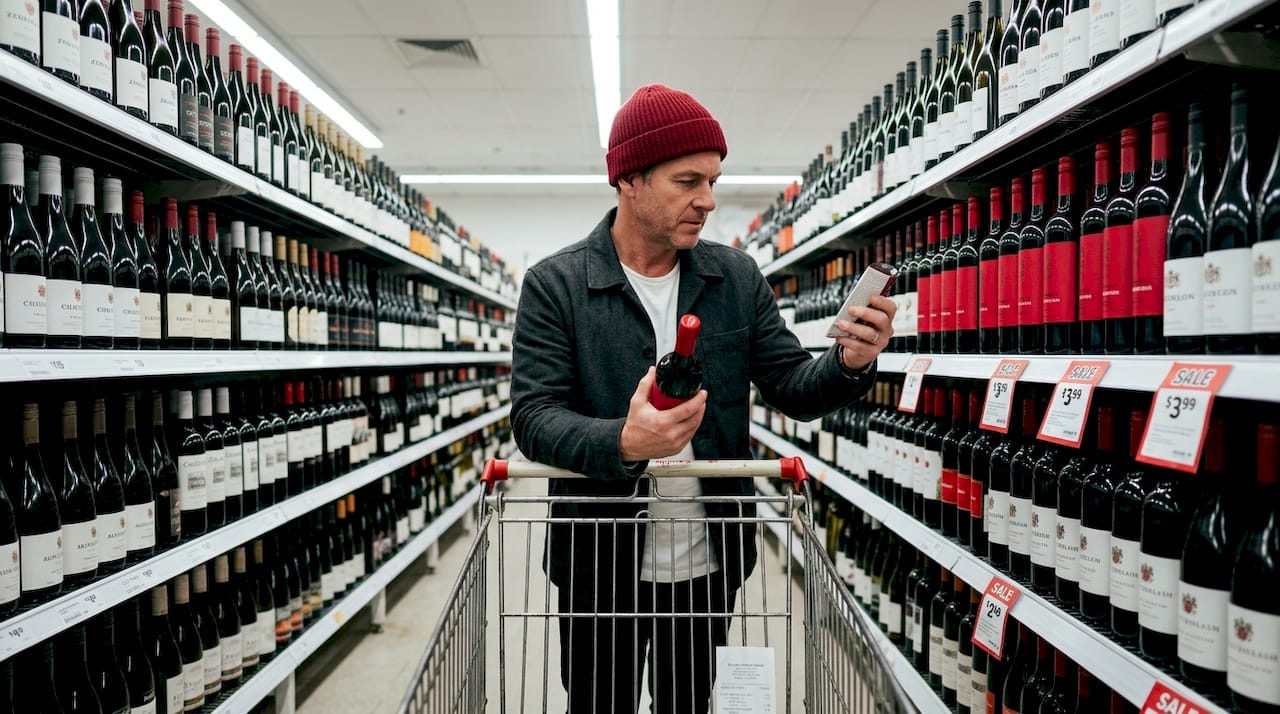
Pro Tip: Focus your attention on up-and-coming wine regions. They’re producing quality that rivals the classics, at a fraction of the cost. Try a Grüner Veltliner from Austria, a Cinsault from South Africa, or an Assyrtiko from Greece. These are the kinds of spotting wine value buys that experienced hunters rave about. And learning to find accessible wine quality without paying a premium is a genuine skill worth building.
The role of trusted networks and importers
While you can hunt solo with research, cultivating connections with trusted networks takes your treasure hunt to the next level.
Here’s the thing about the wine world: it’s both enormous and surprisingly small. The people who consistently find the best bottles aren’t just lucky. They’ve built relationships. They know their importers. They’ve earned the trust of store owners who call them first when something rare arrives.
“It’s often the importer’s reputation that hints at a bottle’s hidden value. A great importer doesn’t just move stock. They curate quality, and their name on a label is an endorsement worth more than most medals.”
Understanding wine curators and rare bottles is critical for serious hunters. These are the people who do the hard work of sourcing so you don’t have to. Their relationships with producers in Burgundy, the Barossa, or Ribera del Duero give you access to wines that simply don’t make it to a standard retail shelf.
There’s also an important distinction to understand. For ultra-rare bottles, direct networks and specialist curators are essential according to the grocery store wine playbook. But for everyday value hunting, what you know matters more than who you know. Knowledge about regions, producers, vintages, and price cues is freely available if you’re willing to learn.
| Importer or curator | Known for | Pricing insight |
|---|---|---|
| Bibendum Australia | European classics, French regions | Mid to premium range |
| Red & White (Philippines/Asia-Pacific) | Asian market rare bottles | Variable, often competitive |
| Domaine Select Wine Estates | Boutique French and Italian | Premium but fair |
| FU Wine | Rare, high-scoring, cellar clearances | Aggressively discounted |
| Young & Rashleigh | Australian boutique producers | Accessible to mid-range |
The wine desirability guide breaks down what actually makes a bottle desirable beyond the brand name. Spoiler: it’s often producer reputation, vintage conditions, and regional character. And once you understand vintage wine explained in practical terms, your ability to read a bottle’s potential multiplies.
Applying your knowledge: practical steps for your next hunt
Armed with new insight and a network, you’re ready for practical action. Here’s how to put it all to the test in the wild.
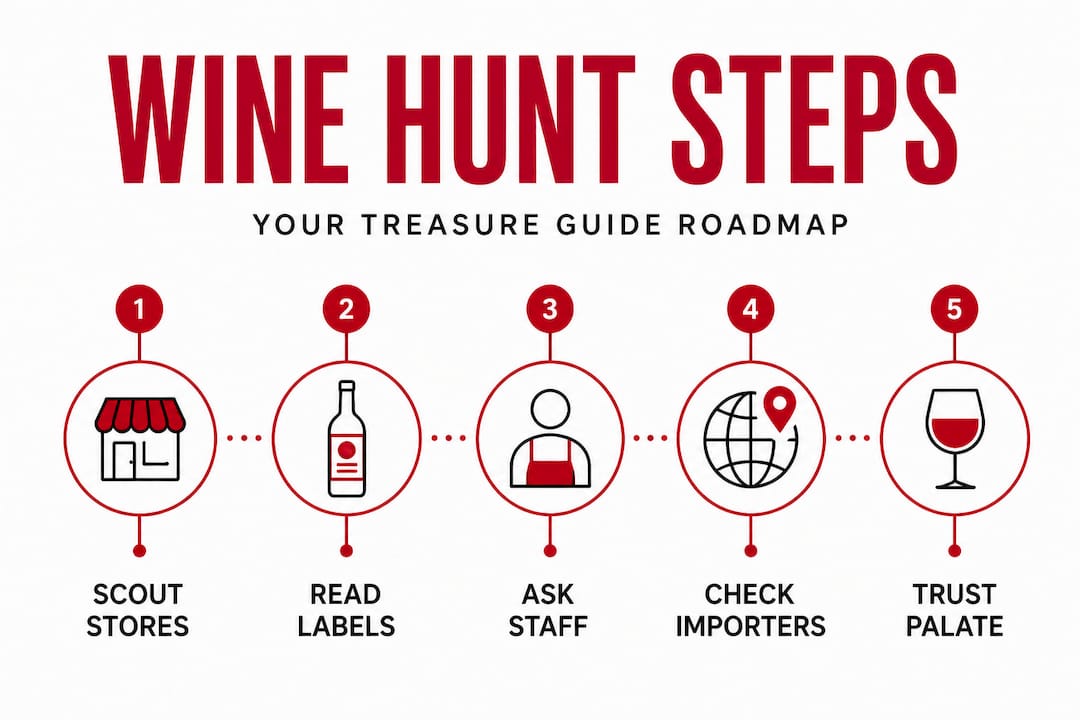
The best hunters don’t wander aimlessly. They show up prepared. Here’s a five-step process you can use every single time:
- Research before you shop. Spend 10 minutes looking at what’s landed recently at your favourite boutique shop or importer. Check trusted wine importers referenced in the grocery store wine playbook to understand what quality looks like at different price points.
- Shortlist two or three shops. Don’t try to cover every option in one trip. Choose places where you’ve had positive experiences or where staff have given you good advice before.
- Set a clear budget. This is non-negotiable. Having a firm number in mind keeps you focused and actually sharpens your ability to spot value. If you’re spending $20 to $30, own that range and work it hard.
- Decode labels with confidence. Use everything you’ve learned: region, importer, vintage, medals, and staff picks. The wine value determination framework is a genuinely useful reference point for this step.
- Engage the staff. Ask one genuine question. “What have you opened recently that surprised you?” That’s it. Most passionate staff will light up and point you to something you’d never have found on your own.
Every single hunt teaches you something new. You’ll develop an instinct over time. Your palate becomes more confident. Your nose picks up details it previously missed. And honestly, even the bottles that don’t quite hit the mark become part of the story.
What most wine hunters get wrong (and how to really win)
Now that you have practical tools, it’s worth reflecting on what sets successful wine hunters apart from the rest. And what most people get completely backwards.
Here’s the uncomfortable truth: most wine hunters get stuck chasing names. They want the Burgundy grand cru, the Napa cult Cabernet, the Barossa icon wine. And those are beautiful bottles, no question. But fixating on famous labels in famous regions is the single biggest mistake a value-focused hunter can make.
The real wins are almost always elsewhere. An experimental natural producer in Victoria’s Macedon Ranges. A biodynamic estate in Priorat that’s not yet on Wine Spectator’s radar. An orange wine from Slovenia that your friends will be talking about for months. These are the bottles that define a great hunter.
“Sometimes, the biggest discovery is expanding your own taste horizons. The wine that changes you isn’t always the one you expected.”
The other trap is letting hype override your own palate. A 96-point score is a data point, not a verdict. If you sip something and it speaks to you, trust that feeling. Knowing how wine deals work means understanding that the best value often comes before the critics catch on, not after.
Pro Tip: The most overlooked vintages and the most experimental producers are where the real treasure sits. Don’t be afraid of an unfamiliar name on a bottle. Be more afraid of paying a premium for a label that’s coasting on its reputation.
The best wine hunters are genuinely open-minded. They enjoy the learning curve as much as the destination. They know that every disappointing bottle is a lesson and every brilliant find is a small victory worth celebrating. That’s what makes the hunt addictive.
Ready to start your wine treasure hunt?
You’ve got the strategies, the frameworks, and the mindset. Now it’s time to put them to work. FU Wine was built for exactly this kind of hunter: someone who refuses to overpay for quality and loves the thrill of finding something genuinely special.
Every bottle in the FU Wine collection has been sourced with one thing in mind: delivering maximum value without compromising on quality, rarity, or excitement. These are the kinds of finds that experienced hunters dream about, available without the insider handshake or the inflated price tag. Discover FU Wine and see what’s waiting for you right now. The next great bottle is out there. Go find it.
Frequently asked questions
What is the best price range for finding wine treasures in stores?
The $13 to $16 range in grocery shops is a proven sweet spot for finding high-value bottles at reasonable prices, often delivering quality well beyond what the price suggests.
How can I tell if a bottle is genuinely a hidden gem?
Look for trusted importer names, staff favourite tags, lesser-known regions, and quality cues like vintage year and credible medals to spot authentic value without paying a premium.
Is it better to shop at boutique stores or large retailers for hidden wine treasures?
Both offer real opportunities: boutique stores deliver curated selections and expert staff advice, while grocery stores reward informed shoppers with everyday value if you know which price bands to target.
Do I need to know a lot about wine to enjoy a treasure hunt?
Not at all. Curiosity and a genuine willingness to learn are far more valuable than technical knowledge when you’re starting out. Every hunt teaches you something new, and that’s entirely the point.
Recommended
- Unlock rare wine: expert guide to selection and savings – FU Wine
- How to spot a wine value buy: expert guide to genuine finds – FU Wine
- How wine deals work: Snagging premium bottles smart – FU Wine
- Unlock exclusive wine access: rare bottles and savings – FU Wine
- Fine wine buying guide: invest and collect rare bottles