

How to access premium wines without paying too much
TL;DR:
- The premium wine market is more accessible to enthusiasts focused on value and authenticity than industry myths suggest.
- Traditional pricing systems like en primeur are increasingly unreliable and favor producers over buyers.
- Buying from reputable, transparent sources and exploring lesser-known regions offers better value and safety from counterfeits.
Most people assume the best wines live behind velvet ropes, priced for hedge fund managers and old-money collectors. That assumption is costing you incredible bottles every single day. The premium wine world is shifting fast, and the old gatekeepers are losing their grip. New buying channels, smarter sourcing strategies, and a growing wave of rebellious enthusiasts are breaking down barriers that once made top-shelf access feel impossible. This guide pulls back the curtain on who really buys premium wine, how pricing models have been manipulating buyers for decades, and exactly what you can do today to drink beautifully without getting fleeced.
Table of Contents
- Who really buys premium wine and why it matters
- Unpacking wine pricing: Markups, futures and trust issues
- How counterfeits and ‘gatekeeping’ shape wine access
- Practical strategies for unlocking premium wine
- The uncomfortable truth: Why premium wine access still needs disrupting
- Ready to discover premium bottles on your terms?
- Frequently asked questions
Key Takeaways
| Point | Details |
|---|---|
| Premium wine is accessible | You don’t need to pay top dollar to own and enjoy collectible bottles. |
| Trust and authenticity matter | Smart sourcing, not just price, is key to avoiding fakes and disappointment. |
| Transparency is disrupting old norms | Modern buyers can sidestep gatekeepers and overpriced schemes with the right tools. |
| Proven strategies exist | Following practical steps lets you unlock high-value wines before the crowd. |
Who really buys premium wine and why it matters
Let’s kick the elitist myth to the kerb first. The image of the grey-haired tycoon swirling a $500 Burgundy in a panelled study? That’s a fantasy the industry sells to justify its pricing. The reality is far more interesting, and far more relevant to you.
The premium wine trends data tells a different story. Research on high-frequency wine consumers shows that 81% of US wine volume comes from three distinct buyer segments: High spenders at $25 or more per bottle, Moderate spenders in the $15 to $25 range, and Low spenders under $15. The enthusiasts aged 30 to 55 dominate the higher segments, and they are not buying on pure prestige. They are buying on value, story, and collectability.
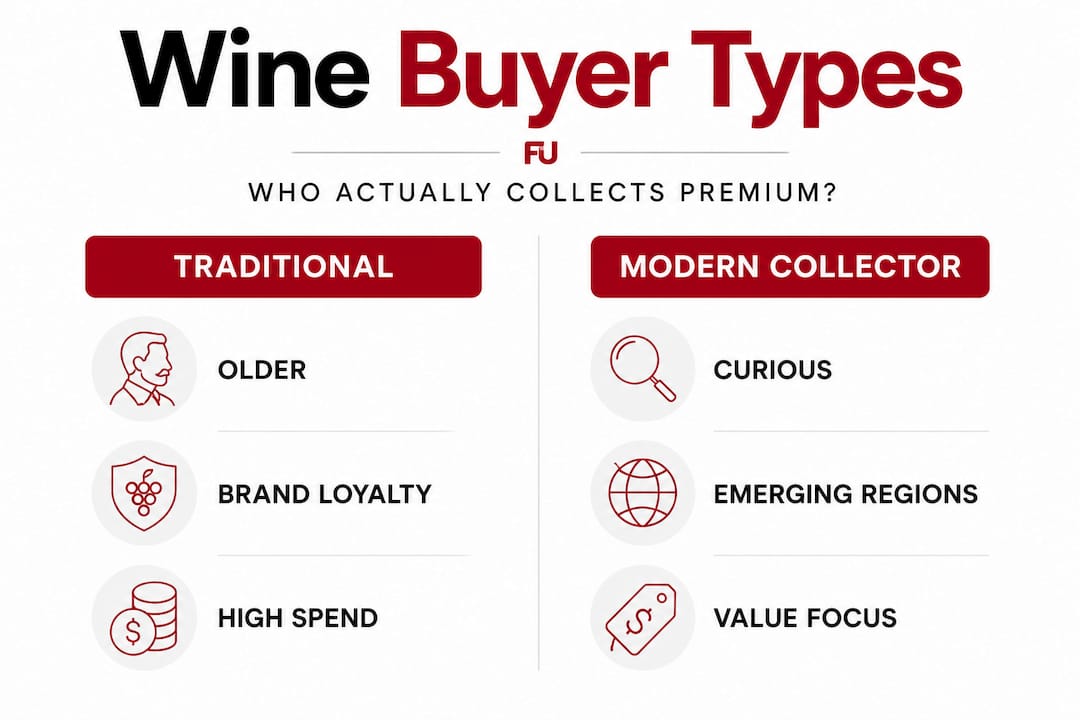
This matters enormously for your access. When you understand that the real premium market is populated by curious, engaged buyers rather than entitled elites, you realise the whole game is more open than the industry wants you to believe.
| Buyer segment | Price per bottle | Key motivation |
|---|---|---|
| High spender | $25 and above | Collectability, provenance, scarcity |
| Moderate spender | $15 to $25 | Quality, value, discovery |
| Low spender | Under $15 | Everyday enjoyment, familiarity |
What cues do savvy buyers actually use to judge quality? Beyond price, they look at producer reputation, vintage scores, regional benchmarks, and secondary market demand. Price is almost the last thing a knowledgeable buyer uses as a quality signal. Understanding wine desirability this way completely changes how you approach sourcing.
The smartest collectors are also building their wine portfolios with an eye on emerging regions rather than chasing famous labels. They are finding brilliant Grüner Veltliner from Austria, structured Nero d’Avola from Sicily, and age-worthy Tempranillo from lesser-known Spanish appellations, all at prices that would make a Bordeaux enthusiast blush.
Pro Tip: Shift your focus to under-the-radar regions like the Jura in France, Alentejo in Portugal, or the Yarra Valley in Victoria. The quality-to-price ratio in these areas regularly embarrasses famous appellations that charge three times as much.
Unpacking wine pricing: Markups, futures and trust issues
Once you understand who’s actually buying, the next question is why paying fairly for premium wine is still so hard. The answer lives in how pricing models have been built, and who benefits from keeping them complicated.
The en primeur system is a prime example. Buying “en primeur” means purchasing Bordeaux futures before the wine is bottled, theoretically at a lower price in exchange for early commitment. For decades this worked reasonably well. Now it’s a different story entirely.
“The en primeur system now faces serious trust issues. Releases are frequently trading below their original ex-chateau prices on the secondary market, meaning buyers who committed early often overpaid. Mature back vintages can actually be cheaper to buy right now than newly released futures.” — Liv-ex analysis, 2026
The eroded trust in the en primeur system reflects a broader pattern of pricing that favours producers and négociants over buyers. The 2023 Bordeaux vintage saw prices drop 22.5% on the secondary market, which is about as clear a signal as you can get that the old model is broken. Smart buyers noticed. They started asking harder questions about wines without premium markups and discovering that physical, mature bottles on the open market often represent far better value.
Here is how the old and new buying models compare:
| Factor | Traditional model | Modern smart buying |
|---|---|---|
| Timing | Futures, locked in early | Physical wines, available now |
| Price transparency | Low, producer-controlled | High, market-driven |
| Access | Restricted by allocation | Open through multiple channels |
| Risk | High (futures, speculation) | Lower (drink or hold on current value) |
| Value | Often inflated | Frequently better than futures |
The gatekeeping in wine runs deep in these traditional models. Allocation systems, mailing lists, and relationship-based access all favour established buyers over newcomers. But cracks are appearing everywhere.
How do you avoid the most common overpaying traps? Here is a simple process to follow:
- Always check secondary market prices on platforms like Liv-ex or CellarTracker before committing to any “exclusive” offer.
- Compare the futures price against the cost of waiting two to three years for the physical release on the open market.
- Research whether your target producer’s wines have historically appreciated in value, or whether they tend to drop.
- Factor in storage, insurance, and currency risk for any long-term futures commitment.
- Explore wine scarcity strategies to identify genuinely rare bottles versus artificially scarce ones created through allocation games.
The market is correcting itself. Buyers who understand these dynamics are already winning.
How counterfeits and ‘gatekeeping’ shape wine access
If pricing and trust issues weren’t enough to navigate, the problem of fake bottles adds another layer of complexity to the quest for authentic premium wine. And it’s bigger than most buyers realise.
Fine wine counterfeiting is a genuine crisis. Up to 20% of the global fine wine market is estimated to involve counterfeit bottles, and for specific trophy labels like Lafite in Asian markets, that figure can reach 70%. Yes, seven out of ten bottles of certain famous labels in some markets are not what they claim to be. That is a staggering figure.
This does more than just put dodgy wine in your glass. It poisons the entire ecosystem for legitimate buyers. When trust collapses around authentication, prices become distorted, sellers build more walls around “verified” stock, and access narrows even further for enthusiasts who lack insider connections.
Gatekeeping and counterfeiting feed each other in a frustrating loop. Traditional sellers use the spectre of fakes to justify exclusive access models, high fees for authentication, and preference for “trusted” clients. The result? Everyday enthusiasts get squeezed out of authentic channels, pushing them toward riskier secondary markets where counterfeits are more prevalent.
Watch for these red flags when sourcing premium bottles:
- Prices significantly below established market rates for a well-known label (if it seems too good to be true, it almost always is)
- Sellers who cannot provide a clear chain of ownership or storage history
- Labels that appear slightly off in font, colour, or paper quality
- Corks without correct producer markings or capsules that sit loose
- No verifiable purchase documentation or auction house provenance records
- Online sellers with no track record, reviews, or established reputation
Choosing unique premiums from credible, transparent sources is your strongest defence. Reputable auction houses, certified merchants with clear provenance records, and platforms with genuine buyer guarantees are worth the slight premium they may charge for peace of mind.
Pro Tip: Stick with industry gatekeeping-aware platforms that actively verify stock and publish provenance details openly. Certification schemes and secondary markets built on transparency, like established auction houses and curated direct sellers, dramatically reduce your counterfeit risk without demanding insider status.
Practical strategies for unlocking premium wine
Enough about the problems. Here is how you actually break through and claim genuinely brilliant bottles without the traditional barriers, the inflated prices, or the anxiety of buying blind.
The good news is that accessible premium wines under $25 are far more abundant than most buyers know. High-involvement wine drinkers, the ones who read, research, and collect seriously, consistently use multiple quality cues beyond price. That is precisely the mindset that unlocks better value. When you stop equating price with quality, the cellar doors start opening.
Consider these five genuinely collectible wines available well under the $25 mark in Australia:
| Wine | Region | Why it’s worth collecting | Typical price |
|---|---|---|---|
| Chianti Classico Riserva | Tuscany, Italy | Age-worthy Sangiovese, strong provenance | $18 to $24 |
| Vouvray Sec | Loire Valley, France | Complex Chenin Blanc, exceptional cellaring | $20 to $25 |
| Alentejo Tinto | Portugal | Rich, structured reds from boutique producers | $15 to $22 |
| Grüner Veltliner Smaragd | Wachau, Austria | Mineral-driven, age-worthy whites | $18 to $24 |
| Nero d’Avola Riserva | Sicily, Italy | Bold, characterful reds with cult following | $14 to $20 |
These are not consolation prizes. These are wines that serious collectors pursue deliberately because quality-to-price ratios like these simply do not exist in the Napa Cabernet or Grand Cru Burgundy bracket.
Here is a simple process for verifying provenance and authenticity before you buy:
- Request the full purchase history of any bottle, including the original retailer, storage conditions, and any previous owners.
- Cross-reference the vintage and label details against the producer’s official records or well-documented databases like Wine-Searcher.
- For anything above $50 per bottle, insist on documented cold-chain storage confirmation to rule out heat damage.
- Use reverse image searches on label photos to check for known counterfeit patterns flagged in collector communities.
- Buy through platforms that offer buyer protection guarantees and are willing to explain their sourcing process in clear terms.
Wine discount strategies that work consistently involve building direct relationships with smaller importers, keeping an eye on cellar clearances and allocation releases, and learning how wine deals work before committing to any purchase.
Pro Tip: Collector clubs and sourcing platforms that specialise in lesser-known regions are goldmines. A good example is a local importer who focuses solely on small Portuguese or Greek producers. Their stock rarely appears on mainstream shelves, their prices reflect actual production costs rather than hype, and the quality frequently rivals bottles costing three times as much.
The uncomfortable truth: Why premium wine access still needs disrupting
Here is where we get honest about what is actually happening in the industry, not what the press releases say.
The reforms are real, but they are moving slowly. For every platform that democratises access, there are a dozen traditional players actively defending their margins by keeping information scarce, allocations opaque, and new buyers uncertain. Industry inertia is powerful. Established merchants, prestigious négociants, and famous châteaux all have enormous financial incentives to keep the mystique alive and the barriers high.
The most successful modern collectors we see breaking through are not waiting for the industry to change. They are the ones actively breaking wine gatekeeping by rejecting allocation games, asking uncomfortable questions about pricing, and embracing channels that traditional insiders quietly dismiss. Every time a buyer refuses to pay a 200% retail markup on a wine because they know the secondary market price, that is a small act of disruption that shifts power toward enthusiasts.
Here is the uncomfortable part though. Many buyers are their own worst enemies. The desire to feel “in the club,” to receive the allocation letter from a famous producer, or to tell friends you bought en primeur from a prestigious négociant, these are powerful psychological pulls that the industry exploits shamelessly. Prestige bias is real, and it costs you money consistently.
The new breed of collector is different. They prioritise transparency over cachet. They would rather drink a spectacular $22 Chianti Classico Riserva with genuine provenance than a hyped $120 futures play that may or may not deliver. They build networks with other enthusiasts, share sourcing intelligence, and actively choose platforms built on honest pricing over those built on manufactured exclusivity.
Pro Tip: Do not accept allocations, pricing, or access restrictions at face value. Ask every seller how they source their stock, what markup they apply, and whether the secondary market price supports their retail price. The good ones will answer directly. The ones who deflect or obfuscate are the ones protecting margins at your expense.
The shift is real and it is gathering speed. But it needs buyers like you to keep pushing.
Ready to discover premium bottles on your terms?
You now know the real dynamics driving the premium wine market, how pricing models have been built to extract maximum value from buyers rather than deliver it, and what practical steps you can take to find extraordinary bottles without the theatre of traditional retail.
FU Wine exists precisely for this moment. Every bottle in the premium wine collection is sourced with transparency, priced to reflect real value rather than inflated prestige, and made available to enthusiasts who deserve access without the gatekeeping nonsense.
At FU Wine, the model is simple: direct sourcing relationships, rotating flash deals on premium stock, and a no-BS commitment to putting remarkable bottles in your hands at prices that actually make sense. Browse the current selection and see exactly what premium wine looks like when it stops pretending to be exclusive.
Frequently asked questions
What makes a wine truly ‘premium’ without the markup?
Premium wines combine regional provenance, winemaker pedigree, and genuine collectability. Accessible premiums under $25 from lesser-hyped regions regularly deliver the same quality complexity as bottles priced far higher, especially when buyers use multiple evaluation cues beyond price alone.
How can I avoid buying counterfeit premium wine?
Buy from transparent, reputable sources with documented provenance and clear buyer guarantees. Fine wine counterfeiting affects 20% of the global market, so verifying a bottle’s chain of custody before purchasing is non-negotiable, particularly for trophy labels.
Is buying en primeur still worth it?
In most cases, no. The en primeur system now carries significant trust issues, with many futures releasing below their original purchase price, and mature back vintages on the secondary market frequently offering better value than newly released futures.
What are some affordable regions for premium-quality wines?
The Loire Valley, Chianti Classico in Tuscany, Alentejo in Portugal, and the Wachau in Austria consistently produce wines with genuine cellar credentials. Accessible premiums under $25 from these regions punch well above their price point for enthusiasts who know where to look.