

Master the wine tasting process for premium finds
TL;DR:
- Blind tasting eliminates price bias and helps identify genuine wine quality.
- Structured tasting with proper setup and methodology enables objective, repeatable evaluations.
- Timeless indicators of quality include long finish times and accurate fault detection.
Paying a fortune for a bottle because some critic gave it 97 points is one of the oldest tricks in the wine industry’s playbook. The label looks impressive, the price signals quality, and suddenly you’re $200 poorer and wondering why it tastes like every other Shiraz you’ve had. Blind tasting eliminates price bias according to studies from the American Association of Wine Economists, and that single fact should change how you buy wine forever. Mastering the structured wine tasting process gives you a real, repeatable tool to assess what’s actually in the glass. No hype. No gatekeeping. Just honest, objective judgement.
Table of Contents
- What you need for a proper wine tasting
- Step-by-step guide to the four-stage wine tasting process
- Comparing tasting methodologies: WSET, CMS, and the 5 S’s
- Troubleshooting and spotting value: faults, finish, and comparative tasting
- Why mastering structured tasting is your best tool against wine hype
- Ready to taste and buy with confidence?
- Frequently asked questions
Key Takeaways
| Point | Details |
|---|---|
| Structured tasting empowers buyers | You can confidently assess real wine quality without relying on labels or critic scores. |
| Comparative tasting exposes hype | Benchmarking bottles side by side is the best way to spot genuine value and avoid overpriced brands. |
| Finish length reveals premium | A long finish is a reliable benchmark for ageing potential and overall wine quality. |
| Troubleshoot faults early | Spotting faults in appearance and nose helps you avoid disappointment and wasted money. |
What you need for a proper wine tasting
Now that you’ve seen why structured tasting matters, here’s what you need to do it right. And no, you don’t need a fancy cellar or a sommelier’s vocabulary to pull this off.
The basics are straightforward. Clear, tulip-shaped glassware is non-negotiable because it concentrates aromas and lets you assess colour properly. You’ll want neutral lighting, ideally natural daylight, so colours read true. A white surface underneath your glass, like a sheet of paper or a white tablecloth, helps you assess clarity and hue accurately. Beyond that, grab a palate cleanser (plain water and unsalted crackers work perfectly), a spittoon if you’re tasting multiple wines, and a notepad or tasting app to record your observations.
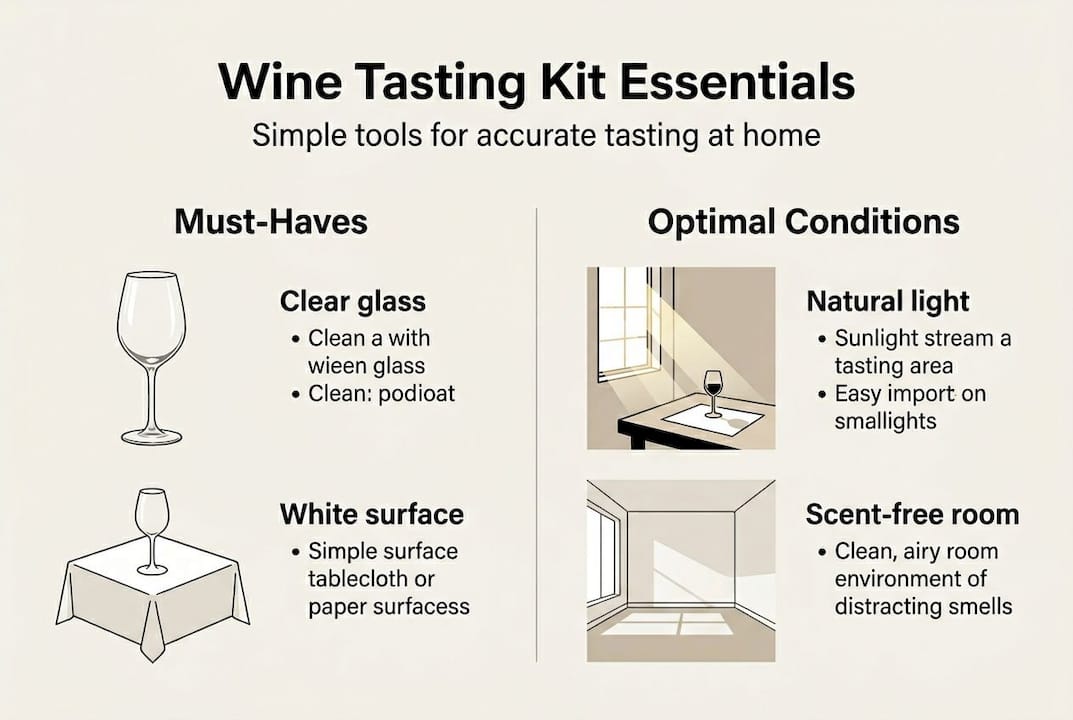
The environment matters more than most people realise. Strong perfume, cooking smells, or even a scented candle can hijack your nose before the wine gets a chance. Tasting in a neutral, well-ventilated room gives your senses a fair shot. Check out these tasting environment tips for setting up a proper space at home.
The mindset shift is where most people stumble. Leave the label face-down. Forget the price. Sequence prevents bias, which is why you assess colour before you ever bring the glass to your nose. Your brain is wired to let expectations colour perception, so removing those cues is the whole game.
| Item | Why it matters |
|---|---|
| Clear glassware | Accurate colour and aroma assessment |
| White surface | True colour reference |
| Natural lighting | Unbiased visual evaluation |
| Palate cleanser | Resets between wines |
| Notepad or app | Builds your personal reference library |
Building a solid tasting kit is part of developing your wine portfolio essentials, and it pays off fast once you start applying the process consistently.
Pro Tip: Always taste in natural light and keep the room free of strong scents. Your nose is your most powerful tasting instrument, and it’s easily distracted.
Step-by-step guide to the four-stage wine tasting process
With everything set up, here’s how to taste wine step by step for accurate results. The standard tasting process follows a structured four-stage methodology used by professionals worldwide, and once you know it, you’ll use it every single time.
Stage 1: Appearance. Pour about 30ml into your glass and tilt it against a white background. Look for clarity (is it clear or hazy?), colour intensity (pale, medium, deep?), and the specific hue. A young Riesling should be pale lemon. An aged Chardonnay shifts toward gold. Reds move from purple in youth toward garnet and eventually brick at the rim with age. These visual cues tell you a lot before a single sniff.
Stage 2: Nose. First, smell without swirling. Note the initial aromas. Then swirl and smell again. Swirling releases volatile compounds and opens the wine up dramatically. You’re looking for primary aromas (fruit, floral, herbal), secondary aromas (yeast, bread, cream from winemaking), and tertiary aromas (vanilla, tobacco, earth from oak and age). Faults show up here too, which we’ll cover shortly.
Stage 3: Palate. Take a proper sip and let it coat your whole mouth. Assess sweetness first, then acidity (does your mouth water?), tannins (that drying grip on your gums), alcohol (warmth in the throat), and flavour intensity. Then there’s the finish, which is how long the flavour lingers after you swallow.
Stage 4: Conclusions. Pull it all together. What’s the quality level? Is it ready to drink or does it need time? Could you identify it blind? Using an objective wine scoring framework here helps you stay consistent across tastings.
| Stage | Key assessment points |
|---|---|
| Appearance | Clarity, intensity, colour, viscosity |
| Nose | Primary, secondary, tertiary aromas, faults |
| Palate | Sweetness, acidity, tannins, alcohol, finish |
| Conclusions | Quality, readiness, blind ID |
For deeper reading on the deductive method details, the Sommelier Education Authority breaks it down beautifully. Understanding quality benchmarks alongside your tasting notes makes the whole process click.
Pro Tip: Hold each sip in your mouth for 10 to 15 seconds, drawing in a little air through your lips. It sounds ridiculous but it maximises flavour perception and gives you a much cleaner read on finish length.
Comparing tasting methodologies: WSET, CMS, and the 5 S’s
After learning the classic tasting method, it’s valuable to know the grids and approaches used by enthusiasts and pros. Not all frameworks are built the same, and choosing the right one depends entirely on where you’re at and what you’re trying to achieve.
WSET focuses on objective quality assessment and is used globally for formal wine qualifications. It’s grid-based and academic, designed to produce consistent, repeatable evaluations. The WSET Systematic Approach to Tasting (SAT) covers appearance, nose, and palate in granular detail, making it ideal if you want a rigorous, transferable skill. Check out the WSET methodology for a thorough breakdown of how the grid works in practice.
The Court of Master Sommeliers (CMS) framework leans heavily into blind identification and service. It’s hospitality-centric, built for professionals who need to identify wines quickly and confidently in a restaurant setting. The hospitality tasting approach is a different beast from the collector’s mindset, but understanding it sharpens your blind tasting instincts considerably.
The 5 S’s (see, swirl, sniff, sip, savour) are the entry point. Simple, memorable, and approachable. They won’t give you the nuance of WSET or CMS, but they get beginners engaging with wine analytically rather than just emotionally. That’s a solid start.
| Framework | Best for | Depth |
|---|---|---|
| WSET SAT | Collectors, enthusiasts, students | High |
| CMS deductive | Hospitality pros, blind tasting | High |
| 5 S’s | Beginners, casual drinkers | Low |
Ignore critic scores. Use the SAT or deductive tasting method to verify premium claims yourself. Your palate is the only authority that matters.
For serious collectors, the WSET SAT is the gold standard for wine value assessment because it strips away marketing and forces you to evaluate what’s actually in the glass.
Troubleshooting and spotting value: faults, finish, and comparative tasting
Knowing how to taste is only half the picture. Here’s how to spot true value and avoid common pitfalls.
Visual faults show up early. Haziness in a young wine that’s not meant to be unfiltered is a red flag. Amber or bricking colours in a young red signal premature oxidation. Hazy or bricking colours can indicate faults or simply advanced age, so context matters. On the nose, musty wet cardboard or damp basement smells point directly to cork taint (TCA contamination), one of the most common and costly faults in premium bottles.
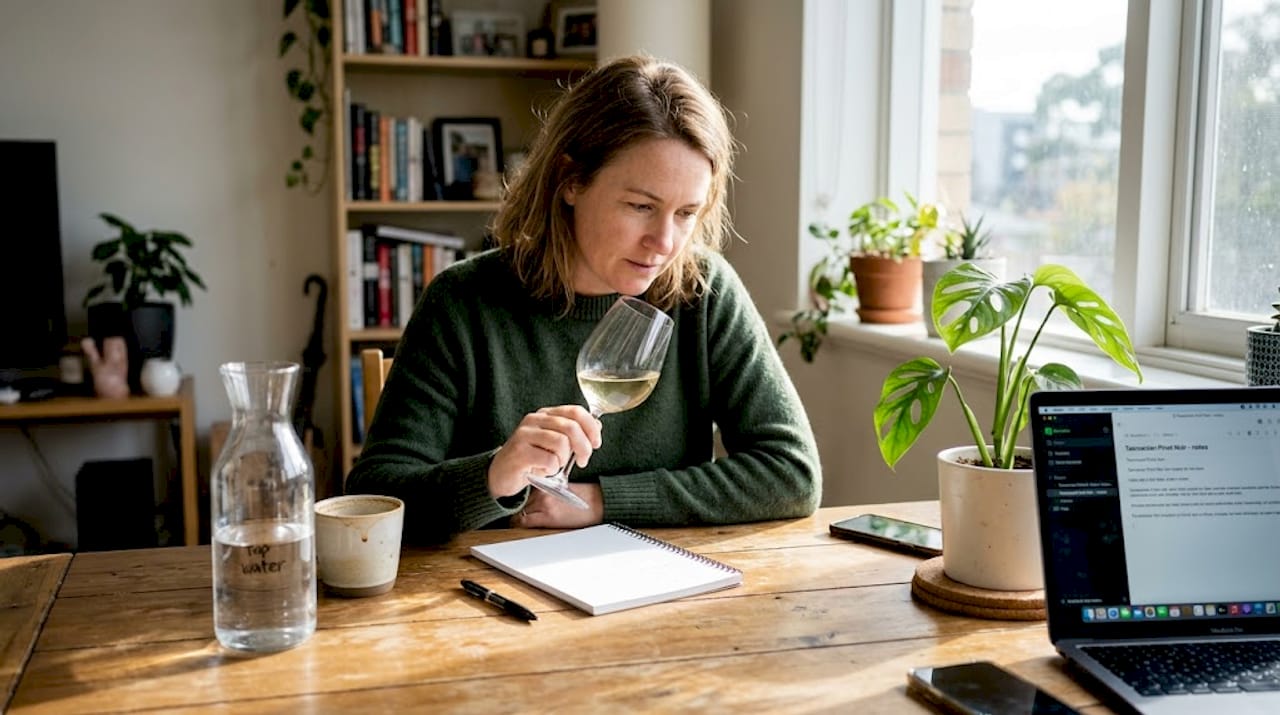
Finish length is your most honest quality benchmark. A finish under 5 seconds is short and signals lower quality. A finish stretching past 45 seconds is exceptional territory, the kind you find in Grand Cru Burgundy and serious aged Bordeaux. Most mid-range wines land between 10 and 30 seconds. Once you start timing your finishes, the marketing language on back labels starts to look pretty hollow.
Comparative and blind tasting is where the real anti-establishment power lives. Tasting 3 to 8 wines side by side, without seeing the labels, exposes overpriced bottles faster than any review ever could. Vertical tastings (same wine across multiple vintages) reveal how a wine actually ages versus how a producer claims it ages. That’s real data. That’s how you stay ahead of the hype. These blind tasting tips are worth bookmarking before your next session.
Knowing how to spot wine value comes down to combining your tasting notes with solid wine value benchmarks and understanding how wine vintage ratings affect real-world pricing.
Pro Tip: Record your finish times in your tasting notes and compare them side by side. After a dozen sessions, you’ll have your own personal quality database that no critic can replicate.
Why mastering structured tasting is your best tool against wine hype
Having tackled every step and common pitfall, here’s what years in the game have taught us about flipping the wine script.
The wine industry profits from your uncertainty. When you don’t have a framework, you default to price and prestige as proxies for quality. That’s exactly what they want. Structured tasting builds an anti-establishment edge because it forces every bottle to prove itself on objective terms. Faults get exposed. Short finishes get clocked. Overpriced labels get called out.
Comparative tastings changed everything for us. Putting a $30 bottle next to a $150 bottle, blind, is one of the most clarifying experiences in wine. Sometimes the $30 bottle wins on finish length and complexity. That’s not a fluke. That’s the market mispricing quality, and it’s your opportunity.
Use your tasting notes as a negotiation tool. When you can articulate exactly why a wine’s finish falls short or why the nose shows early oxidation, sellers and retailers take you seriously. You’re no longer a punter buying on recommendation. You’re a buyer with receipts.
Explore cellar-aged wine examples to see how structured tasting applies to wines with serious ageing potential. The methodology scales beautifully from a $25 table wine to a $500 collector’s bottle.
Ready to taste and buy with confidence?
Now that you know how to cut through the noise, here’s where to put your skills to work.
You’ve got the process. You’ve got the framework. Now you need bottles worth tasting. At FU Wine, we source rare, premium, and hard-to-find wines at prices that make the traditional retail model look embarrassing. No inflated markups. No pretentious gatekeeping. Just genuinely exceptional bottles at aggressively fair prices.
Browse our rotating selection of premium and rare wines and apply everything you’ve just learned. Flash deals move fast, and the good stuff doesn’t hang around. Every bottle is a small rebellion. Come find yours.
Frequently asked questions
What are the standard stages in the wine tasting process?
The four standard stages are Appearance, Nose, Palate, and Conclusions, following a structured methodology used by wine professionals worldwide.
How can blind tasting help collectors find value bottles?
Blind tasting removes price bias and label influence, letting collectors objectively assess quality and identify genuine value without being swayed by reputation or marketing.
What finish length signals high wine quality?
A finish over 45 seconds generally signals exceptional quality, while a finish under 5 seconds indicates lower quality wine regardless of price or label.
Which tasting methodology is best for beginners?
The 5 S’s are beginner-friendly compared to professional grids, offering a simple and approachable framework that builds analytical habits without overwhelming new tasters.
How do faults like cork taint appear in structured tasting?
Cork taint appears on the nose as musty, wet cardboard smells during the nose stage, making the structured tasting sequence an effective early-warning system for faulty bottles.