

The role of transparency in wine buying
TL;DR:
- Transparency in wine buying involves access to verified information about origin, ingredients, and production methods, reducing reliance on marketing narratives. EU regulations now mandate detailed labeling and cookie-free QR codes to ensure factual, accessible data for consumers; blockchain technology further secures supply chain integrity. Consumers can verify authenticity through third-party certifications and scientific testing, making informed choices based on credible evidence rather than stories.
You pick up a bottle, scan the label, and still have no real idea what you’re drinking. That’s the lived reality for most wine buyers. The role of transparency in wine buying has never mattered more than it does right now, because the gap between what producers know and what consumers can actually verify is enormous. Wine is packed with what researchers call “credence attributes” — origin, organic status, production practices — things you simply cannot confirm by tasting or smelling. This article covers the regulations, technologies, and practical steps that put real knowledge back in your hands.
Table of Contents
- Key takeaways
- The role of transparency in wine buying
- EU wine labelling: what changed in 2024
- Digital traceability: blockchain and QR codes
- Wine authentication: the science behind the label
- How to choose transparent wines
- My take on transparency and what consumers miss
- Why FU Wine is the transparent choice
- FAQ
Key takeaways
| Point | Details |
|---|---|
| EU labelling rules changed in 2024 | New regulations require full ingredient and nutrition info accessible via QR code on every bottle. |
| Digital traceability drives purchase intent | Studies confirm that perceiving traceability tech as credible directly increases your likelihood of buying. |
| Scientific authentication backs origin claims | Isotope and genetic testing verify where a wine actually comes from, not just what the label says. |
| QR codes must be cookie-free and factual | Lawful QR links carry only mandatory data, no advertising, no tracking. |
| Verifiable evidence beats good storytelling | Look for certified testing and traceability, not just a romantic producer narrative. |
The role of transparency in wine buying
The wine industry has a long tradition of beautiful mystery. Evocative tasting notes, hand-drawn labels, and poetic origin stories sell bottles beautifully. What they do not always sell is truth.
Transparency in wine buying means something specific. It means having access to verified, factual information about what is in the bottle, where it came from, how it was made, and who made it. Not vibes. Not marketing. Facts.
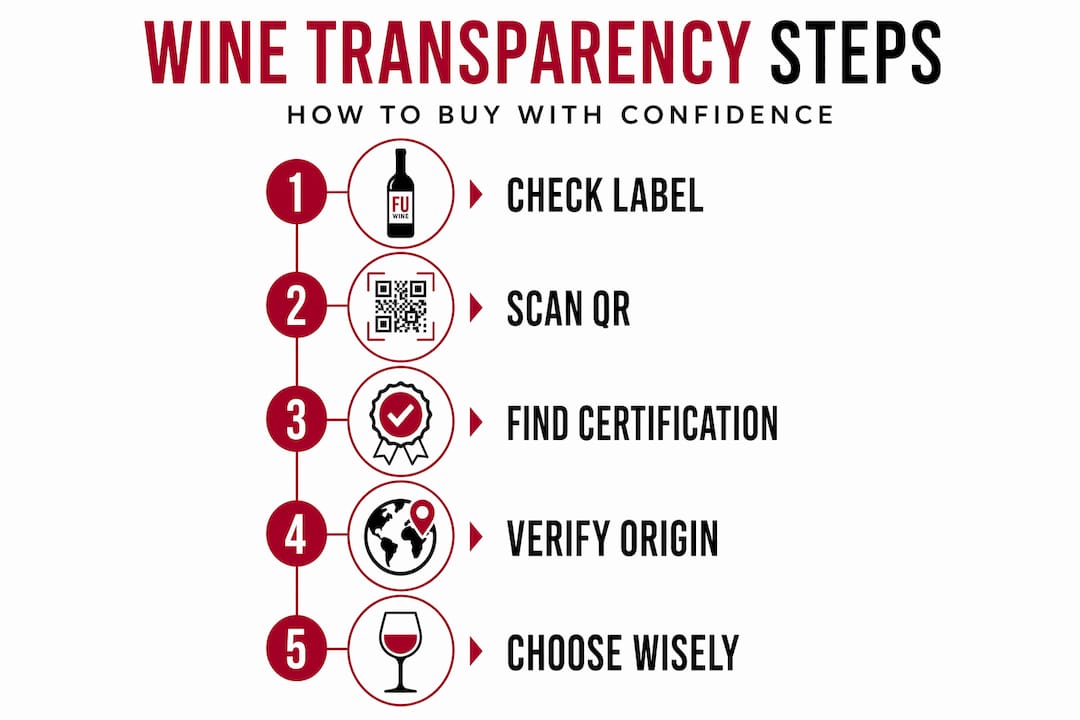
This matters because credence attributes like origin and sustainability cannot be verified by the consumer after purchase. You cannot taste whether a wine is genuinely organic. You cannot smell whether it actually came from the valley printed on the label. Without transparency, you are trusting someone else’s word entirely. That is a significant ask when you are spending real money.
The good news is that regulation, technology, and a growing consumer demand for honesty are shifting this equation fast.
EU wine labelling: what changed in 2024
The European Union moved first and it moved hard. EU Regulation 2021/2117 now mandates that all wines from the 2024 harvest onward must carry the energy value on the physical label, with full ingredient lists, allergen disclosures, and nutritional information accessible via a QR code. This is not optional. It is law.
Here is what this means practically for you as a buyer:
- The QR code on a compliant bottle must link exclusively to a factual data sheet. No advertising, no pop-ups, no subscription forms.
- Allergens must still appear physically on the bottle label itself, not hidden behind a QR code.
- QR-linked pages must be cookie-free, meaning producers cannot use your scan to track your behaviour or serve you marketing.
- Multilingual requirements apply, so the information must be accessible regardless of which market the wine is sold in.
This is a genuinely significant shift. For the first time, EU wine consumers have a legally enforced right to factual product information at the point of purchase. The label is no longer just decoration.
Pro Tip: When you scan a wine’s QR code, check the URL that loads. If it redirects to a general marketing page or asks you to accept cookies, the producer may not be meeting their legal obligations. A compliant page goes straight to the facts.
The implications for Australian consumers buying imported European wines are real. If the bottle you are holding was harvested in 2024 or later and carries a European appellation, that QR code should deliver compliant, factual data. If it does not, that tells you something too.
Digital traceability: blockchain and QR codes
QR codes are the consumer-facing end of a much deeper technology stack. Behind the best of them sits digital traceability infrastructure, and in some cases, blockchain.
Blockchain traceability secures immutable supply chain data, meaning every record from vineyard to bottle is timestamped and cannot be altered retroactively. A producer cannot go back and change what the record shows about where grapes were sourced or how a wine was handled in transit. For a category plagued by fraud and misrepresentation at the premium end, this is a substantial development.
“Transparency is not a marketing strategy. It is an operating principle. The moment you make supply chain data immutable, you change the accountability dynamics of the entire industry.”
Research confirms what you might already suspect. Perceived traceability technology directly and meaningfully increases purchase intention, with studies recording an R² of 0.376 in measuring how traceability perception drives buying behaviour. In plain terms: when consumers believe a wine’s traceability data is credible, they are significantly more likely to buy it.
This is not just about fraud prevention. It also affects brand loyalty. When you can verify what you are buying, you feel confident buying it again. The impact on wine choices is cumulative. Trust builds with every bottle that delivers exactly what it promised.
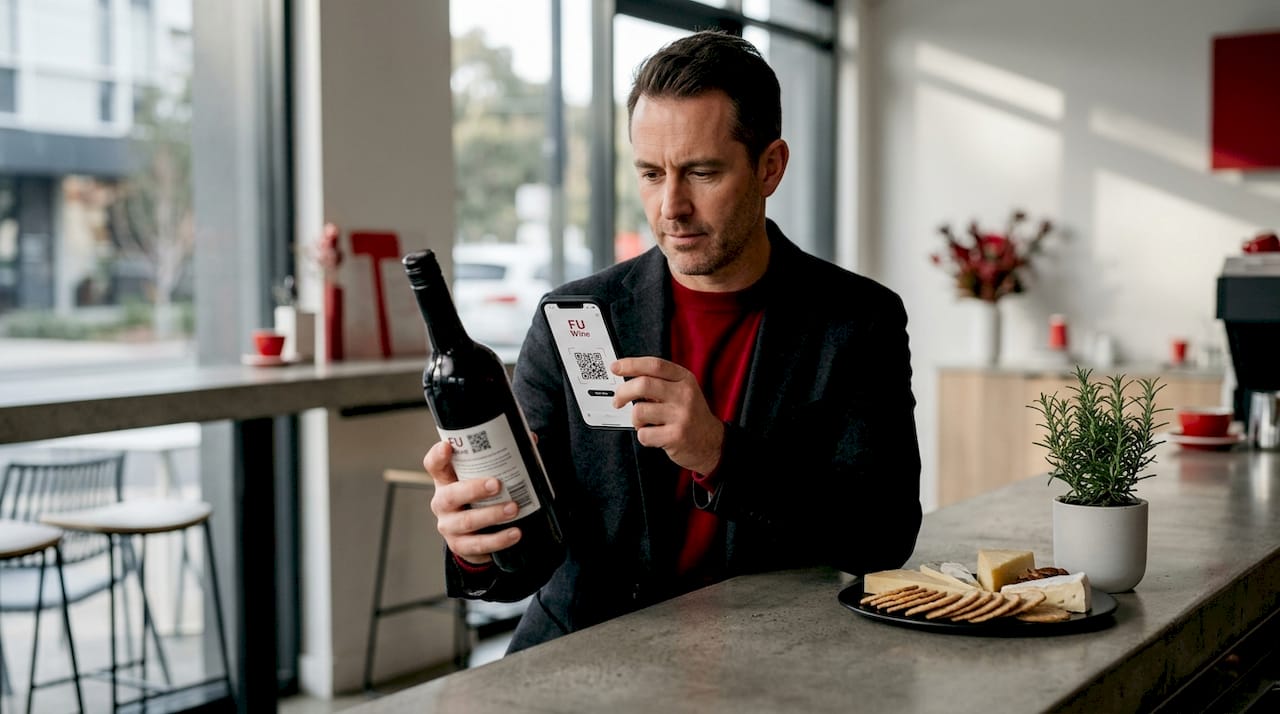
There are limitations worth acknowledging. Implementation costs and operational constraints slow technology adoption across the supply chain, particularly for smaller producers. Not every boutique winery has the resources or technical capacity to maintain blockchain-verified records. This is why third-party certification and independent verification still matter alongside any digital claims a producer makes.
Wine authentication: the science behind the label
A romantic producer story is not authentication. Real authentication is chemistry.
Scientists use a range of analytical methods to verify a wine’s origin and detect adulteration. The table below shows the key approaches:
| Method | What it verifies | Limitation |
|---|---|---|
| Isotope ratio mass spectrometry (IRMS) | Geographical origin, chaptalisation detection | Requires reference databases |
| SNIF-NMR | Alcohol origin and adulteration | Expensive equipment needed |
| ICP-MS | Mineral profile, geographical provenance | Data interpretation complexity |
| Genetic profiling | Grape variety authenticity | Cultivar database coverage varies |
| Organoleptic assessment | Style and quality indicators | Subjective and not fraud-proof |
Techniques like IRMS, SNIF-NMR, and ICP-MS form the scientific backbone of legitimate origin verification. When a regulatory body or independent certifier says a wine is genuinely from a particular appellation, these are the tools doing the heavy lifting.
The practical implication for buyers is this: certified origin claims backed by testing carry real weight. Marketing claims that reference “authenticity” without specifying what testing or certification underpins them should be treated with scepticism.
Pro Tip: Look for wines that carry third-party appellation certification or organic certification from a recognised body. These certifications require actual testing, not just producer declarations.
Verifiable testing over storytelling is the distinction that separates genuine transparency from well-crafted marketing. The wine industry has never been short on beautiful stories. What it has sometimes been short on is evidence.
How to choose transparent wines
You do not need a chemistry degree to make smarter buying decisions. You need a checklist and the confidence to use it.
-
Check for allergen disclosure. A compliant EU wine label must show allergens like sulphites, egg products, or milk products directly on the bottle, not tucked away behind a QR code. If this information is missing entirely, that is a red flag.
-
Scan the QR code before you buy. If you are buying a European wine from the 2024 harvest onward, scan that QR code in the shop. A compliant page loads factual product data without cookies or advertising. If it takes you to a winery homepage or a newsletter sign-up, the producer is not meeting their obligations.
-
Look for certified third-party claims. Words like “organic,” “biodynamic,” or specific appellation designations carry legal meaning only when backed by certification. Ask who certified it. Recognised bodies include Australian Certified Organic, USDA Organic, and various EU appellation authorities.
-
Research the producer’s sourcing practices. A producer who is open about wine sourcing transparency will tell you where the grapes came from, who grew them, and what the vintage conditions were. Vague “estate blend” language without detail deserves follow-up questions.
-
Understand what you are paying for. Transparency links directly to value assessment. A wine priced at a premium should be able to justify that premium with verifiable claims about origin, production method, or ageing conditions. If it cannot, you may be paying for packaging and positioning rather than quality.
Transparency enables quick, clear access to meaningful traceability and certification information at the point of purchase. That is what makes it useful rather than theoretical. You should not need to write to a producer weeks later to find out what is in the bottle you already drank.
Pro Tip: Keep a notes app on your phone for wine purchases. When you find a producer who provides complete, verifiable transparency, record them. Build your own shortlist of trustworthy sources. Your future self will thank you.
My take on transparency and what consumers miss
I have spent years watching the wine industry talk about transparency while quietly keeping the curtains drawn. And what I have noticed is that consumers often mistake beautiful packaging for honest communication.
Here is what I have learned: real transparency is uncomfortable for producers who have something to hide and genuinely easy for those who do not. When a winery cannot tell you what grapes went into a blend, which block they came from, or what additives were used, that silence is information. Treat it as such.
The technology shift is real and I find it genuinely exciting. AI transparency in wine recommendations and blockchain-verified supply chains are changing the accountability dynamic. But I also think consumers underestimate how much power they already hold. Asking questions at the point of purchase, demanding compliant QR codes, and refusing to accept vague “sustainable farming” claims without certification details are all things you can do right now.
What concerns me is the gap between regulation and reality. The EU rules are strong on paper. Implementation across thousands of small producers is messy. The brands most likely to comply fully are those with nothing to hide. That is actually a useful filter.
My honest advice: spend your money with producers who find transparency easy. They are the ones who have earned it.
— Damien
Why FU Wine is the transparent choice
FU Wine was built on the principle that you deserve to know exactly what you are buying and why it is worth what you are paying. No smoke, no mirrors, no markup for the sake of mystique.
Every bottle in the FU Wine collection comes with the provenance story you can actually verify. Think rare cellar releases, boutique producer runs, and high-scoring vintages sourced through direct producer relationships that cut out the layers of middlemen inflating your price. When FU Wine says a wine is from a specific region or vineyard, that claim is backed by sourcing reality, not marketing gloss.
The rebellious part? Premium wine with full transparency should not cost you a fortune. At FU Wine, you get the verified quality, the real provenance, and the 30 to 70 per cent discount on top. Browse the current collection and see what honest wine buying actually looks like.
FAQ
What is the role of transparency in wine buying?
Transparency in wine buying means having access to verified, factual information about a wine’s ingredients, origin, and production methods. It reduces the information gap between producers and consumers, helping you make confident, informed purchase decisions.
What do the new EU wine labelling rules require?
From the 2024 harvest, EU regulation mandates that wines carry energy value on the physical label and provide full ingredient and nutrition information via a cookie-free QR code. Allergens must appear directly on the bottle.
How does blockchain improve wine transparency?
Blockchain creates immutable, timestamped supply chain records from vineyard to bottle. This makes it impossible for producers to retroactively alter data about grape origin, production practices, or handling, which significantly reduces fraud risk.
How can I tell if a wine’s transparency claims are genuine?
Look for third-party certification from recognised bodies and ask whether origin claims are backed by scientific testing such as isotope analysis or genetic profiling. Vague storytelling without verifiable evidence is not the same as real transparency.
Does transparency affect the quality of the wine I buy?
Transparency does not change what is in the bottle, but it gives you the tools to assess whether the wine delivers on its promises. Perceived traceability strongly influences purchase confidence and helps you connect price to verifiable quality rather than marketing claims.