

What makes wine red: the science behind the colour
TL;DR:
- Red wine’s color originates from anthocyanins in grape skins, not the juice itself, and is influenced by maceration time. Longer skin contact extracts more pigment and tannins, resulting in deeper, more stable colors, while aging shifts hues from violet-red to brick and brown tones. Color changes reflect fermentation processes, acidity, and bottle age, offering insights into a wine’s structure and maturity.
Squeeze a black grape over a white cloth. The juice that drips out is almost completely colourless. That single fact explains everything. Red wine gets its colour from pigments locked inside the grape skins, not the juice itself. Those pigments, primarily a group of compounds called anthocyanins, dissolve into the juice only when skins and liquid spend time together during fermentation. That process is called maceration, and it is the single biggest variable in how red, how deep, and how stable a wine’s colour turns out to be.
A few things worth knowing upfront:
- Grape juice from black-skinned varieties is greenish-white, not red
- Anthocyanins are the primary pigments responsible for red wine’s colour
- Maceration time directly controls how much colour ends up in the wine
- Wine acidity (pH) affects how vivid the colour appears in the glass
- As red wine ages, colour shifts from deep violet-red toward brick and brown tones
Table of Contents
- What makes wine red: grape skins and the maceration process
- The chemistry behind red wine’s colour and how it changes with age
- Why red grapes can make white wine
- How the winemaking process shapes red wine colour step by step
- FU Wine’s take: what colour actually tells you about what’s in your glass
- Premium wine without the pretension: FU Wine
- Key takeaways
What makes wine red: grape skins and the maceration process
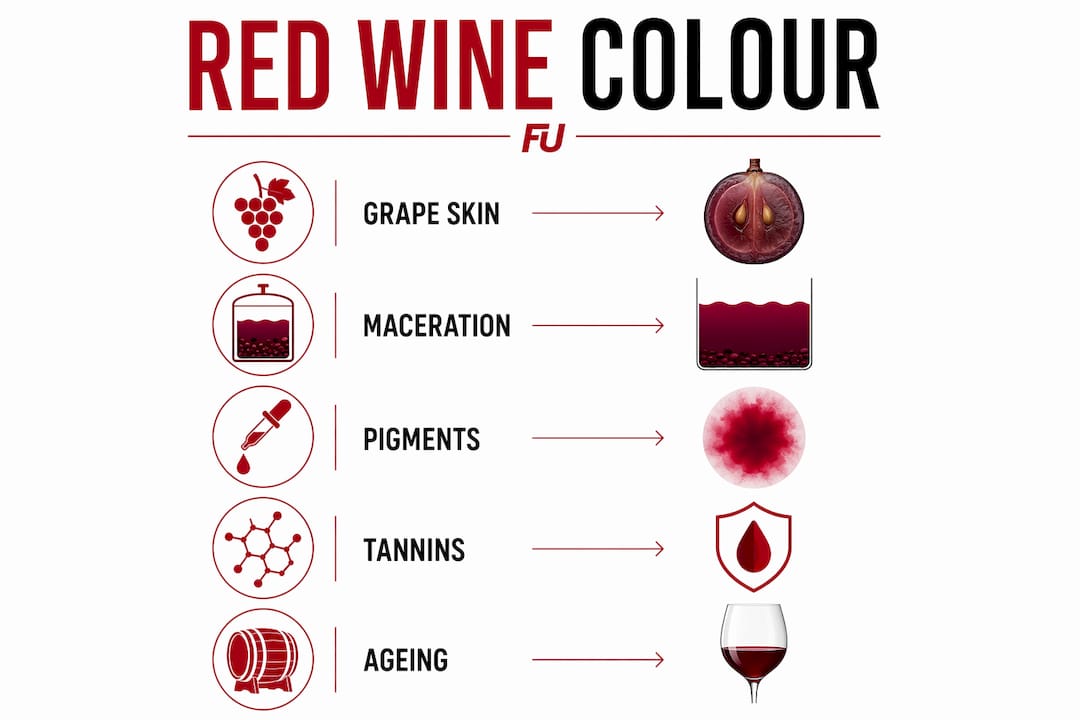
The colour lives in the skin, full stop. Black grape varieties carry concentrated anthocyanin pigments in their skin cells, while the pulp and juice beneath remain largely clear. When winemakers crush grapes and leave the skins in contact with the juice during fermentation, those pigments gradually dissolve into the liquid. This is maceration, and managing its length is one of the most critical decisions a winemaker makes.
Short maceration produces lighter, brighter reds. Extended maceration, sometimes running well beyond the end of fermentation, pulls more phenolic compounds from the skins and seeds, building deeper colour and firmer tannin structure. The alcohol produced during fermentation actually helps extract tannins, which is why post-fermentation skin contact tends to produce wines with more grip and structural complexity than pre-fermentation cold soaking alone.
Rosé sits in the middle. Winemakers allow only brief skin contact, typically a matter of hours, extracting just enough pigment for a pink hue before pressing the skins off. White wine made from black grapes skips skin contact almost entirely.
| Wine style | Skin contact duration | Colour result |
|---|---|---|
| White (from black grapes) | Near zero | Colourless to pale straw |
| Rosé | Hours | Pink to salmon |
| Light red | Days | Ruby, pale red |
| Full red | Weeks (including post-fermentation) | Deep ruby to violet |
Pro Tip: Tannins and colour are extracted together during maceration. A wine with deep, saturated colour almost always has more tannin grip, which is why big reds pair so well with fatty red meats — the tannins bind to proteins and soften on the palate.
The chemistry behind red wine’s colour and how it changes with age
Anthocyanins are the headline act, but the chemistry underneath is genuinely fascinating. These pigments exist in several different molecular forms depending on the wine’s pH, and only some of those forms are actually red. At the acidic pH typical of wine (roughly 3.2–3.8), a significant fraction of anthocyanins sits in a colourless hydrated form. The visible redness you see is produced by the fraction that remains in its coloured ionic state, plus a phenomenon called copigmentation, where anthocyanins stack with other flavonoid molecules to amplify colour intensity.
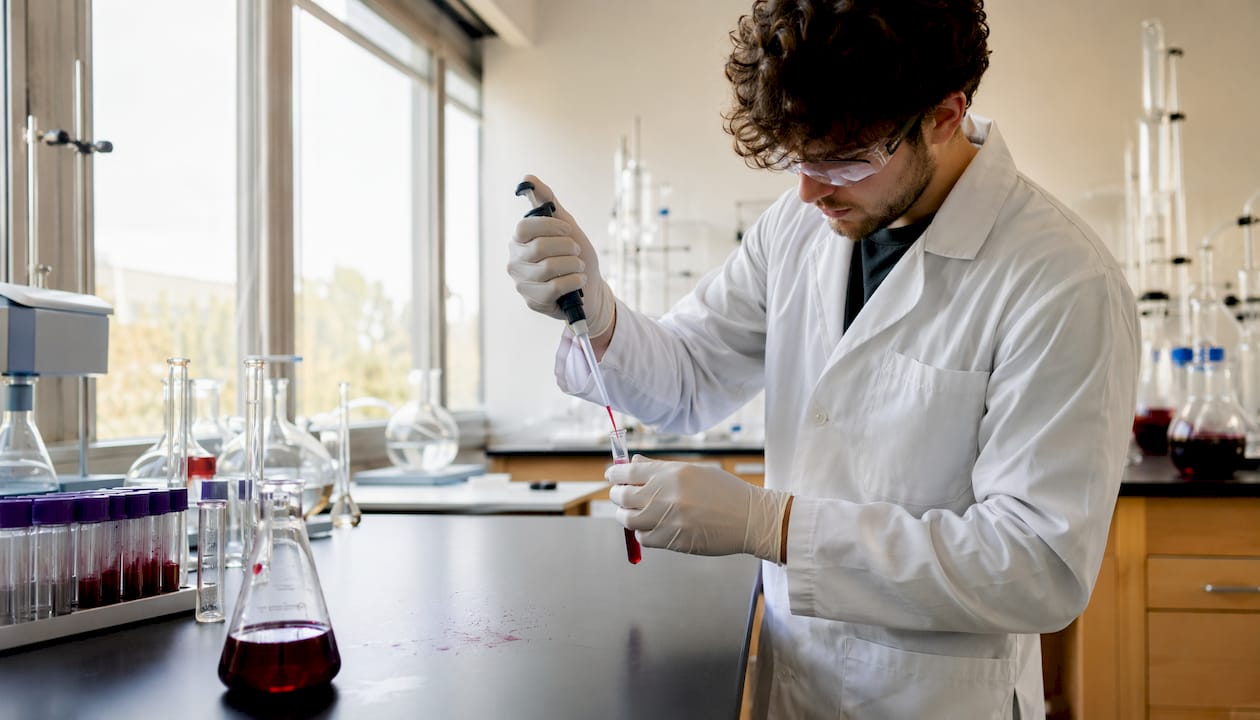
Lower pH (higher acidity) generally pushes more anthocyanins into their red, coloured forms. Higher pH wines can appear more blue-violet or even duller. This is why acidity management during winemaking materially affects the final colour you pour into a glass.
Over time, free anthocyanins react with tannins (proanthocyanidins) to form polymeric pigments. These larger molecules are more stable, less sensitive to pH swings, and resistant to bleaching. The Australian Wine Research Institute notes that extended maceration increases these stable polymeric pigments, producing wines that hold their colour longer during ageing. The trade-off is that free anthocyanin levels drop, so very young extended-maceration wines can sometimes look less saturated than shorter-maceration wines of the same age.
As a wine ages, the bright violet-red of youth gives way to brick-red and eventually brown tones. This shift happens because monomeric anthocyanins gradually convert into polymeric pigments and oxidative products that absorb light differently, moving the hue from blue-red toward orange-red and tawny.
| Pigment type | Colour appearance | Stability | Typical wine age |
|---|---|---|---|
| Monomeric anthocyanins | Bright violet-red | Low (pH sensitive) | Young wines |
| Copigmentation complexes | Deeper, more saturated red | Moderate | Young to mid-age |
| Polymeric pigments | Brick-red, stable | High | Mid to aged wines |
| Oxidative products | Brown, tawny | Very high | Older wines |
Why red grapes can make white wine
Here is the bit that trips people up. The grape’s skin colour does not determine the wine’s colour. The juice does not care what colour the skin is. Press black grapes quickly, remove the skins before they have a chance to leach pigment, and you get colourless juice that ferments into white wine.
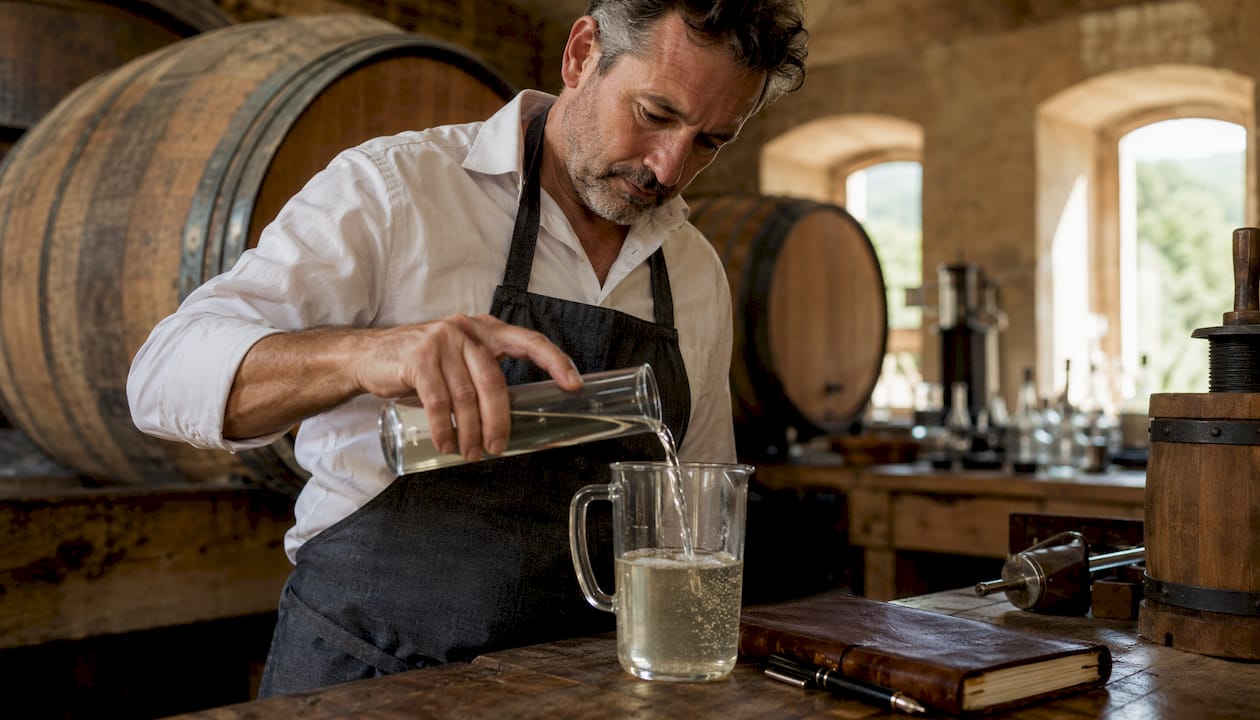
Champagne is the most famous example. Many top Champagne blends include Pinot Noir and Pinot Meunier, both black-skinned varieties, yet the wine is pale gold. Whole-cluster pressing with minimal skin contact keeps the juice clean and pigment-free.
Key points on this phenomenon:
- Grape juice from virtually all varieties is colourless or faintly greenish
- Colour extraction requires physical contact between skins and juice over time
- Pressing speed and gentleness determine how much pigment enters the juice
- The Teinturier grape family is a rare exception, with pigmented pulp as well as skin
- Winemakers can dial colour anywhere from zero to deep purple purely through process decisions
For a deeper look at how white wine colour develops and what each shade signals, the same pigment logic applies, just without the anthocyanin contribution from skin contact.
How the winemaking process shapes red wine colour step by step
Every stage from harvest to bottle influences the final colour. Here is how it plays out:
-
Harvest and sorting. Grape health at picking matters. Damaged or botrytis-affected fruit contains oxidative enzymes that can degrade anthocyanins before fermentation even starts, dulling colour potential.
-
Crushing and destemming. Breaking the skins releases juice and begins pigment exposure. Stems are usually removed because they contribute harsh, green tannins, though some winemakers retain a portion for structural reasons.
-
Pre-fermentation maceration (cold soak). Some winemakers chill the must to around 10°C for one to four days before fermentation begins. This extracts colour and fruit compounds into the water phase without the tannin extraction that alcohol accelerates later.
-
Alcoholic fermentation with skins present. Yeast converts sugars to alcohol while skins remain submerged or floating in the must. Winemakers punch down or pump over the floating skin cap regularly to maximise pigment extraction and prevent spoilage.
-
Post-fermentation maceration. Leaving skins in contact after fermentation finishes extracts more tannin and shifts colour toward stable polymeric pigments. Duration varies from days to weeks depending on the wine style targeted.
-
Pressing. Free-run juice drains off naturally. Press fractions contain higher phenolics and can be blended back in controlled proportions to add colour depth and structure.
-
Malolactic fermentation (MLF). Almost universal in red winemaking, MLF converts sharp malic acid to softer lactic acid. The slight pH rise that accompanies MLF can subtly shift colour toward more blue-red tones.
-
Ageing. Oak barrel ageing introduces controlled oxygen exposure, which drives polymerisation of pigments and tannins, stabilising colour and softening texture. The winemaking process in barrel gradually shifts the wine from vivid red toward more complex, evolved hues.
| Stage | Colour impact |
|---|---|
| Cold soak | Early anthocyanin extraction, minimal tannin |
| Fermentation with skins | Primary colour and tannin extraction |
| Post-fermentation maceration | Polymeric pigment formation, colour stability |
| MLF | Minor pH shift, slight hue change |
| Oak ageing | Oxidative polymerisation, brick-red evolution |
FU Wine’s take: what colour actually tells you about what’s in your glass
Colour is not decoration. It is a readout of everything that happened in the vineyard and the winery before the bottle reached you. A deep violet-purple in a young Shiraz tells you the winemaker extracted hard and the grapes were ripe. A translucent brick-red in a ten-year-old Pinot Noir tells you anthocyanins have polymerised and the wine has evolved. Neither is better. They are just different conversations.
The intensity of red wine colour is one of the fastest ways to read a wine’s age, structure, and winemaking style before you even smell it. Pale and translucent usually means light tannins and early drinking. Deep and opaque usually means extraction, structure, and time.
At FU Wine, the wines sourced are chosen with this kind of knowledge baked in. A premium red wine from a boutique producer tells a story in its colour, and knowing how to read that story makes every glass more interesting.
Pro Tip: Tilt your glass against a white background in good light. The colour at the rim tells you more than the centre. A purple rim means youth. A brick or orange rim means age and evolution. This is the wine tasting technique sommeliers use to estimate a wine’s age before reading the label.
A few things worth understanding about colour and what it signals:
- Deep colour generally correlates with higher tannin and more extraction
- Pale colour in a red does not mean lower quality, just a different style
- Colour fading at the rim is a reliable sign of bottle age
- Wines with high acidity tend to show brighter, more vivid red hues
- Colour stability over years is a marker of good maceration management during production
You can also explore how red wine compares to white in terms of the compounds that skin contact contributes, beyond just colour.
Premium wine without the pretension: FU Wine
Understanding what gives red wine its colour is the kind of knowledge that changes how you shop for wine. You stop buying labels and start reading glasses.
FU Wine is built for exactly that reader. The model is simple: source rare, high-scoring, and hard-to-find bottles through direct relationships, cellar clearances, and allocation releases, then pass the savings straight to you. No middlemen padding the margin. No retail theatre. Just genuinely good wine at prices that make sense, often 30–70% below what you would pay elsewhere. Flash deals rotate constantly, so the best bottles do not hang around. Check what is available now at FU Wine and grab something worth actually thinking about.
Key takeaways
Red wine gets its colour from anthocyanin pigments in black grape skins, extracted into colourless juice during maceration, with ageing chemistry gradually shifting that colour from violet-red to brick and brown.
| Point | Details |
|---|---|
| Colour source | Anthocyanin pigments in grape skins, not the juice, create red wine’s colour. |
| Maceration controls intensity | Longer skin contact extracts more pigment and tannin, producing deeper, more stable colour. |
| pH affects visible redness | Higher acidity pushes more anthocyanins into their coloured form, making wine appear more vivid. |
| Ageing shifts the hue | Polymeric pigments form over time, moving colour from bright violet-red toward brick and brown. |
| FU Wine | Sources premium, rare reds with the kind of colour depth and winemaking story worth knowing about. |