

Best wine that goes with pork: cut-by-cut guide
TL;DR:
- The best wines for pork balance the meat’s sweetness and fat content, varying with cut and cooking method. Light reds like Pinot Noir and white wines such as Riesling are ideal for lean cuts, while high-acidity, off-dry Riesling suits fatty pork belly, and bold reds complement smoky or barbecued pork. Matching wine characteristics such as acidity, tannins, and residual sugar with dish style ensures a harmonious pairing that elevates the meal.
The best wine that goes with pork is one that balances the meat’s natural sweetness and fat content, typically a medium-bodied red like Pinot Noir or a high-acidity white like Riesling. Wine pairing with pork is not one-size-fits-all. The cut, cooking method, and sauce all shift the ideal match. A slow-roasted pork belly calls for something completely different to a quick pan-fried tenderloin. Get this right and the wine lifts the whole meal. Get it wrong and you’re left with a bitter, metallic mouthful that does neither the food nor the bottle any favours.
What wines pair best with different pork cuts?
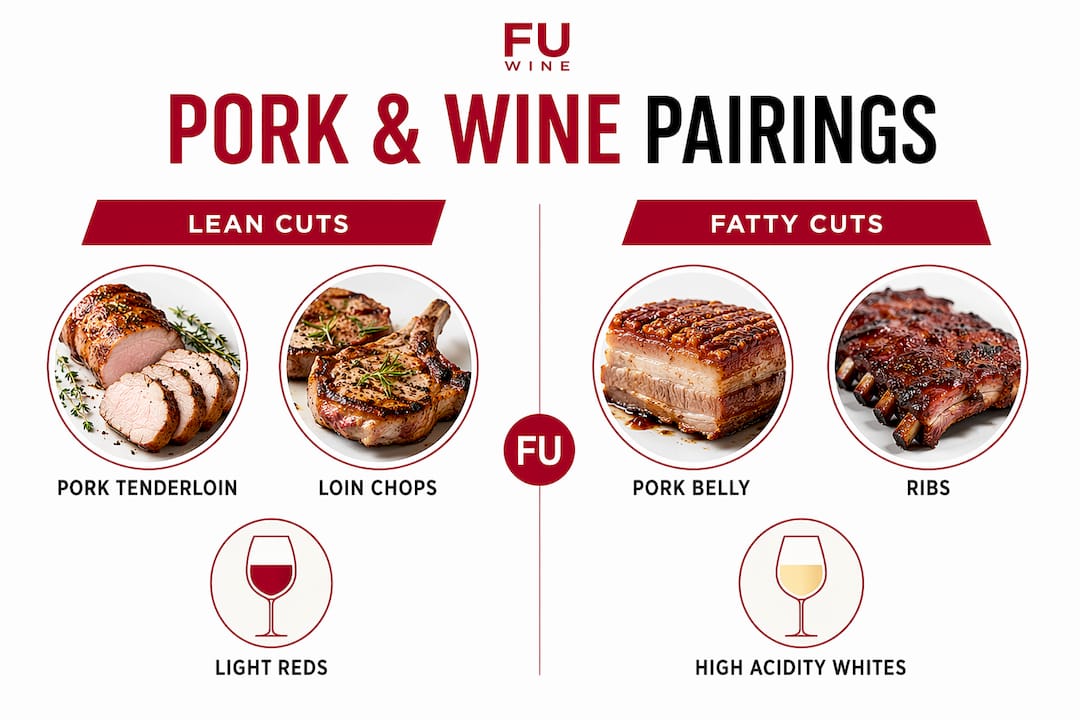
The cut is your starting point. Every pork preparation has a different fat level, texture, and flavour intensity, and your wine needs to match all three.
Lean cuts: pork tenderloin and loin chops
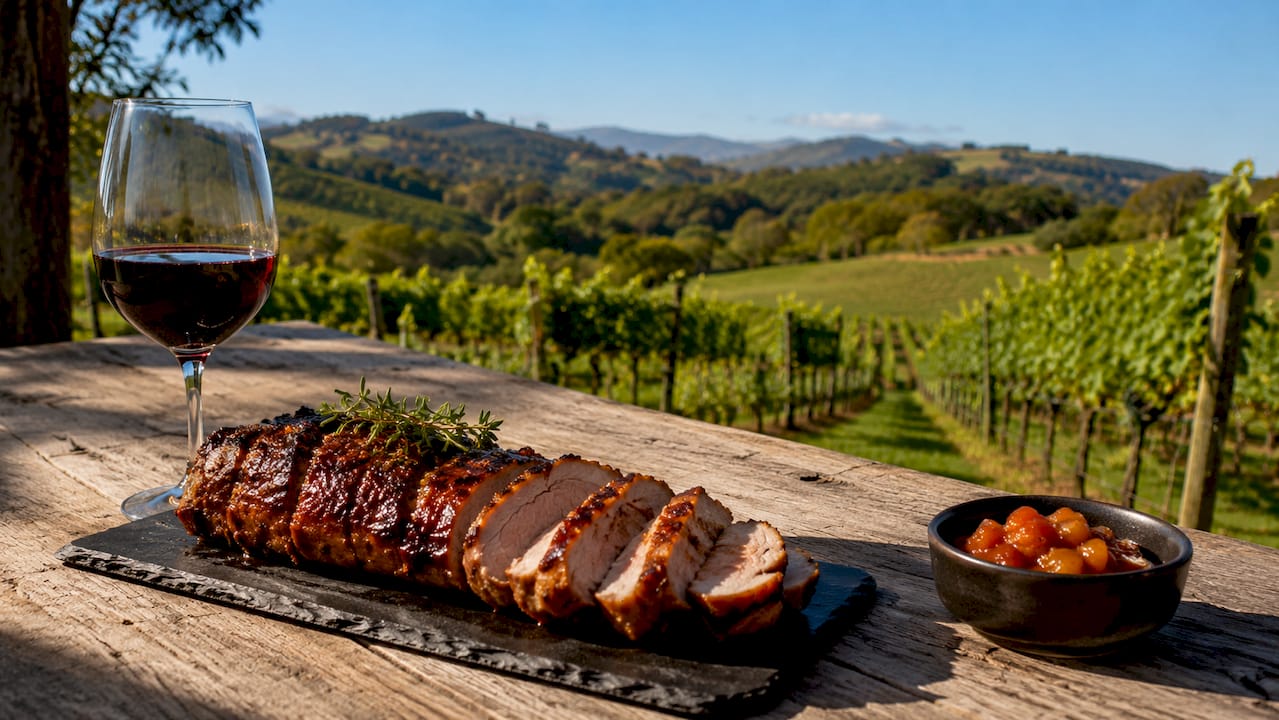
Lean pork is delicate. It has a mild, slightly sweet flavour that a big, bold red will simply bulldoze. Light-bodied reds like Pinot Noir and Beaujolais suit these cuts perfectly, delivering soft tannins and fresh, juicy fruit without overpowering the meat. Unoaked Chardonnay and Pinot Gris are equally strong choices if you prefer white. They bring enough body to stand up to the protein while keeping the pork’s sweetness front and centre.
Fatty cuts: pork belly and ribs
Pork belly is rich, unctuous, and loaded with fat. You need a wine with serious acidity to cut through it and refresh your palate between bites. Off-dry Riesling with residual sugar of 10–30g/L and alcohol sitting at 7–10% does exactly that. It cleanses the fat and the touch of sweetness plays beautifully against a salty crackling crust. Grenache blends and fruit-forward GSM (Grenache, Shiraz, Mourvèdre) styles from the Barossa Valley or McLaren Vale are the red wine answer here, offering ripe fruit and soft tannins that complement the richness without clashing.
Smoky and BBQ pork
Smoke and char need a wine with some grunt. Tempranillo and Shiraz both carry enough fruit intensity and spice to hold their own against bold BBQ flavours. An Australian Shiraz from the Clare Valley or Heathcote brings peppery, dark-fruit character that mirrors the smokiness rather than fighting it.
Cured and salty pork: ham, bacon, and charcuterie
Salt is the wild card. It amplifies tannins and makes heavy reds taste harsh. Sparkling wines and light, fruity reds are the go-to here. A Prosecco, Australian sparkling Shiraz, or even a chilled Lambrusco cuts through the salt and fat with ease. If you’re building a charcuterie board with prosciutto, salami, and cured ham, sparkling is your best friend.
Pro Tip: For a classic Sunday roast pork with apple sauce, try a Clare Valley Riesling or a cool-climate Pinot Noir from the Yarra Valley. Both handle the sweetness of the apple and the richness of the pork without missing a beat.
How do wine characteristics affect pork pairings?
Understanding why certain wines work with pork gives you the confidence to make good calls even when you’re standing in a bottle shop without a cheat sheet.
Acidity is your best mate
Acidity in wine acts like a squeeze of lemon on a rich dish. It cuts through fat, brightens the palate, and makes the next bite taste just as good as the first. This is why white wines like Riesling, Chenin Blanc, and unoaked Chardonnay often outperform reds with pork, particularly with lean cuts or dishes that carry fruit-based or Asian-inspired flavours. High acidity is the single most useful trait to look for when choosing a wine for pork.
Tannins: keep them low
Tannins are the grippy, drying sensation you get from big reds like young Cabernet Sauvignon. With pork fat, heavy tannins produce bitter, metallic tastes that ruin both the wine and the meal. The fat in pork amplifies tannin harshness in a way it does not with beef. Stick to wines with soft or silky tannins: Pinot Noir, Grenache, Barbera, and Gamay all fit the bill.
Residual sugar: the secret weapon
A touch of sweetness in a wine does remarkable things with salty, fatty pork. Off-dry styles balance the salt in cured meats and the richness of slow-cooked cuts. This is not about dessert-wine sweetness. It is about that subtle, refreshing quality in a German or Clare Valley Riesling that makes fatty pork taste lighter and more vibrant.
Matching intensity
A delicate wine gets lost next to a heavily spiced or smoked pork dish. A powerful wine crushes a simple pan-fried chop. The rule is straightforward: match the weight and intensity of the wine to the weight and intensity of the dish. A slow-roasted, herb-crusted pork loin calls for a medium-bodied red or a full-flavoured white. A quick pork stir-fry with ginger and soy calls for something light, crisp, and aromatic.
Pro Tip: When in doubt about whether to go red or white, ask yourself one question: is the dish rich and fatty, or lean and lightly seasoned? Rich and fatty points to high-acid whites or soft reds. Lean and lightly seasoned opens the door to almost anything medium-bodied.
How to choose and serve the perfect wine with pork
Knowing the right wine is only half the job. Buying it well and serving it correctly makes a real difference to what ends up in your glass.
Buying tips for Australian shoppers
- Prioritise grape variety over brand name. A Clare Valley Riesling or a Yarra Valley Pinot Noir will serve you better than an expensive, heavily oaked red chosen for its label.
- Look for wines described as “medium-bodied” or “fruit-forward” on the shelf card. These descriptors signal lower tannins and better pork compatibility.
- Use wine scoring guides to identify quality bottles at honest prices. A high score does not always mean a high price tag.
- For a wine pork roast pairing at a dinner party, buy two bottles of different styles and let your guests compare. It turns the meal into an experience.
Serving temperatures
Temperature changes how a wine tastes. Serve light reds like Pinot Noir and Gamay slightly chilled, around 14–16°C. This keeps the fruit bright and the tannins soft. Serve full whites like Chardonnay at 10–12°C, and sparkling wines at 6–8°C for maximum palate-cleansing effect. Serving a red too warm makes it taste flat and alcoholic, which is a common mistake that kills an otherwise good pairing.
Common mistakes to avoid
The biggest error home cooks make is reaching for a big, tannic red because pork is “meat.” Heavy, oak-forward wines clash with pork fat and produce bitterness that no amount of good cooking can fix. Young Cabernet Sauvignon is the classic offender. The exception is bold, sweet BBQ pork with a rich sauce, which can handle a softer, fruit-forward Cabernet. Even then, a Shiraz or Tempranillo is usually the better call.
When sauces and spices change everything
Matching wine to the sauce or glaze is as important as matching it to the cut. A honey and soy glaze on pork ribs pushes you toward an off-dry Riesling or a fruit-forward red. A creamy mushroom sauce on a pork loin calls for a rich, unoaked Chardonnay or a Pinot Noir. A spicy chilli rub needs a wine with balanced acidity and a touch of sweetness to cool things down. Ignore the sauce and you are only solving half the puzzle.
Pro Tip: Sparkling wines are an underrated choice for entertaining with pork. The carbonation physically cleanses the palate of fat between bites, which is why Champagne and pork belly is a genuinely brilliant combination, not just a fancy flex.
Quick reference: best wine styles for pork dishes
| Pork Dish | Recommended Wine | Why It Works | Serving Note |
|---|---|---|---|
| Pork tenderloin | Pinot Noir, unoaked Chardonnay | Soft tannins and bright acidity match lean, delicate meat | Pinot Noir at 14–16°C; Chardonnay at 10–12°C |
| Pork belly | Off-dry Riesling, Grenache blend | High acidity cuts fat; residual sugar balances salty crust | Riesling well chilled; Grenache slightly cool |
| BBQ or smoky pork | Shiraz, Tempranillo | Bold fruit and spice mirror smoke and char | Serve at 16–18°C |
| Roast pork with apple sauce | Clare Valley Riesling, Pinot Noir | Fruit-forward profiles complement apple and herb flavours | Riesling at 8–10°C |
| Ham and cured meats | Sparkling wine, light Lambrusco | Carbonation cuts salt and fat; low tannins avoid bitterness | Serve well chilled at 6–8°C |
| Pork stir-fry with soy or ginger | Pinot Gris, off-dry Riesling | Aromatic whites handle Asian spice and umami | Serve at 8–10°C |
Pinot Noir is the most versatile red across this table. Its medium body, bright red-fruit notes, and silky tannins complement pork’s natural sweetness across a wide range of preparations. If you can only keep one red in the house for pork nights, make it a Pinot Noir.
Sparkling wines physically cleanse the palate of fatty pork through carbonation, making them an expert technique that most home cooks overlook entirely. Keep a bottle of Crémant or Australian sparkling Shiraz on hand and you will never be caught short.
Key takeaways
The best wine for pork matches the fat level and cooking style of the dish, not just the colour of the meat.
| Point | Details |
|---|---|
| Match wine to fat, not meat colour | Fatty cuts need high-acid whites or soft reds; lean cuts suit light reds or unoaked whites. |
| Pinot Noir is the most versatile red | Its silky tannins and bright fruit work across lean roasts, sauced dishes, and casual chops. |
| Off-dry Riesling is the white wine hero | Residual sugar and high acidity balance salty, fatty pork belly and glazed preparations. |
| Avoid heavy tannic reds | Young Cabernet Sauvignon clashes with pork fat, producing bitter, metallic flavours. |
| Sparkling wine is an expert move | Carbonation cleanses the palate of rich pork fat more effectively than most still wines. |
Damien’s take: stop overthinking it, start tasting
People tie themselves in knots over pork and wine. I get it. There are a lot of opinions out there and most of them are delivered with the kind of snobbery that makes you want to pour the whole bottle down the sink.
Here is what I have actually found after years of cooking pork and drinking wine alongside it: the preparation style tells you almost everything you need to know. Slow-cooked, fatty, and rich? Reach for something with real acidity. Quick, lean, and lightly seasoned? Go medium-bodied and do not overthink the colour.
The pairing that surprises people most is sparkling wine with pork belly. I have served it at casual dinners and proper sit-down occasions and the reaction is always the same: genuine delight. The bubbles do something that no still wine can replicate. It is one of those combinations that sounds wrong on paper and tastes completely right in the glass.
My honest advice is to avoid common wine buying mistakes like spending big on a heavy red because it feels like the “serious” choice for a roast. Pork does not reward that thinking. It rewards balance, acidity, and a willingness to try something a little unexpected. Start with a Riesling or a Pinot Noir, pay attention to how the wine interacts with the dish, and build from there. You will develop your own instincts faster than any guide can teach you.
— Damien
Find your perfect pork pairing at Com
You know the wines. Now you just need to find them at a price that does not make you wince.

Com sources premium Pinot Noir, Riesling, Grenache blends, and sparkling wines from boutique Australian producers and international estates, often at 30–70% below what you would pay at traditional retail. These are not bulk-bin leftovers. They are high-scoring, hard-to-find bottles that happen to be priced like they should be. Whether you are cooking a slow-roasted pork belly for a Saturday dinner or throwing a casual BBQ with mates, browse the full wine collection at Com and find something worth opening.
FAQ
What is the best red wine for pork?
Pinot Noir is the best red wine for pork due to its medium body, silky tannins, and bright fruit that complement pork’s natural sweetness without overpowering it. Grenache and Tempranillo are strong alternatives for richer or smokier preparations.
Does white wine go with pork?
White wine often outperforms red with pork, particularly for lean cuts or dishes with fruit-based or Asian-inspired flavours. Riesling, Chenin Blanc, and unoaked Chardonnay all provide the acidity needed to lift pork’s flavour and cut through fat.
What wine goes with pork belly?
Off-dry Riesling is the top choice for wine pairing with pork belly because its high acidity cuts through fat and its residual sugar balances a salty crust. Sparkling wines are an equally strong option, as carbonation physically cleanses the palate between bites.
Can you drink cabernet sauvignon with pork?
Young Cabernet Sauvignon generally clashes with pork, producing bitter, metallic flavours when its heavy tannins meet pork fat. The exception is bold, sweet BBQ pork with a rich sauce, which can handle a softer, fruit-forward Cabernet.
What wine suits a pork roast?
A wine pork roast pairing works best with a Clare Valley Riesling, a cool-climate Pinot Noir, or an unoaked Chardonnay. The choice depends on whether the roast is served with a fruit-based sauce, a creamy sauce, or simply seasoned with herbs.