

How to access limited wines: proven steps for exclusive bottles
TL;DR:
- Genuine limited wines are scarce, often sold directly through mailing lists or allocations requiring patience and commitment.
- Alternative ways to access quality wines include trusted curators, auction markets, and lesser-known producers, bypassing allocation barriers.
- Verifying provenance, using price benchmarks, and building relationships ensures authentic purchases and maximizes value.
You find the perfect bottle online. A limited-release red from a boutique producer, 94 points, rave reviews. You click through and it’s gone. Sold out. Again. Meanwhile, your local bottle shop has the same label marked up 60% with a snooty little shelf talker that says ‘rare find.’ Infuriating, right? The good news is there’s a smarter way to play this game. Whether you’re a seasoned collector or just getting serious about your palate, this guide walks you through every proven method for securing access to limited wines, without the pretension, the ruinous markups, or the endless waiting.
Table of Contents
- Understanding limited wine access
- How to build direct access: mailing lists, allocations, and wine clubs
- Alternatives beyond allocations: discovering quality without the gatekeepers
- Best practices: securing value, avoiding mistakes, and verifying authenticity
- Our take: why chasing limited wines shouldn’t limit your enjoyment
- Experience exclusive access with FU Wine
- Frequently asked questions
Key Takeaways
| Point | Details |
|---|---|
| Mailing lists open doors | Joining winery newsletters and allocation lists is the most direct path to limited wines. |
| Wine clubs simplify access | Wine clubs offer recurring chances at limited releases and often include member discounts. |
| There are quality alternatives | You can access excellent limited wines by exploring lesser-known producers and curated selections. |
| Always verify authenticity | Purchase from trusted sources to avoid fakes and inflated prices on the secondary market. |
Understanding limited wine access
Not every wine is limited just because someone slapped the word ‘exclusive’ on the label. True limited releases exist because of genuine scarcity: small vineyard parcels, single-barrel runs, rare vintage conditions, or deliberate low-production decisions by boutique winemakers. These bottles are made in tiny quantities and the market for them is fierce.
So how does distribution actually work? Most small, high-quality producers bypass traditional retail entirely. Instead, they sell direct through allocation lists and mailing lists, meaning only registered customers get offered bottles each year. If you’re not on the list, you simply don’t get offered the wine. It’s that brutal.
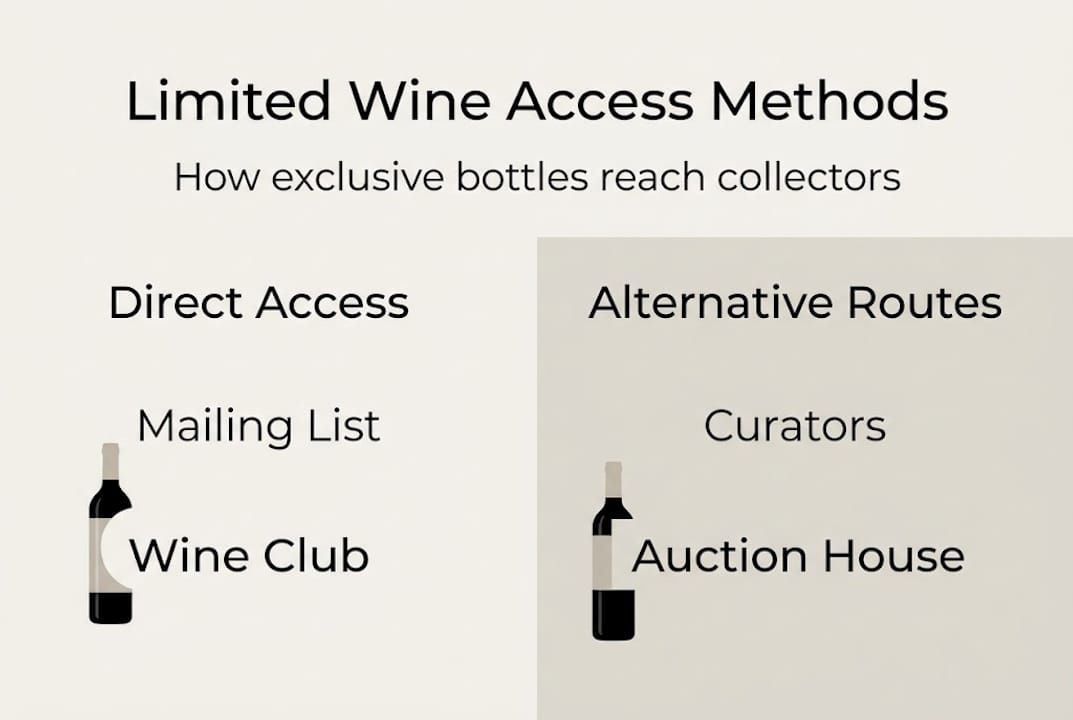
Allocation systems work like this: you register your interest with a winery, often wait months or even years to get approved, and then receive annual offers to purchase set quantities. Miss your window or decline too often and you lose your spot. Wine clubs work similarly, bundling limited releases into recurring shipments for members who agree to minimum purchase commitments.
Here’s a snapshot of what buyers typically encounter:
| Access method | Typical wait time | Minimum commitment | Best suited for |
|---|---|---|---|
| Winery mailing list | 6 months to 3+ years | Annual purchase offer | Serious collectors |
| Allocation list | 1 to 5+ years | Consistent yearly buys | Dedicated enthusiasts |
| Wine club membership | Immediate to 3 months | 2 to 4 shipments per year | Beginners and regulars |
| Trusted retailer/curator | Immediate | None | Casual buyers |
The primary method for accessing limited wines is joining winery mailing lists or allocation lists, which often require waiting periods and consistent purchases to maintain access. The reality? Most newcomers underestimate how much patience and commitment these systems demand.
Key barriers you’ll likely hit include:
- Waiting lists that stretch years for sought-after producers
- Minimum annual spend requirements to stay active on a list
- Strict purchase windows where offers expire fast
- Geographic restrictions that block international buyers from certain lists
Understanding wine allocation explained is step one. Once you see the system clearly, you can navigate it, or decide to sidestep it entirely.
How to build direct access: mailing lists, allocations, and wine clubs
Knowing the system is one thing. Getting in is another. Here’s a straightforward approach to building real access over time.
1. Identify the producers you want access to. Start with three to five wineries making wines you genuinely love. Check their websites for mailing list sign-up forms. Many top Australian and international producers manage this directly.
2. Sign up and be patient. Submit your details and expect a wait. Some producers confirm you’re on the list instantly; others won’t contact you for over a year. Don’t give up or assume you’ve been ignored.
3. Purchase consistently when offers arrive. This is non-negotiable. Wine clubs provide recurring shipments of limited releases and act as a genuine gateway to deeper allocations, but minimum commitments are required and skipping offers can cost you your place.

4. Engage with the winery. Visit cellar doors. Attend events. Wineries prioritise buyers who feel like part of the community, not just transactional names on a list.
5. Use tracking tools. Platforms like Cellar Tracker and Wine-Searcher let you monitor release dates, pricing benchmarks, and availability windows so you’re never caught off guard.
6. Start with wine clubs if you’re new. Clubs are a lower-pressure entry point. You get great bottles, build a track record, and often graduate to winery allocation lists from there.
Pro Tip: Don’t spread yourself too thin. It’s far better to maintain active, committed relationships with five producers than to sit dormant on twenty lists. Wineries notice engagement, and that’s what keeps you in the game.
Allocations have their own rhythm. Most releases happen once or twice a year, often in autumn or spring. Mark these windows and respond quickly. To unlock exclusive wine access through these channels, responsiveness is everything. And if you’re still figuring out how wine deals work, committing to even one wine club shipment cycle teaches you more than reading about it ever will.
Alternatives beyond allocations: discovering quality without the gatekeepers
Let’s be honest. The allocation model has a real dark side. Allocation lists create artificial scarcity that alienates newcomers and reinforces the idea that great wine is only for the already-connected. If you’re tired of being kept out, there are genuinely great alternatives.
Trusted specialist retailers and curators are underrated. A good wine curator isn’t just stocking shelves. They’re actively sourcing bottles, building relationships with producers, and passing those finds directly to their clients. The advantage? No waiting list, no annual commitment, no politics.
Auction houses and secondary markets can unlock incredible bottles. Langton’s and Sotheby’s Wine in Australia regularly list rare, cellar-aged bottles that never appear on retail shelves. You need to know your valuations and watch for provenance documentation, but the access is real.
Boutique producers off the radar deserve serious attention. Plenty of small, quality-focused winemakers operate without hype or allocation theatre. They make exceptional wine in limited quantities and sell it happily to anyone who comes knocking.
Here’s a quick comparison to help you choose:
| Approach | Cost level | Accessibility | Risk level |
|---|---|---|---|
| Allocation list | Medium to high | Low (gated) | Low if managed well |
| Wine club | Low to medium | Medium | Low |
| Auction/secondary market | Variable | High | Medium (provenance) |
| Specialist curator | Medium | High | Very low |
| Direct from lesser-known producer | Low to medium | High | Very low |
Pro Tip: Ask your local specialist what they’re excited about right now, not what scores the most points on a review site. Passionate retailers know where the real value hides.
To build a versatile wine portfolio without gatekeeping frustration, mixing allocation wines with curator-sourced and lesser-known producer bottles is the smartest play. And for those after premium wine selection without the fuss, the world of accessible quality wines is bigger and better than the allocation crowd wants you to believe.
Best practices: securing value, avoiding mistakes, and verifying authenticity
Once you’ve chosen your path, protecting yourself matters. Premium wine markets attract both opportunity and risk. Here’s how to stay sharp.
1. Always verify provenance on secondary market purchases. Authentic documentation, original capsule, label condition, and storage history all matter. If a seller can’t provide these details, walk away.
2. Cross-reference pricing before buying. Wine-Searcher is your best friend here. It aggregates global retail and auction data so you instantly know if a price is fair or inflated. Start with wine clubs and waitlists for direct access without retail markups, and use Wine-Searcher to benchmark everything else.
3. Watch for red flags. Unusually low prices on prestige labels, sellers without verifiable history, bottles with damaged seals or suspicious fill levels. These are warning signs, not bargains.
4. Buy at the source when possible. Direct from winery or through a certified specialist curator is the gold standard. It’s the cleanest transaction, and you’re unlocking rare wine access with full confidence in what you’re getting.
5. Track your collection’s value over time. Apps like Vivino and CellarTracker let you log bottles, monitor market value, and stay informed about optimal drinking windows.
Smart buyers don’t just find great wine. They verify it, value it correctly, and know exactly what they paid and why.
The role of wine curators is to do a lot of this vetting for you, which is why working with a trusted specialist can save you significant stress and money. And if you’re focused on aspirational wine quality, the best value discoveries almost always come from knowing what to look for rather than chasing scores.
A quick rule of thumb: if it feels too good to be true on the secondary market, it almost certainly is.
Our take: why chasing limited wines shouldn’t limit your enjoyment
Here’s an uncomfortable truth the industry doesn’t love to admit. The obsession with scarcity can quietly ruin your enjoyment of wine. We’ve seen it happen. Collectors who spend months hunting a single allocation finally crack it open and… it’s fine. Great, even. But the anxious chase left them too exhausted to properly enjoy the glass.
The most satisfying wine experiences we hear about rarely come from the most coveted bottles. They come from that unexpected find: a small-batch Shiraz from a producer nobody’s heard of, a cool-climate Chardonnay sourced through a curator who just believed in it. Every bottle is a small rebellion against the idea that wine gatekeeping is the only path to quality.
Chase the wines that genuinely excite you, not the ones someone else told you to want. Discover accessible quality wines and you’ll realise the treasure hunt doesn’t have to be exclusive to be worth it. The best glass is the one you actually enjoy drinking.
Experience exclusive access with FU Wine
You’ve got the knowledge. Now put it to work with a team that’s built for exactly this. FU Wine cuts through the traditional wine industry nonsense to bring you rare, high-quality bottles at prices that make sense.
We’re talking genuine limited releases, boutique producer runs, and premium stock sourced directly without the usual gatekeeping theatre. Discounts of 30 to 70% below traditional retail aren’t a gimmick here; they’re the whole point. Visit FU Wine and see what’s available right now. Flash deals move fast, and so should you. Life’s genuinely too short for overpriced, ordinary wine.
Frequently asked questions
What is the fastest way to access limited-release wines?
Joining winery mailing lists and wine clubs directly is usually the fastest route, especially for new releases and smaller producer allocations. Responding quickly when offers arrive is just as important as getting on the list in the first place.
Are wine clubs worth it for beginners?
Absolutely. Wine clubs give beginners access to limited releases and often better pricing than retail, but always read the commitment terms before signing up. Knowing your minimum shipment obligations upfront avoids any nasty surprises.
How do I avoid markups and fake bottles?
Buy direct from winery lists or through trusted specialist curators to sidestep inflated prices and authenticity risks. Always verify provenance documentation when purchasing on secondary markets.
Can I get quality limited wines without joining allocations?
Yes, and often brilliantly so. Many lesser-known producers offer outstanding limited releases directly or through curators, completely free of allocation barriers and the associated waiting game.
What happens if you decline an allocation offer?
Declining an allocation offer frequently risks losing your spot, particularly with highly sought-after wineries that have far more buyers than bottles available. Stay engaged and respond to every offer, even if you reduce your quantity.