

Premium wine vs mass market: what's really different?
TL;DR:
- Premium wine emphasizes terroir, limited production, and rigorous quality standards over volume and brand familiarity. Estate-controlled vineyards produce wines with unique fingerprints, whose aging potential and investment value surpass mass-market options. Consumers should focus on regional classifications and producer reputation to spend smarter and enjoy true quality.
Premium wine is defined by terroir specificity, limited production, and quality rigour rather than volume, brand consistency, or broad accessibility. That distinction matters more than ever right now. The premium segment above $15 has grown in value by over 20%, while lower-tier mass-market volumes dropped 1.51% year on year in 2025. If you’re spending your money on wine, knowing which side of that divide you’re buying from changes everything about what you get in the glass and what you get for your dollar.
What production factors separate premium wine from mass-market options?
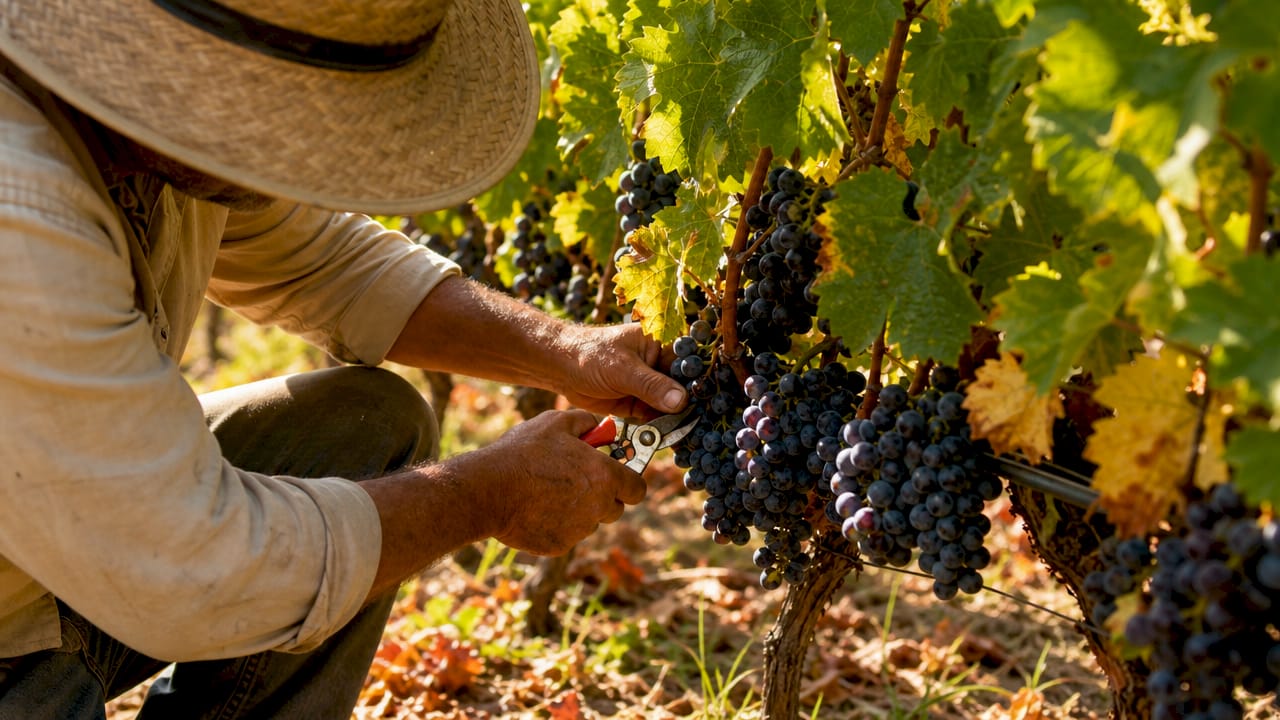
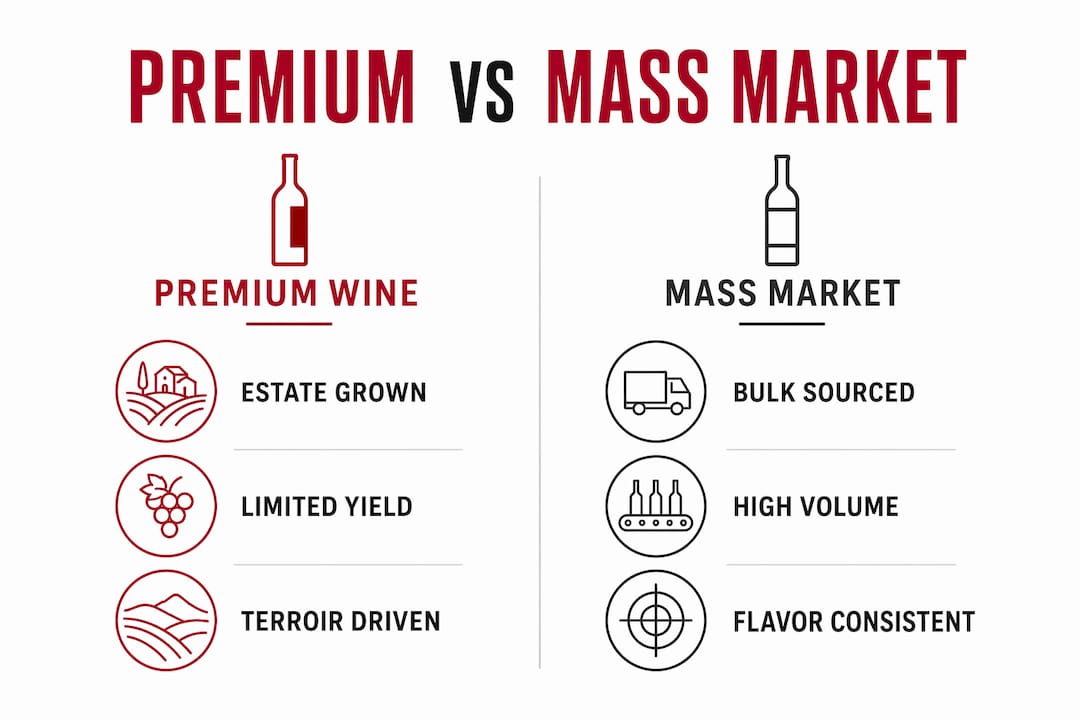
The gap between premium wine vs mass market starts in the vineyard, not the bottle. Estate wines are produced exclusively from grapes grown, harvested, vinified, and bottled on the same property. That vertical control delivers terroir purity and scarcity, which are the two forces that drive premium valuations. When a Barossa Valley producer controls every vine, every harvest decision, and every barrel, the wine carries a fingerprint that can’t be replicated at scale.
Mass-market wines prioritise volume consistency, rapid scalability, and flavour standardisation, often blending grapes sourced from multiple vineyards to smooth out vintage variation. That’s not a flaw. It’s a deliberate philosophy. A supermarket shiraz that tastes the same every year is exactly what it’s designed to be. The problem is when you pay premium prices expecting premium results and get standardised blending instead.
Vinification methods widen the gap further. Premium producers age wine in French or American oak barrels, sometimes for years, building complexity and structure. Mass-market producers typically use stainless steel tanks and shorter production cycles to cut costs and speed up shelf availability. The result is a wine that’s clean, approachable, and forgettable.
Regional quality classifications are the clearest shorthand for premium status. Labels like DOCG in Italy, AOC in France, and DOC in Spain signal that a wine has passed rigorous quality and origin assessments. These aren’t marketing badges. They’re legally enforced standards covering yield limits, grape varieties, and production methods.
| Factor | Premium wine | Mass-market wine |
|---|---|---|
| Grape sourcing | Single estate or controlled parcels | Multiple regions and vineyards |
| Ageing vessel | Oak barrels, extended maturation | Stainless steel, short cycle |
| Quality classification | DOCG, AOC, DOC certified | Rarely classified |
| Production volume | Limited, often scarce | High volume, scalable |
| Flavour philosophy | Terroir expression | Consistency and repeatability |
Pro Tip: When scanning a label, look for the appellation classification first. A Barossa Valley GI or a Coonawarra designation tells you more about quality than the price tag alone.
How do premium and mass-market wines differ in taste and ageing?
Taste is where the philosophy becomes personal. Premium wines show greater vintage specificity and terroir expression, meaning the wine in your glass reflects a specific place and a specific year. A Margaret River Cabernet Sauvignon from a cool, wet vintage tastes structurally different from the same producer’s wine in a hot, dry year. That variation is the point. It’s what makes collecting and cellaring genuinely exciting.
Mass-market wines are engineered to eliminate that variation. Winemakers blend across vintages and regions to hit a consistent flavour profile year after year. For casual drinking, that reliability is a genuine benefit. You know what you’re getting. But you’re also trading away the story, the specificity, and the potential for something genuinely memorable.
Ageing potential is the starkest difference of all. Consider these four realities:
- Premium estate wines can appreciate in value at 8% to 14% annually, with the right provenance and storage conditions.
- Mass-market wines are designed for immediate consumption and typically depreciate the moment you walk out of the bottle shop.
- A well-cellared Penfolds Grange or a Henschke Hill of Grace gains complexity over decades. A $12 supermarket red does not.
- The tannin structure, acidity, and concentration in premium wines act as natural preservatives. Mass-market wines are often softened and filtered to be approachable young, which strips the compounds that enable long ageing.
“Mass-market wines are optimised for brand consistency and immediate consumption, whereas premium estate wines embody terroir-driven longevity and investment potential.” — The Luxury Playbook
The consumer experience also diverges sharply. Opening a premium wine is an occasion. It invites attention, conversation, and comparison. A mass-market wine is background. Both have their place. The mistake is treating them as interchangeable.
What market trends are driving the shift toward premium wines?
The wine market is splitting in two, and the data makes it plain. Premiumisation is reshaping the entire industry, with the top quartile of wineries growing revenue by over 20% while weaker producers face double-digit declines or exit the market entirely. This isn’t a niche trend. It’s a structural shift in how consumers relate to wine.
Wellness culture is the engine behind it. Consumers are drinking less but choosing better, prioritising quality over quantity. A person who used to drink a bottle of cheap wine three nights a week is now buying one exceptional bottle for the weekend. The spend per occasion goes up. The volume goes down. Premium producers win. Mass-market producers lose shelf space and relevance.
Pricing dynamics reflect this bifurcation. The wine industry shows a structural split where premium wines above $15 show value growth, mid-tier wines compress, and consumers bypass retail markups through direct sourcing and niche retailers. The middle of the market is the most dangerous place to be right now, both as a producer and as a buyer.
| Price tier | Market direction | Consumer behaviour |
|---|---|---|
| Under $15 | Volume declining | Casual, convenience-driven |
| $15 to $30 | Compressed, competitive | Value-seeking, occasion-driven |
| $30 to $100 | Growing, premiumisation sweet spot | Quality-focused, gifting, cellaring |
| $100 and above | Strong growth, investment appeal | Collectors, enthusiasts, gifting |
Investment appeal is real at the top end. Premium wines hold long-term value through scarcity, terroir fidelity, and limited production. Mass-market wines rely on brand recognition and volume, neither of which creates collectibility. If you’re thinking about wine investment benefits, the premium tier is the only tier worth considering.
Pro Tip: Watch the $30 to $60 range closely. This is where boutique Australian producers and emerging regions like Grampians, Pyrenees, and Clare Valley offer the best value for quality. You get premium production philosophy without the prestige markup.
Understanding what actually drives expensive wine prices helps you spend smarter. Scarcity, critical scores, and provenance move prices more than production cost. Knowing that lets you find the gaps where quality outpaces price.
How to choose between premium and mass-market wines
Choosing well starts with being honest about the occasion and your actual drinking habits.
- For everyday drinking: A well-made mass-market wine at $15 to $20 does the job. Look for single-region wines rather than generic blends. An Adelaide Hills Sauvignon Blanc or a McLaren Vale Grenache at this price point will outperform a generic “South Eastern Australia” blend every time.
- For gifting or special occasions: Move to the $40 to $80 range and look for classified or estate-grown wines. Producers like Cullen Wines in Margaret River or Grosset in Clare Valley offer genuine terroir expression at prices that don’t require a second mortgage.
- For cellaring and investment: Focus on producers with a track record, consistent critical scores, and limited annual production. Penfolds, Henschke, and Giaconda are Australian benchmarks. International equivalents include Burgundy Premier Cru and Barolo DOCG producers.
- For accessing premium wines affordably: Producer-direct membership schemes and specialised wine societies give you access to higher-quality, limited-production wines that never appear on supermarket shelves. Collectors and savvy buyers use these channels to circumvent traditional retail markups and discover unique labels.
Regional quality seals are your fastest shorthand. DOCG, AOC, and DOC classifications mean the wine has passed legally enforced quality standards. Australian GI designations like Coonawarra, Eden Valley, and Yarra Valley signal a level of regional specificity that mass-market blends can’t offer. You can find practical strategies for accessing premium wines affordably without overpaying for labels or prestige.
Pro Tip: Ignore the front label and read the back. The vintage year, appellation, and producer address tell you more about what’s in the bottle than any award sticker or lifestyle image.
Key takeaways
Premium wine outperforms mass-market wine on quality, ageing potential, and investment value because it is built on terroir specificity, limited production, and rigorous classification standards rather than volume and flavour consistency.
| Point | Details |
|---|---|
| Production philosophy | Estate-grown, classified wines deliver terroir purity that mass-market blending cannot replicate. |
| Ageing and investment | Premium wines can appreciate 8% to 14% annually; mass-market wines depreciate post-purchase. |
| Market direction | Premium segments above $15 grew over 20% in value while mass-market volumes declined in 2025. |
| Buying smarter | Regional classifications like DOCG and AOC are the fastest quality indicators on any label. |
| Access without overpaying | Membership schemes, specialist retailers, and direct sourcing bypass retail markups on premium stock. |
The premiumisation shift is only going one way
I’ve watched the Australian wine market change dramatically over the past decade, and the direction is unmistakable. The “drink less, but better” movement isn’t a passing trend. It’s a permanent recalibration of how people value wine. Consumers who once bought a dozen bottles of cheap red for a barbecue are now buying two or three genuinely good bottles and paying attention to what’s in them.
What surprises most people is how accessible the premium tier has become when you know where to look. The traditional retail model inflates prices through layers of distribution, margin stacking, and brand positioning. Strip that out and a $60 bottle at retail might be available for $35 through the right channel. That’s not a compromise on quality. That’s just smarter buying.
Terroir and provenance are the two factors I keep coming back to when advising anyone on where to spend their wine budget. A wine that comes from a specific place, made by a producer who controls the entire process, will always outperform a blended product at the same price point. Not because of prestige. Because of what’s actually in the glass.
My honest recommendation: stop treating wine as a commodity purchase and start treating it as a considered one. You don’t need to spend a fortune. You need to spend deliberately. The premium wine trends in 2026 show that the gap between quality and price is closing for buyers who know where to look. That’s genuinely good news.
— Damien
Drink better without paying more
FU Wine was built for exactly this moment. The premise is simple: premium wine shouldn’t come with a pretentious price tag. FU Wine sources rare, high-scoring, and limited-production bottles through direct relationships, cellar clearances, and allocation releases, then passes the savings straight to you. We’re talking 30% to 70% below traditional retail on wines that are genuinely worth drinking.
This isn’t clearance stock or bulk surplus. Every bottle FU Wine offers is selected for quality, scarcity, and desirability. Think boutique producer runs, cellar-aged vintages, and hard-to-find labels that don’t show up in your local bottle shop. If you’re ready to explore premium wine selections without the usual gatekeeping, FU Wine is your insider access. Every bottle is a small rebellion against paying too much for something brilliant.
FAQ
What is the main difference between premium and mass-market wine?
Premium wine is produced from estate-grown or classified grapes with a focus on terroir expression, limited yield, and quality rigour. Mass-market wine prioritises volume, flavour consistency, and broad accessibility through multi-region blending.
Are premium wines always worth the higher price?
Not always at retail, but the quality difference is real. Premium wines offer greater complexity, ageing potential, and investment value. The key is accessing them through direct channels or specialist retailers to avoid inflated markups.
How do I identify a premium wine on the label?
Look for regional quality classifications like DOCG, AOC, or DOC, along with a specific appellation, estate name, and vintage year. These indicators confirm the wine meets legally enforced production and origin standards.
Can premium wines be a good investment?
Yes. Estate wines with strong provenance and critical scores can appreciate at 8% to 14% annually. Mass-market wines depreciate post-purchase and hold no collectible value.
What is the best way to access premium wines affordably?
Producer-direct membership schemes, specialist wine societies, and disruptive retailers like FU Wine offer access to limited-production and high-scoring wines at prices well below traditional retail.