

Why pay for wine labels: what collectors must know
TL;DR:
- Wine labels are a crucial asset that influences consumer perception, brand identity, and collector value due to their design, materials, and regulatory compliance. The costs of premium labels range from $0.10 to over $1.20 each, with design and material choices playing a significant role in overall quality and messaging. Regulatory changes, such as EU QR code mandates, are increasing label complexity and costs, making professional, compliant labeling a smart risk management strategy for producers.
You see a bottle on the shelf. Something about it stops you. Before you read a word, before you check the vintage, before you even reach for it, the label has already done its job. So why pay for wine labels at all? Because that split-second reaction is worth real money, and the story behind what makes a great label goes much deeper than most people realise. From regulatory complexity to collector psychology, wine labels are one of the most underestimated assets in the entire industry.
Table of Contents
- Key takeaways
- Why pay for wine labels: the real cost breakdown
- How labels shape what you think you are drinking
- DIY labels versus investing in the real thing
- Labels, ethics, and what collectors are really reading
- How to read a label like a collector
- My take: labels are doing more work than anyone admits
- Find premium bottles that actually earn their label
- FAQ
Key takeaways
| Point | Details |
|---|---|
| Labels carry real production costs | Custom wine labels range from $0.10 to over $1.20 per label based on materials and quantity. |
| Design drives purchase decisions | Script fonts, animal imagery, and traditional layouts directly influence how much consumers are willing to pay. |
| Regulations are raising the bar | New EU mandates including QR codes are increasing label complexity and cost from 2026 onward. |
| DIY labels often cost more overall | Printer ink, labour, and non-compliance risks make DIY a false economy for serious producers. |
| Labels signal ethics and exclusivity | Collectors read labels for provenance, sustainability cues, and brand story as part of valuation. |
Why pay for wine labels: the real cost breakdown
Let’s kill the myth straight away. A wine label is not just a sticker. Behind every bottle sits a web of design decisions, material choices, print specifications, and regulatory requirements that all cost real money.
Custom wine label costs range from $0.10 to $1.20 per label depending on quantity, substrate, and finishing complexity. That spread is enormous. A boutique producer running 500 bottles of a limited Shiraz is not paying the same per-label rate as a major commercial brand printing a million units. Short runs are expensive. Premium materials push that cost higher again.
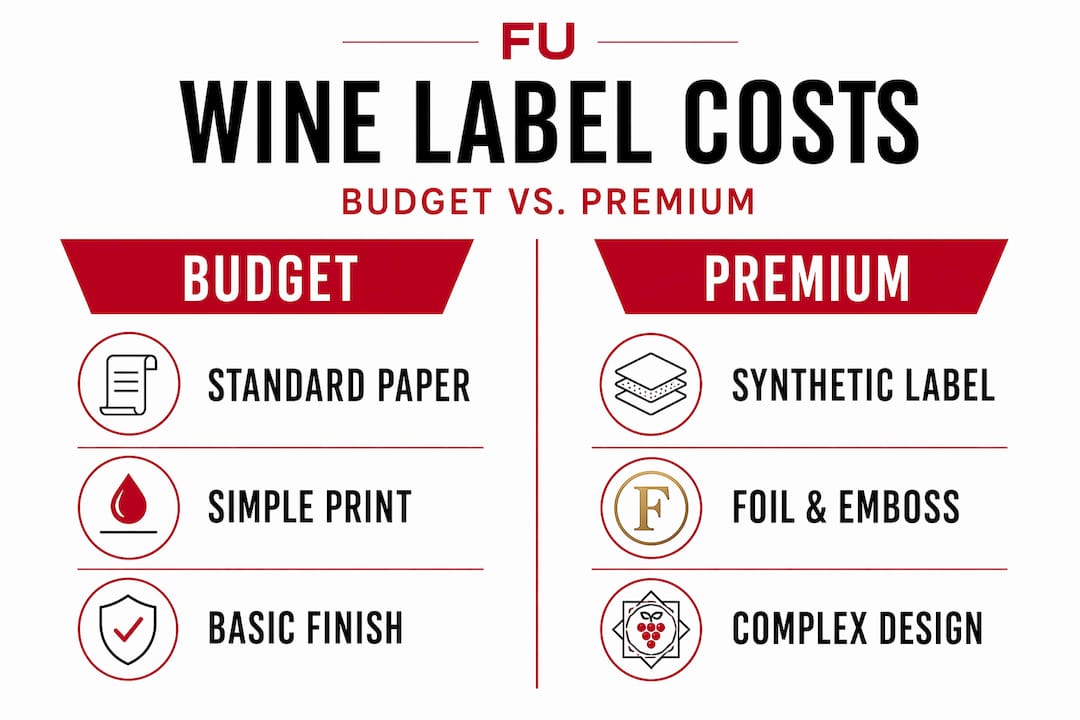
Then there is the design itself. Professional design for a single SKU starts around $1,000, with multi-SKU projects climbing well beyond that. For a small winery trying to compete on the shelf against brands with full marketing teams, that is a significant investment. But it is also the one investment that faces the consumer every single time a bottle is picked up.
Here is a snapshot of where label costs actually come from:
- Design and artwork: Concept, typography, illustration, and brand identity work
- Material selection: Paper, synthetic polypropylene, foil, or textured substrates all carry different price points
- Print complexity: Embossing, hot foil stamping, spot UV, and die-cut shapes add cost at every step
- Regulatory compliance: Mandatory information, country-specific rules, and new digital requirements
On that last point: EU regulations effective March 2026 now mandate digital QR codes and revised placement rules on wine labels. This is not a minor update. It forces wineries to redesign labels, which means reprinting costs, compliance checks, and in many cases, completely rebuilt artwork. If you are wondering why the importance of wine labels keeps growing, regulatory pressure is a big part of the answer.
| Label element | Budget option | Premium option |
|---|---|---|
| Substrate | Standard paper | Synthetic polypropylene |
| Finish | Matte laminate | Foil stamp, emboss, spot UV |
| Design | Template-based | Custom illustrated artwork |
| Compliance | Basic required text | Compliance-reviewed with QR code |
| Cost per label | ~$0.10 to $0.30 | ~$0.70 to $1.20+ |
Pro Tip: If you are a collector, turn the bottle around. A label printed on synthetic polypropylene resists moisture and wear far better than paper. That durability signals a producer who has thought carefully about the entire product experience, not just the wine inside.
How labels shape what you think you are drinking
Here is the uncomfortable truth. Your brain decides whether a wine is good before your tongue has a chance to weigh in. Wine label design value is not a marketing buzzword. It is a documented psychological reality.
Visual elements like script typefaces, balanced composition, and traditional imagery strongly influence how consumers perceive wine quality. A label with a hand-drawn crest and elegant serif type reads as heritage and craft. A label with a clean, modern sans-serif and minimal layout reads as contemporary and confident. Neither is objectively better. But both are telling you a story before you pop the cork.
“The label is the first handshake between the wine and the person picking it up. For a boutique winery without a TV budget, it might be the only handshake they ever get.”
Animal imagery is a particularly interesting case. Eye-tracking studies show that labels featuring animals attract consumer attention faster and hold it longer, which directly influences willingness to pay more. This is why you see so many creatures on wine shelves. It is not random. It is studied, deliberate, and effective.
Consistent label design across a winery’s full range compounds this effect. When every bottle in a producer’s portfolio shares a visual language, brand recognition builds fast. Consumers begin to associate that design shorthand with a quality standard. That trust is worth more than any single bottle’s label cost.
DIY labels versus investing in the real thing
Some producers try to cut costs by printing labels themselves or going with the cheapest option available. It is understandable. Cash flow is tight for small operations. But DIY printing often costs more in ink and labour than outsourcing to a professional printer, and the results are almost always visually inferior.
Here is what tends to go wrong when producers cheap out on labels:
- Durability failures: Paper labels peel, bubble, or stain when bottles are chilled, transported, or stored in a cellar. A damaged label on a collectible bottle is a serious problem.
- Credibility loss: Consumers register print quality subconsciously. A label that looks amateurish signals an amateurish product, regardless of what is inside.
- Compliance exposure: Misunderstanding label regulatory requirements leads to costly redesigns and printing delays, which can derail release schedules entirely.
- Short-run traps: Digital e-label platforms often charge per-label fees that compound quickly as product ranges grow, making flat-rate professional printing a smarter long-term play.
Pro Tip: When evaluating premium vs standard wine labels, ask the producer or retailer about their print substrate and compliance process. A producer who cannot answer that question has probably not thought hard enough about either.
The cost of custom wine labels done properly is not wasted money. It is risk management. Late-stage compliance revisions are cheaper to avoid with regulatory-aware design from the start. That means working with designers who understand wine labelling law, not just aesthetics.
Labels, ethics, and what collectors are really reading
Walk through any serious bottle shop and you will notice something shifting. Labels are no longer just about the wine. They are about who made it, how, and why. This is not a trend. It is a fundamental change in what collectors and enthusiasts expect from a bottle.
Wine labels increasingly communicate ethical values like chemical-free farming and fair labour practices. A California producer recently introduced the Guardian Vital label specifically to highlight workers’ rights on their bottles. That is a bold move, and it works because today’s consumers, particularly collectors, are reading labels like a shorthand biography of the producer.
What ethically minded labels are actually signalling:
- Provenance: Where exactly the grapes come from, down to the specific vineyard block
- Farming practice: Biodynamic, organic, or minimal intervention, communicated visually and in writing
- Social values: Fair wages, environmental stewardship, community investment
- Scarcity: Limited edition numbering, hand-signed artist labels, or single-barrel designations
For collectors, label quality is a real factor in desirability and investment decisions. A pristine, beautifully printed label on a limited-release bottle is part of the collectible. It is not decoration. It is documentation. And if that label is damaged, the investment value of the bottle drops accordingly.
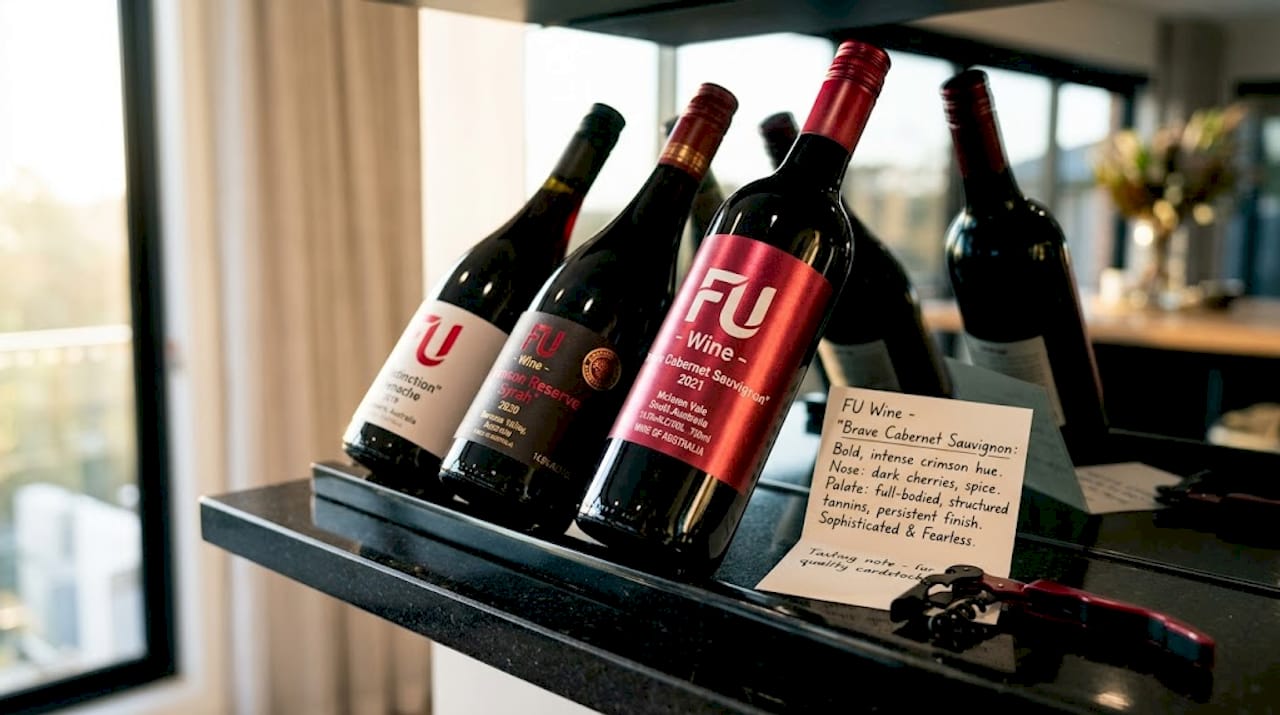
Boutique wineries use professional labels strategically to close the perception gap with larger competitors. A small Barossa producer with a stunning, foil-stamped label can hold its own on a shelf next to a brand with a hundred times the marketing budget. That is the whole game.
How to read a label like a collector
You do not need to be a wine professional to extract real value from what a label is telling you. You just need to know what to look for.
Start with the physical quality of the label itself. Is it printed on a premium substrate? Does the artwork feel considered, or does it look like a stock template? Are the colours consistent and saturated, or slightly washed out? These are not snob questions. They are signals about how much the producer cares about presentation, and by extension, the wine.
- Check for regulatory compliance markers. A label missing required information is a red flag, not just legally but for quality control.
- Look for edition or batch numbers. Limited releases with clear provenance information carry more collector appeal, and more market value.
- Assess consistency across the range. A winery with a unified visual identity across multiple labels is investing in its brand story, and that signals confidence in the product.
- Consider condition on older bottles. For wine investment purposes, label condition directly affects valuation. Stained, torn, or faded labels reduce a bottle’s worth even if the wine inside is exceptional.
Pro Tip: Do not overlook the back label. That is where producers tell the real story, the vineyard, the vintage conditions, the winemaker’s notes. A thoughtful back label is a sign of a producer who respects their audience.
Understanding what makes wine labels important goes beyond aesthetics. It is about recognising the full investment a producer has made in bringing a bottle to market, and deciding whether that investment aligns with your own values as a buyer or collector.
My take: labels are doing more work than anyone admits
I have spent a lot of time thinking about where the actual value sits in a bottle of wine. And the honest answer is that labels are consistently underestimated, even by people who should know better.
What I have seen working closely with boutique producers is that the ones who invest in proper label design almost always outperform the ones who do not, at the retail level. Not because the wine is better, but because the label gives people permission to believe it is. That is not cynical. That is just how human perception works, and smart producers use it.
I have also seen the other side. A genuinely exceptional wine, badly labelled, that sat on shelves while inferior products with gorgeous labels sold out. It is frustrating. But it reinforces something I keep coming back to: wine labels and brand identity are inseparable for small producers. You cannot afford to treat the label as an afterthought.
The most interesting shift I have observed lately is collectors factoring label quality into their buying calculus in ways they did not a decade ago. A hand-numbered, artist-illustrated label on a limited release from a boutique producer carries real weight. It signals scarcity, intention, and care. Those are not just nice qualities in a bottle. They are investment signals.
If you are serious about wine, whether you are drinking it or collecting it, understanding the label is part of understanding the wine.
— Damien
Find premium bottles that actually earn their label
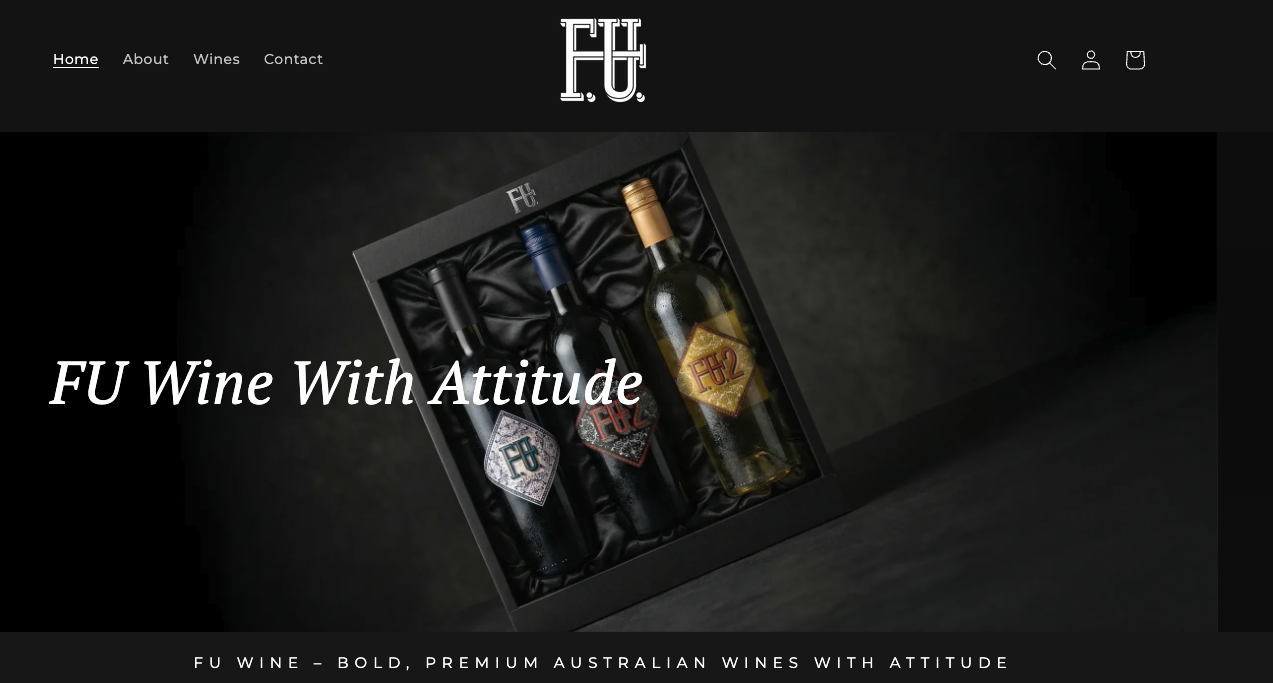
At FU Wine, we are not here to tell you to pay more for a pretty sticker. We are here to help you find wines where every element, including the label, reflects genuine quality and producer intent. The bottles we source come from boutique producers, limited releases, and cellar clearances where the label tells a real story. You get access to premium wines at prices that do not punish you for appreciating the craft. Explore the FU Wine collection and see how we curate wines where the label is the beginning of the story, not the whole point. Great wine should never cost you your dignity.
FAQ
What does it actually cost to produce a wine label?
Custom wine labels cost between $0.10 and $1.20 per label depending on materials, print complexity, and quantity. Professional design services for a single wine product line typically start around $1,000.
Why do boutique wineries spend more on labels than big brands?
Boutique producers use high-quality labels to compete on shelves without large marketing budgets. A premium label acts as the first and sometimes only impression a small winery gets to make with a new customer.
Do wine labels affect collector value?
Yes. Label condition and quality directly influence a bottle’s desirability and resale value. Collectors assess label design and physical condition as part of overall wine valuation.
Why invest in wine labels if the wine speaks for itself?
Research shows consumers form quality judgements before tasting. Design elements like typography and imagery influence willingness to pay, meaning even exceptional wine benefits from a label that communicates its worth.
How is regulation changing wine label costs in 2026?
New EU rules require digital QR codes and updated placement standards on wine labels from March 2026. These changes increase design complexity, compliance review costs, and in many cases require producers to reprint existing label stock.