

How to secure limited wine releases in 2026
TL;DR:
- Securing limited wine releases requires early engagement, rapid responses, and building genuine relationships with producers and retailers. Understanding scarcity sources and avoiding common pitfalls can help collectors gain consistent access without relying excessively on the secondary market. En primeur and long-term commitment are key strategies, while maintaining proactive communication and record-keeping ensures ongoing eligibility.
You refresh the page. The wine is gone. Sound familiar? Knowing how to secure limited wine releases feels like cracking a code that only insiders have access to, and for good reason. The system is genuinely stacked against the casual buyer. Allocation lists, distributor tiers, producer waitlists, short response windows — it all adds up to a process that rewards the prepared and punishes the passive. This guide cuts through that noise. You’ll learn the exact strategies that serious collectors use to get their hands on sought-after bottles before they disappear, without paying secondary market prices.
Table of Contents
- Key takeaways
- How limited wine releases actually work
- Setting yourself up: the prerequisites
- Executing on allocation offers and en primeur
- Pitfalls that cost you access
- Tracking your standing and staying connected
- My honest take on playing the long game
- How FU Wine helps you find the good stuff
- FAQ
Key takeaways
| Point | Details |
|---|---|
| Join mailing lists early | Waitlists for top producers can stretch 10 years, so start queuing now rather than later. |
| Respond fast to offers | Allocation windows are typically 48 to 72 hours. Miss the window and you risk losing your spot entirely. |
| Buy across full portfolios | Producers favour customers who purchase their whole range, not just the flagship bottles. |
| Use en primeur wisely | Buying futures 18 to 24 months before delivery can save you 15 to 25% compared to retail pricing. |
| Avoid cherry-picking | Consistently declining offers or buying selectively signals speculation and damages your standing. |
How limited wine releases actually work
Not all rare wines are rare for the same reason. Understanding what you’re dealing with shapes how you pursue it.
A limited wine release is any bottle produced in quantities too small to meet open-market demand. That covers everything from a single-vineyard Burgundy with 200 cases produced worldwide, to a cult Australian Shiraz where the winemaker simply caps production to maintain quality. Limited production wines carry different scarcity profiles, and treating them all the same is where most collectors go wrong.
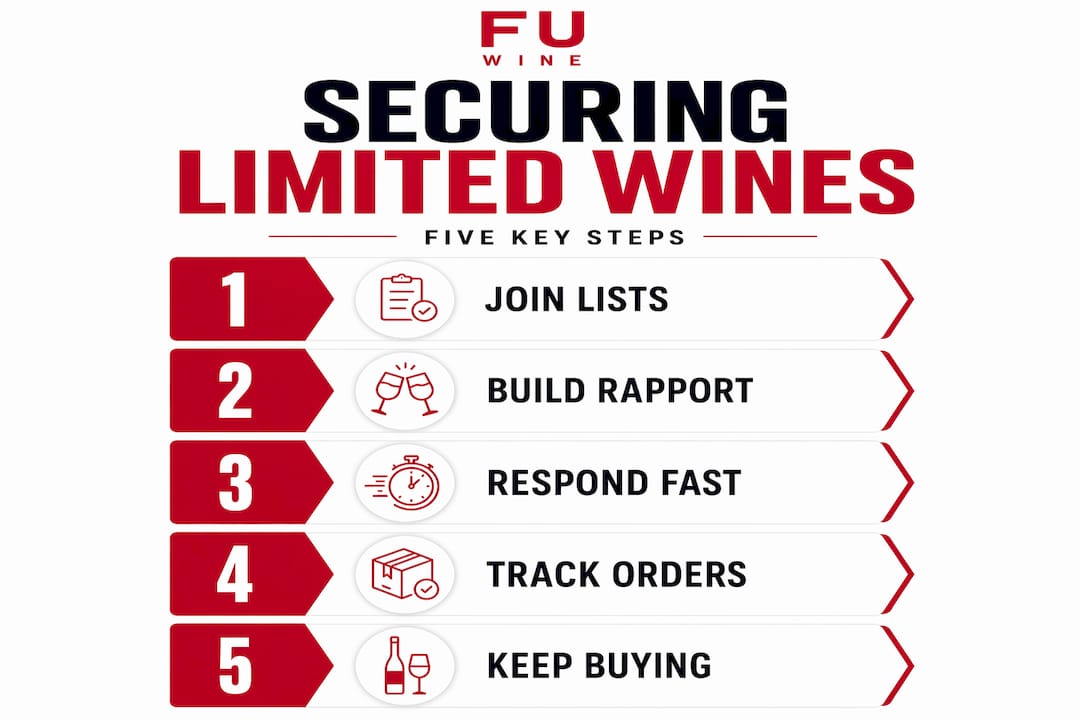
Scarcity comes from a few distinct sources. Vintage variation plays a huge role. A cold snap, drought, or early frost can slash yields in any given year, making an already small production even smaller. Marketing strategy matters too. Some producers deliberately keep volumes low to maintain prestige and pricing power. And then there’s the distribution system itself.
In markets like the US, allocations cascade through tiers before a single bottle reaches you. The producer allocates to a distributor, the distributor allocates to retailers, and retailers allocate to customers. By the time the wine reaches the consumer level, the pool can be tiny.
The secondary market fills in the gaps, but at a steep cost. Collectors who miss the allocation window often end up paying 30 to 50% premiums on platforms that resell coveted bottles. That’s money you’re handing over simply for being late to the party. The better play is to never need the secondary market in the first place.
Here’s what typically drives limited releases:
- Small-batch production from boutique or family-owned estates
- Single-vineyard designations with naturally limited yields
- Winemaker decisions to restrict output for quality control
- High-demand vintages where scores drive consumer frenzy
- Geographic appellation rules that cap total production
Setting yourself up: the prerequisites
The biggest myth in wine collecting is that money alone gets you access. It doesn’t. Relationships and commitment are the real currency, and building them takes time.
Start with mailing lists. Immediately. Wait times for top cult producers can exceed 10 years, with typical waits sitting around 3 to 4 years. Joining a waitlist today doesn’t feel exciting, but the version of you in 2030 will be grateful. Search the websites of producers you love and look for a mailing list or allocation signup. Most have one. If they don’t, contact them directly.
Get involved in wine clubs and tastings. Physical presence accelerates relationships. When a winery host sees your face at events, you stop being an email address and become a real person. That matters more than you’d think when allocation decisions are being made.
Follow these steps to build your foundation properly:
- Identify 5 to 10 producers whose wines genuinely excite you. Don’t scatter your efforts across 50 names you’re vaguely interested in.
- Join every available mailing list and note the date you registered.
- Purchase wine from these producers whenever you can, across their full range, not just the bottles that score 97 points.
- Attend tastings, cellar door visits, and trade events where producers or their representatives are present.
- Introduce yourself to distributor sales reps at these events. These people hold enormous influence over who gets offered what.
- Keep a simple spreadsheet tracking which lists you’re on, when you joined, and what you’ve purchased.
Building rapport with your local retailer is equally underrated. A good retailer with strong distributor relationships can advocate for you internally. When allocation is being divvied up, your name gets mentioned in rooms you’re not in. That only happens if someone knows you exist.
Pro Tip: Purchase a few bottles from a producer’s entry-level range before their allocation window opens. It signals genuine, ongoing support rather than speculative interest in trophy bottles.
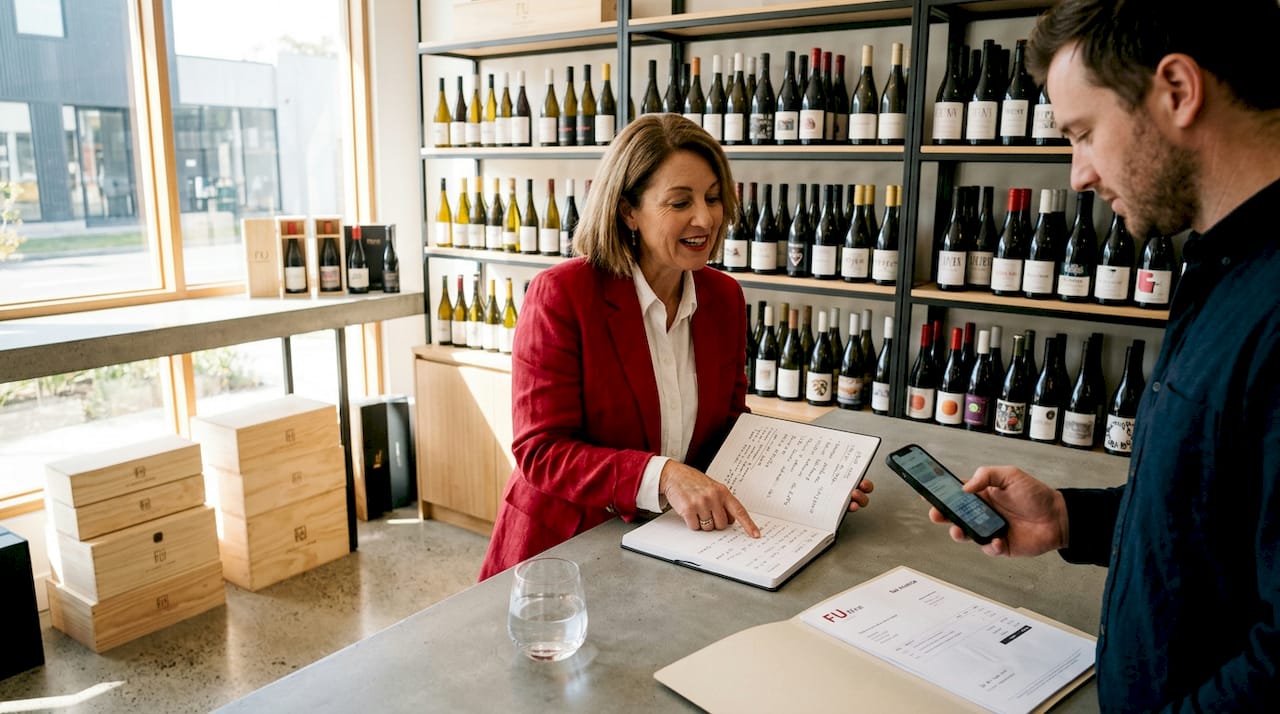
Understanding commitment obligations upfront saves awkward situations later. Many allocation programmes require a minimum purchase per release. Missing this minimum can see you dropped from the list. Ask producers directly what the expectations are before signing up so you’re not caught off guard.
Executing on allocation offers and en primeur
Here’s where most collectors lose ground, not through lack of effort, but through slow decision-making or waiting for the wrong signals.
Responding to time-sensitive offers
Allocation offers typically close within 48 to 72 hours. That’s not a soft deadline. Miss it and you’re either moved to a lower priority tier or removed entirely. Set email alerts for producers you’re allocated to, and treat those notifications the way you’d treat a flight check-in. Not doing it on time has real consequences.
The instinct to wait for critic scores before committing is one of the most common and costly mistakes in this space. By the time Robert Parker or James Suckling drops a number on a bottle, the allocation window has already closed. You’re then competing on the secondary market against people who bought at allocation pricing and are now flipping. Don’t play that game if you don’t have to.
Understanding en primeur buying
En primeur, also known as buying futures, means purchasing wine before it’s bottled or released, typically 18 to 24 months before delivery. It’s standard practice in Bordeaux and Burgundy, and increasingly common for top Australian producers. Up to 80% of a top producer’s output can be allocated this way, which means by the time the wine appears on any shelf, the vast majority is already spoken for.
The financial logic is solid. En primeur prices are often 15 to 25% below what you’d pay at retail, assuming the vintage performs as expected. The trade-off is tying up capital for up to two years before you receive anything.
| Buying method | Timing | Typical price | Risk level |
|---|---|---|---|
| En primeur (futures) | 18 to 24 months before release | 15 to 25% below retail | Medium (vintage uncertainty) |
| Allocation offer | At or near release | Standard retail | Low |
| Secondary market | Post-release | 30 to 50% above retail | Low (wine exists) |
Pro Tip: Base en primeur decisions on vintage reputation and producer track record, not early buzz. Buying into a great vintage from a reliable producer is far safer than chasing hype on an unproven year.
One more thing on maintaining good standing in allocation programmes. Producers track your purchasing behaviour. Buying only flagship wines signals you’re in it for speculation or resale, not genuine support. The collectors who get better allocations year after year are the ones who buy across the range, respond consistently, and treat the relationship like what it is: a partnership.
Pitfalls that cost you access
Most people don’t lose their allocation because of a dramatic falling-out. They lose it quietly, through small missteps that accumulate over time.
Here are the most common ways collectors damage or destroy their allocation standing:
- Declining multiple offers in a row. Wineries track engagement closely and enforce a use-it-or-lose-it policy. Two or three consecutive declines is often enough to trigger removal.
- Cherry-picking. Showing up only for the 98-point vintage and ignoring everything else signals opportunism. Producers notice, and it affects your standing.
- Missing response windows. Even if you want the wine, missing the deadline can be treated the same as a decline. Late is late.
- Over-relying on the secondary market. Paying a 40% premium is a symptom of a broken access strategy. It should motivate you to fix the root cause, not become a habit.
- Going silent. No purchases, no communication, no event attendance for a year or more. You drop off the radar and then wonder why allocations dried up.
If you’ve already been removed from a list, re-engagement is possible but slow. Contact the winery or distributor directly, acknowledge the gap, and express genuine interest in rebuilding the relationship. Start small. Buy available stock, attend an event, and be patient. The exclusive wine access you want is rebuilt through consistent action, not a single enthusiastic email.
Tracking your standing and staying connected
Securing a spot on an allocation list is step one. Keeping it requires ongoing attention.
| Activity | Frequency | Purpose |
|---|---|---|
| Review purchase history | Quarterly | Spot gaps in buying pattern before they become problems |
| Contact winery or distributor | Every 6 months | Maintain visibility and reinforce genuine interest |
| Attend tastings or events | 2 to 4 times per year | Deepen relationships and stay top of mind |
| Monitor vintage news | Ongoing | Prepare for en primeur decisions early |
Collector networks are also worth your time. Whether it’s an online forum, a local tasting group, or a merchant’s collector programme, other enthusiasts surface opportunities you’d otherwise miss. Younger collectors in particular, as trends in the wine community show, are pushing for more transparent engagement and direct communication from producers. Wineries are responding to this. Being part of those conversations keeps you ahead of the curve.
And keep records. A simple document tracking which lists you’re on, your purchase history, response dates, and contact names goes a long way. It takes 20 minutes to set up and can save you from expensive gaps in your cellar.
My honest take on playing the long game
I’ve watched people throw money at limited releases and still miss out, while others with tighter budgets drink extraordinary wine year after year. The difference isn’t luck. It’s patience, consistency, and a genuine relationship with the producers they love.
In my experience, the biggest shift happens when you stop treating allocation as a transaction and start treating it as a conversation. Producers remember the people who show up, buy honestly across the range, and respond without fuss. They forget the people who only appear when a bottle scores big.
En primeur changed how I think about this entirely. Committing early, before the hype, before the scores, before the secondary market inflates everything, is the closest thing to an insider move that’s available to most collectors. Yes, you’re tying up cash. But you’re also locking in pricing and access that simply isn’t available any other way.
What I tell anyone starting out: pick fewer producers and go deeper. Three wineries where you’re a known, committed customer will serve you better than 20 where you’re just a name on a list. Transparency and genuine engagement aren’t soft skills in this world. They’re the actual strategy.
— Damien
How FU Wine helps you find the good stuff
Look, the allocation game is real, and not everyone wants to spend years cultivating winery relationships to drink well. That’s exactly why FU Wine exists. No gatekeeping. No inflated markups. No waiting a decade for someone to take your call. FU Wine sources rare, premium, and hard-to-find bottles including limited releases, cellar-aged stock, and high-scoring vintages, and makes them available at prices that would make your local merchant cry into their clipboard.
Flash deals, rotating drops, and genuine insider access without the usual barriers. Browse the FU Wine collection and see what’s available right now. Life’s too short for ordinary wine, and it’s definitely too short to keep missing out.
FAQ
How long do allocation waitlists typically take?
Top cult producers can have waitlists exceeding 10 years, though most sit around 3 to 4 years. Joining early is the only real way to manage this timeline.
What is en primeur and is it worth it?
En primeur means buying wine as a future, before it’s bottled, typically 18 to 24 months before delivery. It often saves collectors 15 to 25% on final retail price and secures access before stock disappears.
What happens if I miss an allocation offer?
Most wineries treat missed response windows the same as a declined offer. Repeated non-responses can result in removal from the list, so prompt action every time is non-negotiable.
Why do producers remove customers from allocation lists?
Producers monitor purchasing behaviour closely. Declining consecutive offers, buying only flagship wines, or going quiet for extended periods can all trigger removal. Consistent, broad engagement across a producer’s range is what keeps you in good standing.
Is buying on the secondary market ever worth it?
Sometimes, but expect to pay a 30 to 50% premium above allocation pricing. It’s a last resort, not a strategy. If you’re relying on the secondary market regularly, it’s a sign the underlying access strategy needs work.