

Unlocking wine exclusivity: How limited releases really work
TL;DR:
- Wine exclusivity depends on limited production, high demand, and controlled access, not just price.
- Building relationships with producers through loyalty, sign-ups, and purchases is key to access.
- Genuine rarity results from small vineyards and verified production limits, unlike strategic marketing scarcity.
Think exclusive wines are reserved for a lucky few with the right connections and a bottomless cheque book? Think again. The truth is, premium and hard-to-find bottles aren’t locked away forever behind velvet ropes. There are real, proven systems that serious collectors use to land coveted pours, and once you understand how those systems operate, you can start working them yourself. This article breaks down exactly how wine exclusivity functions, from allocation models and waitlists to the difference between genuine rarity and clever marketing, and gives you the practical steps to start building your own access.
Table of Contents
- What wine exclusivity really means
- The allocation system: How access is decided
- Scarcity: Genuine rarity or strategic marketing?
- How to build your own access to exclusive wines
- Why the exclusivity playbook is evolving—what most collectors overlook
- Ready to access exclusive bottles? Start here
- Frequently asked questions
Key Takeaways
| Point | Details |
|---|---|
| Allocation system basics | Exclusive wines are distributed through loyalty-based allocation lists, not just price or connections. |
| Scarcity types matter | Knowing the difference between genuine and strategic scarcity helps you navigate offers wisely. |
| Practical access strategies | You can build access through persistence, relationship building, and choosing smart alternative paths. |
| Exclusivity is evolving | Collectors benefit most by blending traditional and new methods for rare wine access. |
What wine exclusivity really means
Let’s clear something up straight away. Wine exclusivity is not simply about price. A bottle that costs $500 isn’t automatically exclusive, and plenty of genuinely rare wines sit at surprisingly approachable price points. What makes a wine exclusive is the combination of limited production, high demand, and controlled access.
Producers of truly sought-after wines rarely put their bottles on open-retail shelves. Instead, wine exclusivity operates through allocation systems where producers distribute limited production wines to select buyers via mailing lists, wine clubs, or merchant networks, rewarding loyalty and consistent purchasing over time. It’s a relationship game as much as it’s a numbers game.
Here’s what that looks like in practice. A small Napa producer might make 800 cases of their flagship red each year. A portion goes to their mailing list, a portion to restaurant accounts, and a small slice to select merchants. That’s it. If you’re not already in one of those channels, you’re on the outside looking in.
Some producers have never sold via retail at all. Screaming Eagle, one of California’s most coveted cult wines, has operated allocation-only since inception. You won’t find it at your local bottle shop. Ever.
Common terms you’ll hear floating around the exclusive wine world:
| Term | What it means |
|---|---|
| Allocation | A set quantity of wine assigned to a buyer each release |
| Waitlist | A queue of buyers hoping to join a producer’s mailing list |
| Minimum purchase | The least amount you must buy to retain your spot |
| Tiers | Buyer levels based on loyalty and spend, unlocking better offers |
| Release window | The short period to accept or decline an allocation offer |
“The wine on your radar might not be rare because of the vineyard. It might be rare because you’re simply not in the room yet.”
Understanding allocation explained properly is the first real step. And once you see how the system is built, the wine scarcity guide becomes a lot less intimidating.
The allocation system: How access is decided
With these models in mind, it’s important to see how actual buyers are selected and managed. Allocation lists are not random. Wineries are deliberate about who gets access and how much they receive.
Your buying history matters enormously. Multi-year purchase history spanning three to five years, portfolio breadth, and account size all determine what tier you land in and how generous your allocation becomes. Think of it like a loyalty programme that actually pays off in liquid form.

Here’s a rough look at how tiers typically stack up:
| Buyer tier | Typical requirements | Allocation benefit |
|---|---|---|
| Entry level | Joined mailing list, one purchase | Standard bottles, limited variety |
| Mid tier | Two to four years of consistent orders | Priority access, occasional library picks |
| Top tier | Five or more years, large volume orders | First releases, vertical sets, special offers |
Waitlists for cult producers are genuinely competitive. Saxum Vineyards in Paso Robles, for example, has had waitlists of four to five years at various points. That’s not hype. That’s real.
When an offer does come through, speed is everything. Most wineries issue allocation offers with a 48 to 72 hour response window. Miss it and your bottles go to the next person on the list. No exceptions, no extensions.
To build and keep your status, most programmes also require minimum annual purchases. Buying six bottles a year is a common threshold, and it’s not negotiable if you want to stay in the game.
Pro Tip: Respond to every allocation offer, even if you only want part of what’s offered. Showing engagement signals loyalty and keeps you in good standing for future releases.
The proven steps to access rare bottles start here, and unlocking access strategies from the inside is far more effective than chasing bottles on the secondary market.
Scarcity: Genuine rarity or strategic marketing?
Once you understand how allocation works, it’s crucial to recognise why some bottles are truly rare while others are simply positioned as exclusive.
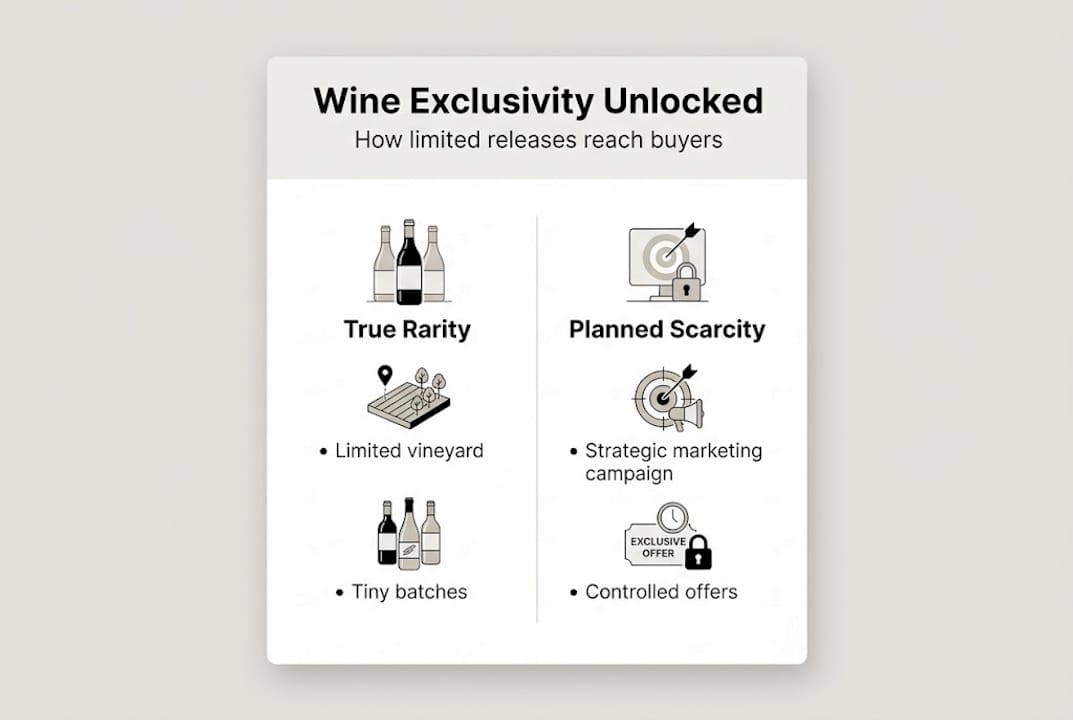
Genuine scarcity has physical limits. Burgundy Grand Cru vineyards are some of the most extreme examples. Romanée-Conti covers just 1.8 hectares and produces fewer than 5,000 bottles annually. That’s not a marketing strategy. That’s geography and biology working together against you.
Strategic scarcity, on the other hand, is a choice. Genuine scarcity versus strategic allocation is a real distinction that builds loyalty in some buyers but frustrates younger consumers who expect engagement during long waits. Napa cult wines often produce far more wine than they release publicly. The limited supply is a deliberate business decision designed to maintain prestige and drive demand.
Here’s how to spot the difference:
- The vineyard footprint is tiny and well-documented
- Production numbers are publicly stated and independently verified
- The wine scores consistently high regardless of marketing spend
- Scarcity existed before the wine became famous, not after
- Older vintages are equally hard to find, not just recent hyped releases
When a wine’s exclusivity seems to have appeared overnight, ask questions. Sometimes a small producer genuinely made 200 cases. Sometimes a marketing team decided 200 cases sounded better than the actual 2,000.
For collectors, this distinction matters because it shapes your strategy. Chasing understanding wine scarcity properly means knowing when you’re paying for real rarity versus a story. If the scarcity is artificial, patient buyers often find the same wine at better prices down the track, sometimes through allocation releases or merchant stock that didn’t move.
The bottles worth chasing hardest are the ones where demand will always outpace supply, no matter how well the market understands the product.
How to build your own access to exclusive wines
Armed with this understanding of how exclusivity is engineered, let’s get practical: how can you start accessing these coveted bottles yourself?
The most direct path is also the most obvious one that people skip. Join mailing lists. Seriously. Go to the producer’s website, sign up, and wait. Access requires joining waitlists, often spanning three to five years for cult producers like Saxum, alongside tasting room visits and genuine relationship-building, with minimum annual purchases needed to retain your status. It’s a long game, but it starts with a simple click.
Here’s a practical order of operations:
- Identify five to ten producers you genuinely love and sign up to every mailing list today
- Visit tasting rooms when you travel to wine regions. Put a face to the name.
- Buy consistently, even in years where the vintage is not exceptional
- Respond to every allocation offer within 24 hours, well inside the typical 48 to 72 hour window
- Meet minimum purchase requirements every single year without fail
- Ask your merchant about their own allocation relationships
- Explore trusted secondary exchanges for older vintages you’ve missed
Pro Tip: Don’t ignore smaller, lesser-known producers. Boutique wineries with tight but growing followings often have shorter waitlists and can offer you meaningful access fast. Those relationships pay dividends as the winery’s reputation grows.
For collectors who want access now rather than in five years, working with the right partners matters. Shopping boutique wines without inflated markups is very possible when you know where to look. Using wine curators who already hold allocation relationships is another smart shortcut. And reading expert tips for rare wines keeps your strategy sharp as the market shifts.
The biggest pitfalls? Ignoring small wineries because the name isn’t famous yet. Missing offer windows because you didn’t check your inbox. And failing to show consistent loyalty, which is the single fastest way to lose your allocation status.
Why the exclusivity playbook is evolving—what most collectors overlook
Here’s the honest take from our end. Too many collectors still chase brand prestige over real access strategy. They obsess over labels that have been hyped to the moon and wonder why the waitlist is a decade long. Meanwhile, genuinely outstanding bottles from independent producers sit in allocation programmes with far shorter queues and just as much pleasure in the glass.
The premium wine distribution model is being disrupted. Digital platforms have made it easier to discover boutique producers. But patience and real human connection still outperform any algorithm when it comes to landing the best bottles.
The collectors quietly winning in 2026 are blending two approaches. They maintain traditional allocation relationships with established producers while simultaneously building early relationships with emerging names. Loyalty to a lesser-known winery today can yield remarkable rewards in five years when that producer’s reputation explodes. The old playbook still works. It just works better when you add a smarter layer on top.
Ready to access exclusive bottles? Start here
You’ve just learned how the system actually works, and that knowledge puts you ahead of most buyers still paying retail for wines they could access at far better value.
At FU Wine, we do the hard work of sourcing premium and allocation-worthy bottles so you don’t have to spend years on a waitlist. Our premium wine range features limited releases, boutique producer runs, and high-scoring vintages at prices that make the gatekeepers nervous. We’re talking 30 to 70 per cent below what you’d expect to pay elsewhere. Browse the range, join the list, and start building your own rare wine story without the pretension or the inflated price tag. Every bottle is a small rebellion, and you’re very welcome to join it.
Frequently asked questions
How do wine allocation lists work?
Wineries rank buyers by purchase history and loyalty, then allocate limited-release wines to those who qualify each year. Multi-year purchase history of three to five years, portfolio breadth, and account size all determine which tier a buyer lands in.
Is it possible to skip the waitlist for exclusive wines?
Yes, if you build relationships with curators or find trusted merchants who hold allocation, you can often access bottles sooner than waiting years on a producer’s list directly.
What’s the difference between real scarcity and planned exclusivity?
Real scarcity comes from small production or rare vineyards; planned exclusivity limits supply for marketing effect. Genuine versus strategic scarcity are meaningfully different, with Burgundy Grand Cru representing the former and many Napa cult wines representing the latter.
What do I need to join a wine allocation or club?
Most require joining a mailing list and meeting minimum purchase requirements each year to keep your spot. Minimum annual purchases of around six bottles per year are a common threshold at many well-known programmes.
Why do some people get frustrated waiting for wine allocations?
Long waitlists combined with little engagement from wineries tend to disappoint newer buyers. Younger buyers expecting engagement during multi-year waits often find the traditional allocation model feels cold and one-sided compared to more modern direct-to-consumer experiences.