

Unlocking access to allocated wines: the real guide
The fastest realistic path to securing allocated wines in Australia is to build a direct buying relationship with a producer or distributor, accept the rules of their allocation programme, and show up consistently. If you can’t wait years for a mailing-list spot, a trusted direct-to-consumer specialist like FU Wine gives you access to rare, allocated-quality bottles at steep discounts right now.
Two facts worth knowing before you do anything else. Allocation offer windows typically run over several weeks, but for high-demand producers the window can shrink to just a few days. Miss it and you’re out. And if you’re eyeing the secondary market instead, expect to pay significantly more than the release price for the same bottle on the secondary market.
Your 48-hour action: Pick one producer you love, find their mailing list, and sign up today. Or head straight to FU Wine and browse what’s available now.
Pro Tip: Don’t sign up to twenty lists at once. Pick two or three producers whose wines you’d genuinely buy every release, and commit to those. Scattered sign-ups with no purchase history get you nowhere.
Table of Contents
- How does the wine allocation process actually work?
- Step-by-step tactics to secure allocations in Australia
- What do producers actually look for when granting allocations?
- What are your legal alternatives when you can’t get allocations?
- Australian legal and shipping rules you need to know
- Typical savings and realistic timelines
- Red flags: how to spot a dodgy deal before you pay
- How an in-person visit moved one collector up the list
- Key takeaways
- The allocation game is rigged, and that’s the point
- FU Wine: rare bottles without the gatekeeping
- Useful sources and further reading
How does the wine allocation process actually work?
An allocation is a right of first refusal. The producer offers you a fixed quantity at release price, you accept or decline, and that’s it. No automatic shipment, no subscription. Just a periodic offer that rewards the buyers who’ve been loyal enough to earn a spot.
Typical quantities run from a small multiple bottles per offer, sometimes structured as case lots. The offer lands in your inbox, and you have a window to respond. For most producers that’s several weeks. For cult-tier names, it can be only a few days before the allocation closes and moves to the next person on the list.
This is where wine clubs and allocations diverge. A wine club ships you bottles on a set schedule two to four times a year whether you actively choose them or not. An allocation requires you to say yes every time. Decline too often and you lose your spot.
The pricing advantage is the whole point. Secondary-market buyers routinely pay a significant premium above release price for the same bottles. Getting on an allocation list means buying at the price the producer set, not the price a reseller decided to charge.
Step-by-step tactics to secure allocations in Australia
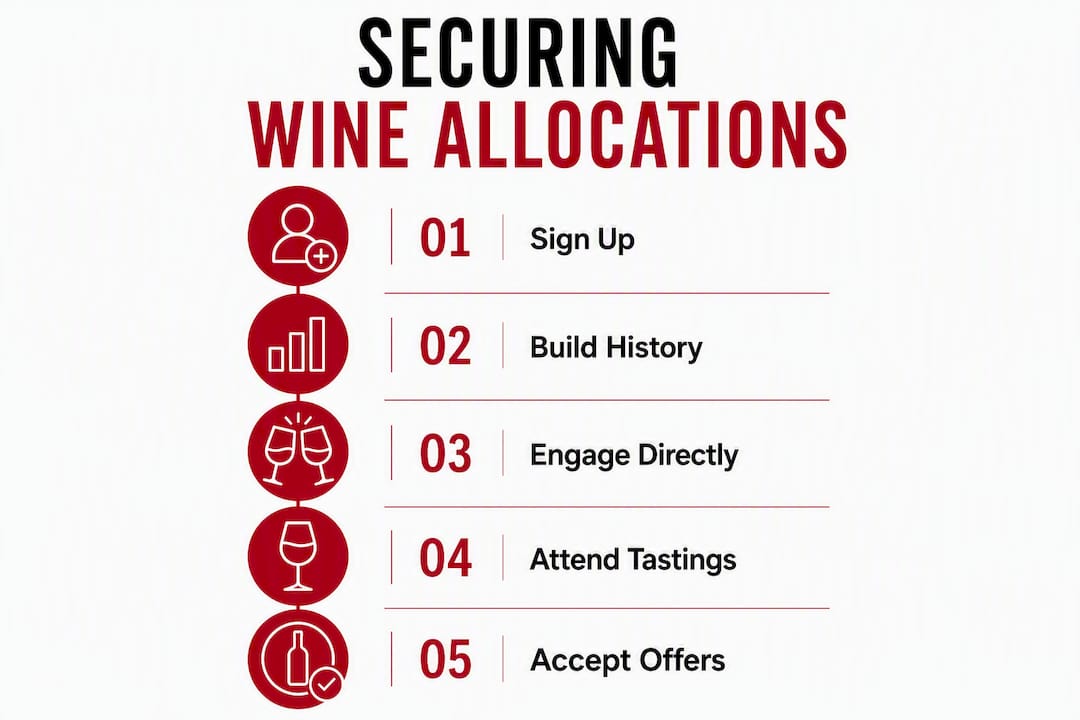
This is active work, not passive luck. Here’s the order that actually moves the needle.
- Sign up for producer mailing lists directly. Go to the winery’s website, find the allocation or mailing list page, and register. Many allocation landing pages list member benefits upfront: exclusive events, flat-rate shipping, early access. Read the terms before you commit.
- Make your first purchase quickly. A sign-up with no purchase history is invisible. Buy something from the producer’s available stock within the first release cycle to establish yourself as an active buyer.
- Contact a local distributor rep. Distributors often hold allocation stock that never reaches consumers directly. A polite email introducing yourself as a serious buyer, naming the specific wines you want, and asking about trade channel access can open doors faster than waiting on a public list.
- Visit the cellar door in person. This is the single most underrated move. Showing up, tasting, buying, and having a genuine conversation with the winemaker or cellar-door staff shifts you from anonymous name to real person.
- Buy consistently across the portfolio. Don’t cherry-pick only the flagship. Producers and distributors track multi-year purchase histories and portfolio breadth. Buying the second label or the white alongside the flagship signals you’re a partner, not a speculator.
- Follow up once per season. A brief, genuine email asking about upcoming releases keeps you visible without being annoying. Reference a wine you enjoyed. Keep it short.
Pro Tip: Ask your favourite restaurant’s sommelier which producers they pour by the glass. Sommeliers often have direct allocation relationships and can refer serious buyers. One warm introduction from a trusted on-premise account can move you up a waitlist faster than years of cold sign-ups.
What do producers actually look for when granting allocations?
Producers want demonstrable partners, not passive collectors. The allocation system rewards buyers who treat the wine with respect and keep it in good hands.

The criteria that matter most: consistent purchase history across multiple releases, breadth of portfolio support (not just the trophy bottle), prompt payment, and genuine engagement like tasting visits and responses to communications. On-premise placement carries serious weight with producers who want their wines poured in restaurants rather than sitting on retail shelves.
A buyer who wins priority looks like this: they’ve purchased every release for three years, they pick up in person when possible, they’ve visited the cellar door once, and they’ve never flipped a bottle publicly. That’s the profile that gets the call when a slot opens.
The behaviours that get you deprioritised are flipping (reselling immediately at a markup), cherry-picking only the most famous vintage, and skipping releases repeatedly. Most producers tolerate one skipped release per year; two consecutive skips at a cult-tier producer often means losing your place entirely.
Pro Tip: When you email a producer to express interest, mention a specific wine you’ve enjoyed and where you’d cellar it. Vague “I love your wines” emails are forgettable. Specificity signals you’re serious.
What are your legal alternatives when you can’t get allocations?
You don’t have to be on a list to drink well. These routes all work in Australia, each with its own trade-off.
- Auction houses (Langton’s, Shapiro’s and similar fine-wine specialists) offer access to rare bottles, including back vintages, but prices reflect demand and buyer’s premiums add to the cost.
- Specialist fine-wine retailers carry allocated stock through trade relationships. Expect to pay above release price but below peak secondary-market rates, and you get provenance documentation.
- Trusted DTC sellers like FU Wine source limited releases and cellar-aged bottles through direct producer relationships and opportunistic buying, offering significant discounts compared to retail without the mailing-list wait.
- Restaurant sommeliers occasionally sell bottles from their allocation or can refer you to producers. This works best when you’re a regular and the relationship is genuine.
- Accredited brokers can source specific bottles on request, though fees apply and lead times vary.
The secondary market and specialist avenues offer immediacy but typically charge a premium over release price for bottles that would have been allocation-priced at the winery door.
Australian legal and shipping rules you need to know
Buying allocated or rare wine in Australia comes with a few non-negotiable compliance steps.
- Age verification is mandatory. Every online alcohol retailer in Australia must verify you’re 18 or over before completing a sale. Expect ID checks at checkout and on delivery.
- Signature on delivery is required. Couriers cannot leave alcohol unattended. Someone over 18 must sign for the parcel, or it goes back to the depot.
- Interstate shipping rules vary. Some carriers have restrictions on transporting alcohol across state lines, and temperature-controlled options matter for premium bottles in summer. Confirm with the retailer before ordering.
- Importing from overseas. If you’re bringing bottles in personally, Australia’s duty-free allowance is 2.25 litres per adult traveller. Commercial imports attract customs duty and GST; use a licensed importer for anything beyond personal quantities.
- Storage conditions matter for provenance. If a seller can’t confirm cold-chain handling, that’s a problem worth raising before you pay.
This is general guidance only. For complex commercial purchases or import arrangements, consult a customs broker or legal adviser.
Typical savings and realistic timelines
Here’s how the numbers look across three common buyer scenarios.
| Wine type | Typical release price | Likely secondary-market price | Estimated time to delivery |
|---|---|---|---|
| Small boutique producer | — | — | 2–6 weeks from offer |
| Mid-tier popular label | — | — | several weeks from offer |
| Cult-tier, high-demand | — | — | several weeks or longer |
Secondary-market buyers routinely absorb a 30–50% markup on top of release price. Add shipping, any storage fees, and the cost of waiting, and the gap between allocation access and open-market buying becomes significant fast.
Variables that shift the maths: allocation size limits (you may only be offered six bottles when you wanted twelve), interstate freight costs, and whether the seller includes temperature-controlled delivery. Always factor those in before comparing headline prices.
Red flags: how to spot a dodgy deal before you pay
Not every “allocation release” offer is what it claims to be. These are the warning signs.
- Prices that are suspiciously low for a wine with strong secondary-market demand. Genuine bargains exist; prices that defy market logic usually don’t.
- Sellers who can’t or won’t provide provenance documentation: original invoice, importer details, storage history, or bottle photographs.
- Pressure tactics. Legitimate allocation offers have set windows. Anyone pushing you to pay in the next hour is a red flag.
- No verifiable merchant history, no ABN, no physical address, and reviews that look manufactured.
- Bottles offered without a clear chain of custody from producer to seller.
Pro Tip: Before paying, ask for the original purchase invoice and the importer’s name. Cross-check the importer against the producer’s official distributor list. If the seller hesitates, walk away. Checking common buying mistakes before you commit can save you real money.
If something goes wrong, document everything: screenshots, emails, payment records. Escalate through your bank’s dispute process and report to Consumer Affairs in your state.
How an in-person visit moved one collector up the list
A collector in regional Victoria had been on a boutique Yarra Valley producer’s mailing list for two years with no allocation offer. She drove out on a quiet Tuesday, spent an hour tasting through the current releases with the winemaker, bought two cases of the second label, and had a genuine conversation about how she cellars wine and why she wanted the flagship.
Three months later, she received her first allocation offer.
The takeaways you can replicate:
- Visit on a weekday when staff have time to talk.
- Buy something at the visit, even if it’s not the wine you came for.
- Be honest about your storage setup and your intentions for the wine.
- Follow up with a short thank-you email referencing what you tasted.
FU Wine operates on exactly this principle at scale: direct producer relationships, genuine sourcing conversations, and a commitment to placing wine with buyers who’ll respect it.
Key takeaways
Unlocking access to allocated wines in Australia is active relationship work, not a passive waiting game. The buyers who win allocations buy consistently, show up in person, and treat producers as partners.
| Point | Details |
|---|---|
| Offer windows close fast | Allocation windows run 30–60 days; high-demand producers close in 48–72 hours. |
| Secondary market costs more | Expect to pay 30–50% above release price if you buy outside an allocation. |
| Consistency wins priority | Producers reward multi-year buyers who support the full portfolio, not just the flagship. |
| In-person visits accelerate access | A cellar-door visit and genuine conversation can move you from anonymous to priority faster than years on a list. |
| FU Wine is an immediate alternative | Browse rotating drops of rare, allocated-quality bottles at significant discounts without the mailing-list wait. |
Your 48-hour action plan: Sign up to one producer’s mailing list today, or visit FU Wine to see what’s available right now.
The allocation game is rigged, and that’s the point
The traditional allocation system wasn’t designed to be fair. It was designed to reward insiders and keep everyone else paying secondary-market prices. Most guides tell you to “build relationships” as if that’s a weekend project. It isn’t. For cult producers, mailing-list wait times can stretch years, and even then, there’s no guarantee.
What frustrates me about the conventional advice is that it treats patience as the only strategy. It’s not. The buyers who move fastest combine mailing-list sign-ups with in-person visits and trade referrals simultaneously, not sequentially. And they’re honest with themselves about which producers they can realistically access versus which ones they should source through a trusted specialist instead.
The other thing most articles won’t say: flipping is genuinely bad for the ecosystem. When buyers treat allocations as arbitrage opportunities rather than access to wine they love, producers tighten their criteria and the whole system gets harder for everyone. Buy what you’ll drink or cellar. It’s better for you and better for the producers who make the wines worth chasing.
FU Wine: rare bottles without the gatekeeping
The allocation system keeps most buyers locked out by design. FU Wine was built to cut through that.
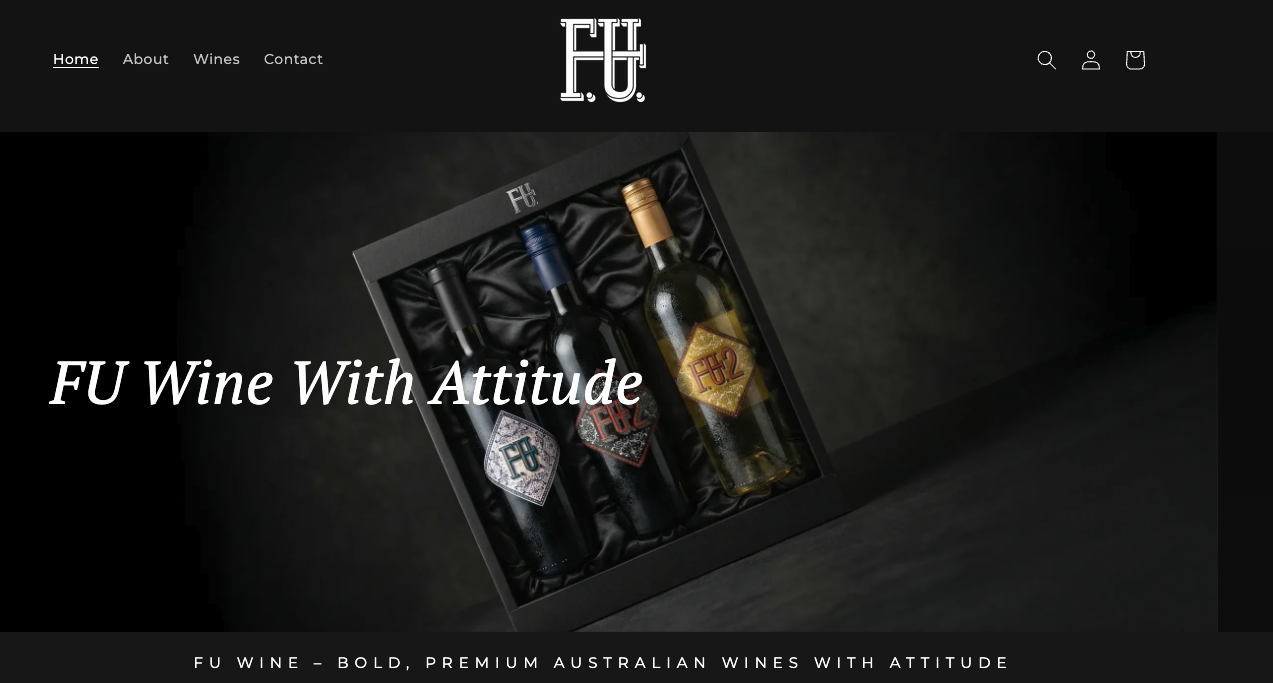
FU Wine sources limited releases, cellar-aged bottles, boutique producer runs, and high-scoring vintages through direct producer relationships and opportunistic buying. The result: rare, allocated-quality wine at prices that are typically 30–50% below what you’d pay at retail or on the secondary market. No mailing-list wait. No relationship-building required. No pretension.
The model is a rotating catalogue of flash deals on standout bottles. Stock moves fast because the prices are real. Every bottle goes through provenance checks, and age verification is handled at checkout and delivery in line with Australian law.
To get started, visit FU Wine, create an account, and browse the current drops. When something catches your eye, move quickly. These aren’t clearance wines. They’re the bottles you’ve been trying to get allocated for years.
Useful sources and further reading
- Napa Valley wine allocations: how to get on the list — Covers allocation mechanics, offer windows, and secondary-market pricing. US-focused but the structural principles apply directly to Australian boutique producers.
- How to navigate the tricky world of wine allocations | SevenFifty Daily — Trade-focused perspective on distributor relationships and on-premise placement strategies. Useful for hospitality buyers and serious collectors.
- Allocation | WineWiki — Concise definition of allocation systems, tiering, and the difference between allocation and retail channels.
- Sonoma wine clubs and allocation lists: how they work | Sonoma Wine Authority — Explains the structural difference between wine clubs and allocation programmes. Helps readers choose the right sign-up path.
- FU Wine — The direct-to-consumer alternative for Australian buyers who want rare, allocated-quality bottles without the traditional gatekeeping. Browse current drops and verify compliance details on the site.
For import regulations and customs requirements, consult the Australian Border Force directly. For interstate shipping rules, check with your state’s liquor licensing authority, as requirements differ across jurisdictions.